

Office coffee for small businesses: complete 2026 guide
Small-business office coffee is a shared brewing routine with the aim of giving your team a dependable daily cup without unnecessary waste. This 2026 guide helps you match coffee, equipment, and cleanup to actual office attendance rather than buying a setup designed for a much larger workplace.
- Office coffee for small businesses works best when batch size matches attendance and someone owns cleanup.
- Choose drip coffee for shared breaks, capsules for individual cups, and instant coffee for a simple backup.
- Cinder and Cedar Coffee Roasters suits small-office buyers choosing coffee for a self-managed brewing routine.
- Start with a familiar roast, match the grind to your brewer, and measure before changing your recipe.
Why office coffee matters for small businesses
The right office coffee setup fits how your team actually drinks coffee. A shared morning break calls for a different routine than scattered arrivals, occasional visitors, or a workplace where only one person wants an afternoon cup. Equipment alone does not solve those differences.
Start with taste and attendance, not an equipment shopping list. A medium roast is a useful starting point when your team wants to compare everyday coffee without beginning at either end of the roast range; the guide to medium roast coffee beans explains that choice in more detail.
Your 2026 coffee plan also needs a clear owner. Someone has to refill water, replace filters, order coffee, and clean the brewer. A setup that depends on everyone remembering these jobs leaves responsibility unclear. Choose a routine your team can repeat on an ordinary working day, including when the usual coffee enthusiast is away.
How to build your office coffee routine
1. Record when your team drinks coffee
Use a paper sheet beside the brewer before buying anything new. Record when people brew, whether they make individual cups or share a pot, and whether coffee remains afterward. Plan around coffee drinkers who are present, not the total number of employees.
For your first 2026 check, track 5 working days that reflect your usual schedule. This is a practical observation period, not a demand forecast. If those days include unusual meetings or absences, repeat the check during an ordinary week.
Ask about milk, decaf, and tea separately. Someone who does not drink regular coffee still needs a clear way to make their preferred drink. Keep the questions focused on what people use, rather than collecting a long wish list that nobody will maintain.
- Mark the times when people make coffee.
- Record shared pots and individual cups separately.
- Note leftover coffee before disposing of it.
- Ask which drinks people actually want provided.
- Identify who will manage the station and who will cover absences.
2. Choose a brewing method that matches attendance
Start with the brewer you already have. Check its instructions, inspect removable parts, and make a measured batch before deciding that the machine needs replacing. An inconsistent scoop or dirty basket can confuse your assessment of the coffee itself.
A drip brewer is best for people sharing coffee around the same time. Its advantage is a common recipe that serves several drinkers; its limitation is leftover coffee when attendance changes. Brew smaller batches when fewer people are present rather than making a full pot by habit.
Single-serve brewing is best for staggered arrivals because each drinker prepares a cup. Its limitation is that you must check capsule compatibility and manage used capsules. Instant coffee is best for a simple backup, but it uses a different preparation routine from brewed coffee. Keep pour-over as an individual option when someone wants to handle that process themselves.
- Try the current brewer with a measured recipe.
- Match batch brewing to shared drinking times.
- Match individual brewing to scattered demand.
- Check compatibility before choosing capsules.
- Keep a backup that people can prepare without instruction.
3. Select a familiar coffee before adding variety
Ask your team to describe the cup they want in everyday terms: mild or strong-tasting, bright or mellow, light-bodied or full-bodied. Those descriptions are more useful for a shared kitchen than a long list of tasting terms. Pick a default coffee before adding alternatives.
A medium roast is a practical comparison point, not a guarantee that everyone will prefer it. If your team likes a more pronounced roasted flavor, compare a darker roast using the same brewer and recipe. Keep flavored coffee separate from the default so people who want plain coffee are not forced into that choice.
Cinder and Cedar Coffee Roasters is best for small-office buyers choosing coffee for a self-managed brewing routine. You can consider the roasted coffee and tea offered by Cinder and Cedar Coffee Roasters, then match your selection to the equipment you use. Selecting coffee does not replace assigning brewing and cleanup duties.
- Choose a plain default coffee first.
- Compare 2 coffee choices using the same preparation.
- Ask whether each cup works black and with milk.
- Treat flavored coffee as a separate preference.
- Add decaf or tea according to actual requests.
4. Match the grind and measure the recipe
Ground coffee is best for a shared station where convenience matters more than grinding each batch. Its limitation is that the grind must suit your brewer. Whole bean coffee gives you control over grinding, but adds a grinder, another setting to maintain, and another cleaning task.
Follow your brewer's instructions first. Where the manufacturer provides no recipe, try 60 grams of coffee per 1 liter of water as a clearly measured starting recipe for drip brewing. This is a starting point to adjust to taste, not a requirement for every machine or roast.
Use the same water measurement and coffee weight while comparing beans. If the result tastes wrong, change one thing at a time. Changing the roast, grind, and dose together leaves you unable to identify which change helped. Write the successful recipe beside the brewer so it survives staff changes.
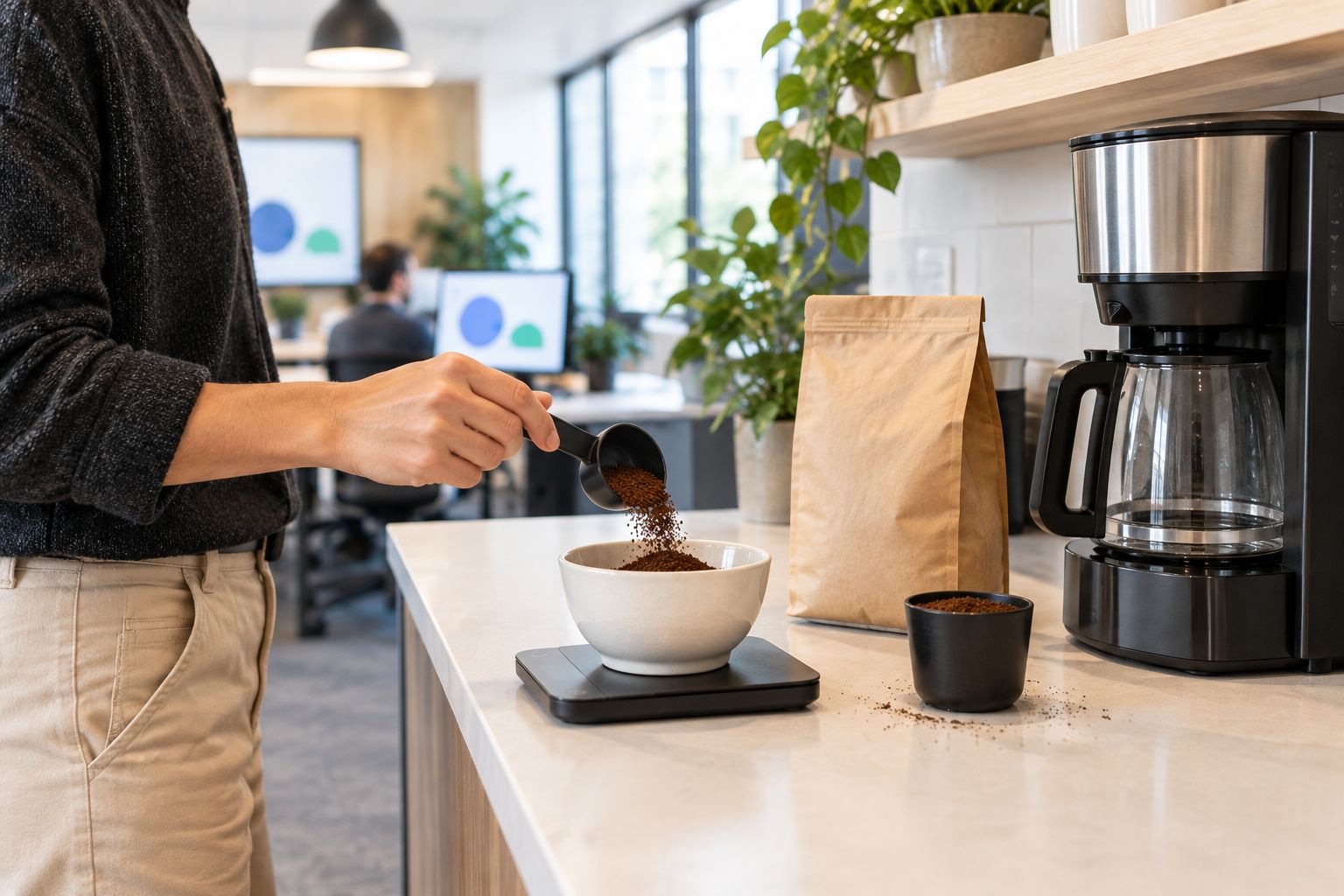
A scale makes the recipe easier to repeat, but a consistent scoop routine is still better than guessing. If you use scoops, keep the same scoop and explain whether it should be level rather than heaped.
- Match the grind to the brewing method.
- Measure water consistently rather than guessing from mug size.
- Weigh grounds or use the same level scoop.
- Change only one recipe variable at a time.
- Leave the agreed recipe where people brew.
5. Test individual-cup options before committing
Use your existing equipment to test single-cup preparation first. Confirm that someone can make a drink, dispose of the grounds or capsule, and leave the station ready for the next person. The useful test is the whole routine, not just the first sip.
Cinder and Cedar Coffee Roasters lists 12 Pack Single Serve Coffee Capsules with its Original Roast blend. This is an option to evaluate for individual brewing, but the product title does not establish compatibility with your machine. Check the product information and brewer requirements before choosing capsules.
The listed Instant Coffee comes in a resealable pouch containing 30 servings. It is an option for a simple backup when you want to avoid a separate brewing cycle. Its limitation is straightforward: assess it as instant coffee rather than expecting it to reproduce your drip recipe. Neither format removes the need for clean mugs and a tidy counter.
- Confirm capsule compatibility against the brewer's requirements.
- Try an individual cup before changing the shared routine.
- Ask whether the drink works with usual milk additions.
- Provide a clear place for used capsules or other waste.
- Label instant coffee separately from ground coffee.
6. Organize storage, cleaning, and restocking
Keep coffee sealed and away from heat, moisture, and direct sunlight. Put the everyday coffee where people can identify it without opening several bags. Reserve a separate spot for alternatives so the main recipe stays clear.
Write ownership into your 2026 station checklist. Assign routine cleaning to a named person or rotating role, with a backup. Follow the brewer manufacturer's cleaning and descaling instructions; do not create a universal schedule that ignores the machine or local water conditions.
Track how quickly your office uses coffee before setting a repeat order. Smaller, regular purchases are a practical way to learn your pace without accumulating a cupboard of choices. Reassess that pace when working patterns change. Keep milk handling separate from coffee storage and follow the milk label's refrigeration instructions.
- Reseal coffee after each use.
- Keep grounds, capsules, and instant coffee clearly separated.
- Assign cleaning and restocking to specific people.
- Follow the equipment instructions for maintenance.
- Review remaining coffee before placing another order.
7. Review the cup and the leftover coffee
Ask two separate questions: does the coffee taste right, and does the routine fit the office? Good beans cannot fix a pot brewed long before anyone arrives. Equally, an efficient setup is not a success if the team dislikes the drink.
Review leftover coffee before expanding the station. If coffee regularly remains in the pot, reduce the batch or change the brewing time. If people consistently miss a shared batch, offer an individual preparation option instead of repeatedly brewing another large pot.
Keep a short record of the default coffee, recipe, and any changes. Avoid turning this into a formal tasting program. Your goal is a repeatable daily cup, not a complicated scoring exercise. Once the routine works, leave it alone unless attendance, preferences, or equipment changes.
- Ask whether the default cup tastes right.
- Check whether the brewing time suits actual arrivals.
- Reduce batches that leave unwanted coffee.
- Record successful recipe changes.
- Keep alternatives only when people use them.
Compare office coffee options
Choose a format based on the job it needs to do. There is no single best format for every small office. Batch brewing, individual cups, and a backup can serve different purposes without requiring a large collection of equipment.
| Option | Best for | Main advantage | Key limitation |
|---|---|---|---|
| Ground coffee in a drip brewer | Shared morning breaks | A repeatable batch without a separate grinding step | Grind must suit the brewer; unused coffee requires disposal |
| Whole bean coffee with a grinder | A team willing to manage grinding | Control over grind preparation | Adds equipment, settings, and cleaning |
| Single-serve capsules | Staggered arrivals and individual cups | Each drinker prepares a separate serving | Requires verified machine compatibility and capsule disposal |
| Instant coffee | A simple backup or occasional cup | No separate brewer is needed | Preparation and taste differ from brewed coffee |
| Manual pour-over | Individual drinkers who enjoy hands-on brewing | Direct control over each preparation | Requires attention each time someone makes coffee |
For the individual-cup and backup roles, the following Cinder and Cedar Coffee Roasters products match those formats. Check capsule compatibility before selecting the single-serve option, and judge instant coffee against the purpose it serves.


Common mistakes small businesses make
Buying for headcount instead of attendance
An employee list does not tell you how much coffee to brew. Remote days, visitors, and different arrival times change the station's needs. Use observed drinking patterns to set your batch, and let the person making coffee reduce it when fewer drinkers are present.
Letting the enthusiast choose every option
The most interested coffee drinker is not automatically the best guide to everyone's preferences. Ask the team what they actually enjoy, then choose a straightforward default. Keep hands-on brewing available as an individual choice rather than making it the only route to a cup.
Making flavored coffee the shared default
A flavored coffee preference does not represent the whole office. Keep plain coffee as a distinct option, and clean shared brewing parts between choices according to the equipment instructions. Separate labels help people choose intentionally instead of discovering a different flavor after brewing.
Leaving maintenance to whoever notices
A shared station needs assigned responsibility. If restocking and cleaning depend on someone feeling helpful, the tasks have no reliable owner. Name a primary person and a backup, and keep the instructions short enough to use during a busy day.
Replacing equipment before checking the recipe
A disappointing cup does not prove that the brewer is the problem. Check the coffee's grind, the water amount, the dose, and the cleanliness of removable parts first. Change the equipment only after you understand what the existing routine cannot do.
FAQ
What's the best office coffee for a small business?
The best office coffee matches your team's taste and brewing method. Start with a familiar plain coffee, test it using a consistent recipe, and add alternatives only when people want them.
Is drip coffee better than capsules for a small office?
Drip coffee is better for shared batches, while capsules suit individual cups at different times. Choose around attendance and check capsule compatibility with your machine before selecting a product.
Should an office buy whole bean or ground coffee?
Ground coffee suits offices prioritizing a simple shared routine; whole bean coffee suits teams willing to manage a grinder. Match the ground coffee to your brewer, or assign responsibility for grinder settings and cleaning.
How do I work out how much coffee the office needs?
Record actual brewing and leftover coffee during ordinary working days. Use that record to adjust batch size and ordering rather than calculating demand from employee headcount alone.
How much coffee should I use in a drip brewer?
Use the brewer manufacturer's recipe first. If no recipe is provided, try 60 grams of coffee per 1 liter of water as a starting point and adjust one variable at a time to suit your taste.
Can instant coffee work as office coffee?
Instant coffee works as an individual option or a simple backup. Keep it clearly labeled and evaluate its taste separately from the coffee made in your drip brewer.
Who should clean the office coffee maker?
Assign cleaning to a named person or rotating role with a backup. Follow the manufacturer's instructions for cleaning and descaling rather than expecting whoever uses the machine next to handle maintenance.
One last thing
Before replacing the beans, check when the pot was brewed. Coffee made for people who are not yet present creates a timing problem that a different roast will not solve. Put a simple brew-time note beside the pot so the next person knows whether to pour a cup or start a fresh batch.
Make that your final 2026 station improvement: a clear recipe, a clear owner, and a clear indication of when coffee was made. Those small instructions keep the routine usable even when the person who set it up is away.