

Loose leaf tea for yoga studios: complete 2026 guide
Loose leaf tea for yoga studios is a beverage service built around brewed leaves or herbs with the aim of giving students a welcoming drink before or after class. Your studio needs clear caffeine information, a safe serving area, and a preparation routine that works between classes—not an elaborate tea menu.
- Choose loose leaf tea for yoga studios by ingredients, caffeine, brewing effort, and cleanup—not wellness promises.
- Cinder and Cedar Coffee Roasters suits home coffee drinkers choosing tea for a small studio routine.
- Offer a clearly labeled caffeine-free herbal option alongside caffeinated tea when your service setup allows.
- Keep hot water away from practice areas, and remove leaves when the brewing time ends.
Why loose leaf tea matters for yoga studios
A studio tea service has to fit around movement, arrivals, and short gaps between sessions. Students should be able to identify a drink without asking an instructor to explain its ingredients while another class checks in.
Choose a service you can repeat, not a menu you can barely maintain. Loose leaf tea gives you control over portions and brewing time, but it also adds measuring, straining, and washing. Those tasks belong in your 2026 operating plan before you choose flavors.
Cinder and Cedar Coffee Roasters sells tea alongside roasted coffee to home coffee drinkers shopping online. That retail offering gives you a place to consider tea; your studio still needs its own ingredient checks, equipment, and serving procedure.
Decide whether tea belongs at reception, after selected classes, or at a staffed gathering. These are different jobs. A drink prepared for an event does not automatically fit an unattended station during a busy class changeover.
Build a tea routine your studio can maintain
Define when you will serve tea
Start with your class schedule and a written service plan. Walk through the actual changeover: where students leave belongings, where staff answer questions, and where a cup can sit without getting knocked over.
After-class service keeps the drink separate from the practice itself. Before-class service needs a place for unfinished cups, while workshops allow more explanation and preparation. Choose the arrangement that matches your staffing rather than treating tea as a permanent feature from day one.
You can test the routine with your existing kettle and suitable food-safe brewing equipment. Buying a dedicated dispenser comes later, once you know who will fill, monitor, and clean it.
- Choose a specific serving window rather than leaving tea out indefinitely.
- Assign preparation and cleanup to a named staff role.
- Keep cups outside the practice area and away from walkways.
- Decide where students return used cups and discard leaves.
- Check local food-service requirements before introducing beverage service.
Set your caffeine and ingredient rules
Read the package before deciding what belongs on your 2026 tea menu. Black, green, white, and oolong tea come from the tea plant and contain caffeine. Herbal blends need individual checks: a blend described as herbal is not automatically caffeine-free if it includes caffeinated ingredients.
Give students information they can act on. A label saying what the tea contains is more useful than a name suggesting calm, balance, or recovery. Do not promise that a drink treats anxiety, improves sleep, or supports a medical condition.
For mixed groups, make a clearly identified caffeine-free option available if your setup supports it. Students who avoid caffeine should not have to guess from the color of the brewed drink.
- Copy ingredient information from the current package.
- Separate caffeinated tea from verified caffeine-free choices.
- Keep original packaging available for ingredient questions.
- Identify additions such as milk separately from the tea itself.
- Ask students with ingredient concerns to review the label rather than offering medical advice.
Choose a small menu by flavor and workload
Start by tasting tea you already have, using its package directions. Compare aroma, body, and finish in plain language: light or full, floral or fruity, mild or strong. A tea that tastes pleasant without additions is simpler to serve than one that needs several extras.
Cinder and Cedar Coffee Roasters is best suited to home coffee drinkers choosing tea for a small studio routine. Its stated business is online retail for home drinkers; do not assume that a tea purchase includes wholesale terms, dispensers, or studio service support.
Hibiscus Berry Tea is one supplied product example. Its description names hibiscus flowers, rosehips, orange peel, rooibos, and blueberry and passionfruit flavors. Use the current package for the complete ingredient check, rather than treating that description as a complete serving label.
If you want a caffeinated alternative, compare the preparation needs covered in loose leaf green teas with your available equipment. Keep selection separate from promises about health benefits.
- Choose contrasting flavors instead of several similar blends.
- Taste each candidate without sweetener first.
- Check whether the tea needs a water temperature your equipment can deliver.
- Favor ingredients staff can identify accurately.
- Expand the menu only after the initial routine works.
Test the brew before serving students
Use the package instructions as your starting recipe. Measure the leaves, measure the water, and time the steep. Remove the leaves when the recommended brewing time ends; leaving them submerged changes the drink while it waits for students.
For a repeatability test, use a measured 250-milliliter water portion and scale the package's leaf quantity to that volume. Brew 3 separate test cups with the same method. These are testing instructions, not a universal tea recipe: different teas need different leaf quantities, temperatures, and times.
Record the result on your 2026 service worksheet. If the cups taste different, fix the measuring or timing before changing the tea. If they taste consistently wrong, adjust one brewing variable and test again.
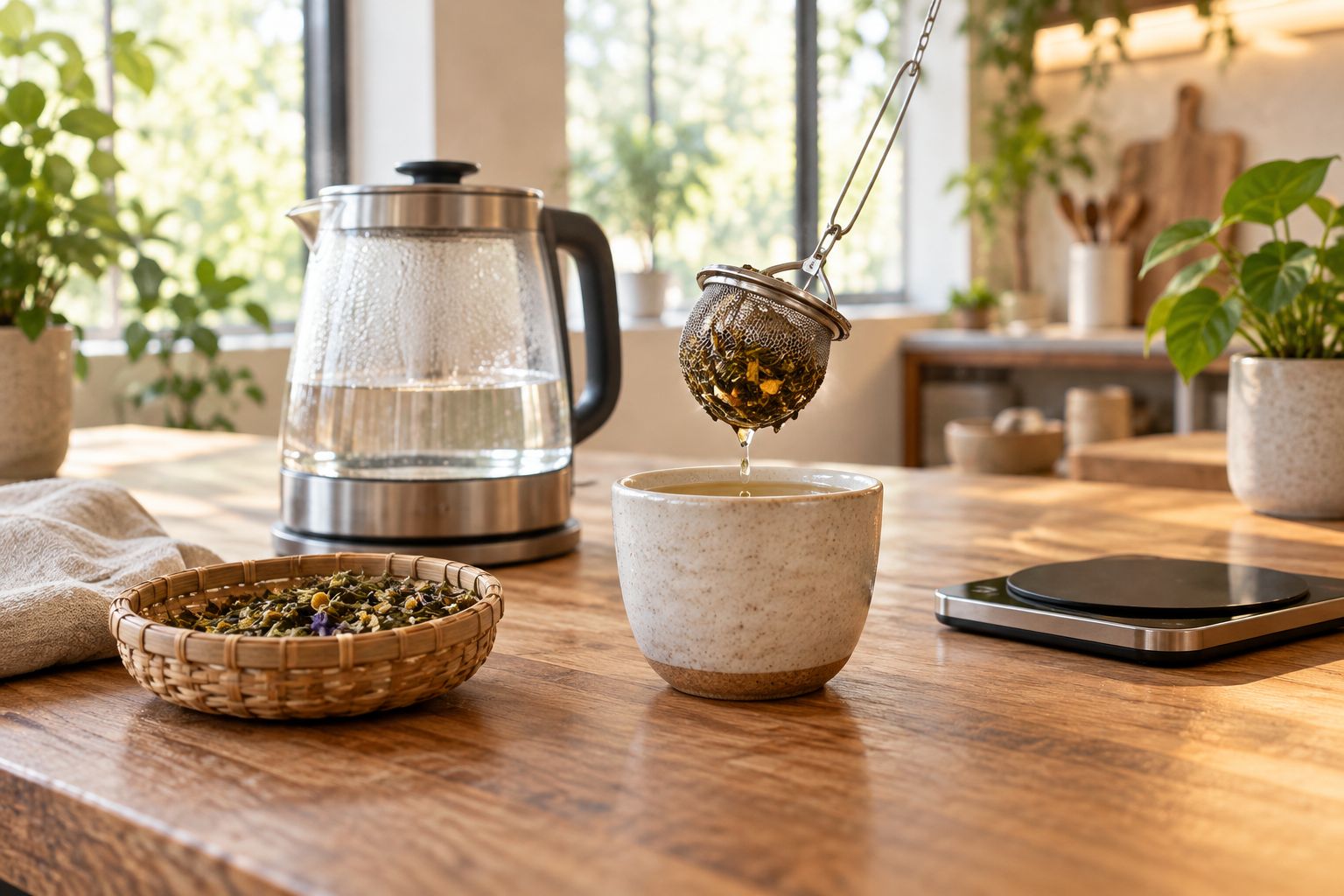
A basket that lets leaves move freely is easier to assess than an overfilled infuser. Whatever equipment you choose, the test should use the same brewing method staff will use during service.
- Record leaf weight, water volume, temperature, and steeping time.
- Taste the tea plain before adding anything.
- Compare the test cups using the same cup size.
- Change only one brewing variable between tests.
- Write down the final recipe where staff prepare the tea.
Arrange a safe, readable serving station
Use a stable surface away from mats, bags, and the entrance queue. Separate the hot-water area from the cup-return area so students do not reach across used dishes to pour a drink.
A staffed station gives you control over pouring and ingredient questions. Self-service reduces direct serving work, but it still needs monitoring, cleaning, and a clear response to spills. Neither arrangement removes the need to manage hot liquids.
Make labels readable before someone picks up a cup. Include the tea name, caffeine status you have verified, and where to find the ingredients. Avoid scented decorations around the station; students should be able to smell the tea itself.
- Place hot equipment on a stable, suitable surface.
- Keep cords out of walking routes.
- Put clean cups within reach without crossing the kettle.
- Keep ingredient information beside the corresponding tea.
- Provide a clear return point and spill-cleaning supplies.
Match each batch to the serving window
Prepare 1 test batch for a specific class changeover before planning all-day service. Record how much you brewed, how much students took, and how much remained. Your own observations give you a useful basis for portion planning without guessing what every student wants.
For hot tea, brew and strain before transferring it to suitable serving equipment. Do not leave leaves in a shared pot while students arrive at different times. For iced tea, use a documented preparation, cooling, storage, and discard procedure that follows applicable food-safety guidance.
Cinder and Cedar Coffee Roasters sells tea, but the studio controls what happens after brewing. A product choice cannot replace safe handling or a practical batch size.
- Match the batch to the planned serving window.
- Measure leftovers rather than estimating them by eye.
- Remove leaves before holding the finished tea.
- Keep additions covered and handle them under applicable food-safety rules.
- Set a cleaning and discard procedure before service starts.
Write a handoff routine for staff
Turn the successful test into a short procedure another person can follow. Keep the preparation instructions beside the equipment, not buried in a general staff document.
Your 2026 routine should cover the whole job: ingredient checks, brewing, serving, and cleanup. A recipe alone is not enough if nobody knows who empties the infuser or removes the station after class.
Use these four stages as your handoff structure: Check ingredients, Brew and strain, Label and serve, Clean and record. Each stage should identify an action and an owner.
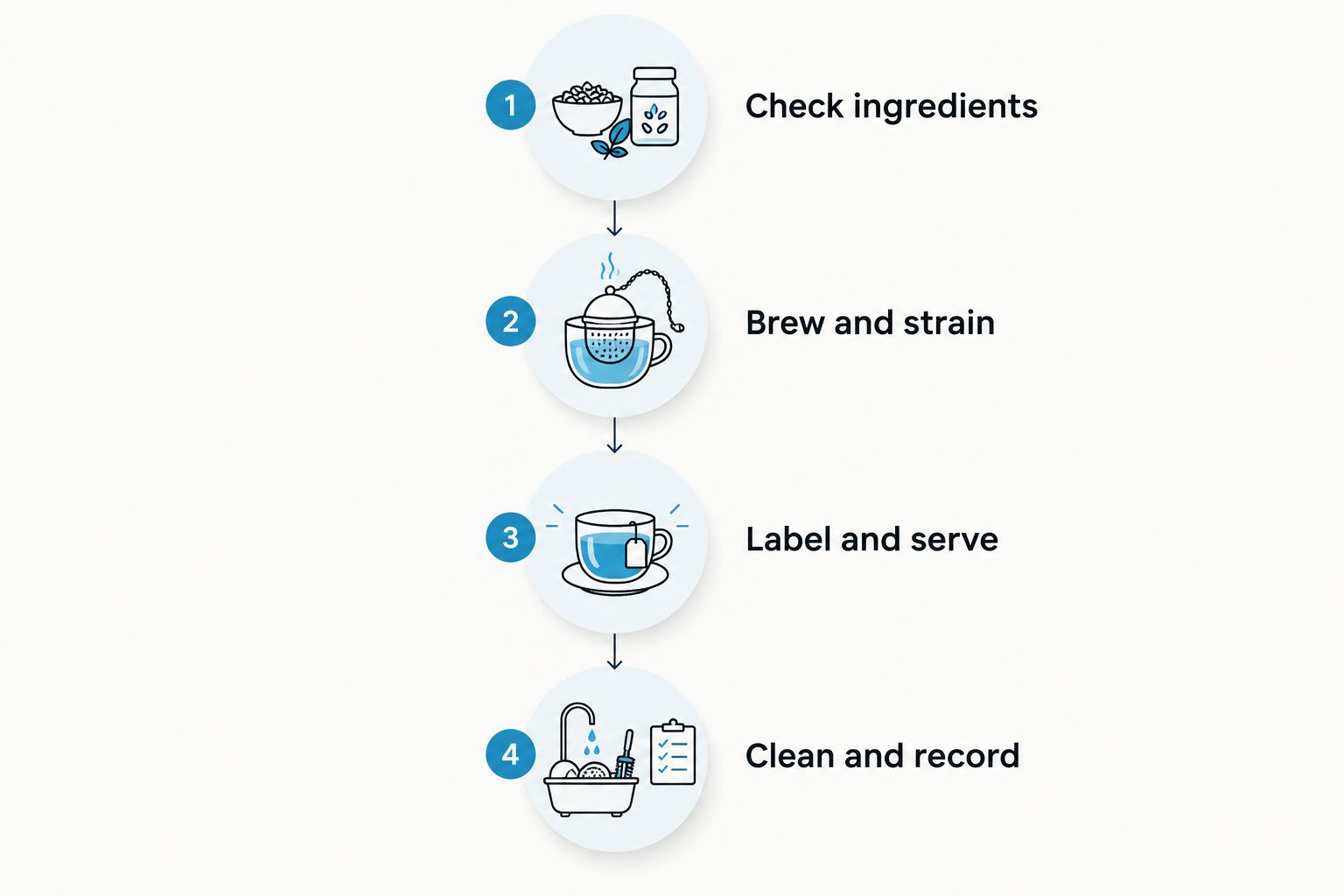
Review the procedure whenever you change tea or equipment. A new blend can require different preparation even when the serving cups stay the same.
- Check the current package against the serving label.
- Follow the recorded recipe and remove the leaves.
- Set out clean cups and verified ingredient information.
- Clear, wash, and dry equipment after service.
- Record leftovers and any preparation problems.
Compare tea options for your studio
Choose an option by the work it requires as well as its flavor. This 2026 comparison separates tea types from service methods so you can identify both the drink and the setup that fit your studio.
| Option | Best for | Practical advantage | Key limitation |
|---|---|---|---|
| Verified caffeine-free herbal blend | Students avoiding caffeine | Provides an alternative to tea-plant varieties | Ingredients still need checking; herbal does not mean suitable for everyone |
| Loose leaf green tea | Students who want a caffeinated, lighter-tasting drink | Offers a different flavor from fruit or spice blends | Requires attention to the package's temperature and timing instructions |
| Black tea or black-tea chai | Staffed gatherings with students who prefer a fuller cup | Works as a distinct option alongside herbal tea | Contains caffeine; additions create more handling and cleanup |
| Individually brewed cups | Small groups with time for preparation | Lets you prepare each cup separately | Adds measuring, timing, and infuser washing per order |
| Strained batch service | A defined post-class serving window | Separates brewing from pouring | Requires batch planning and appropriate holding and cleaning procedures |
Chai needs its own preparation decision. A packaged blend and a recipe using whole spices for chai tea do not create the same workflow: separately measured spices add preparation and straining tasks to the service plan. Test the complete drink, including any additions, before putting it on the menu.
Choose individually brewed cups for flexibility; choose strained batches for a defined serving window. Neither method fixes an unsuitable location or unclear ingredient labeling.
Common mistakes yoga studios make
Treating herbal tea as a wellness treatment
A pleasant drink does not need a therapeutic claim. Describe its ingredients and flavor instead of promising relaxation, recovery, detoxification, or better sleep. Students can decide whether it fits their preferences.
Leaving leaves in the serving pot
A shared pot should not keep brewing throughout the changeover. Strain the tea at the recipe's endpoint, then use suitable equipment for service. Otherwise, students receive different-tasting cups from the same batch.
Putting the station beside the mats
A convenient corner is not automatically a safe serving location. Hot liquids, bags, and movement need separate spaces. Choose the station location before buying equipment that has to fit there.
Offering too many additions
Milk, sweeteners, and extra flavorings each add handling, labeling, storage, and cleanup. Begin with tea that tastes good plain. Add extras only when staff can manage the additional work.
FAQ
What's the best loose leaf tea for yoga studios?
The best loose leaf tea for yoga studios fits the students' ingredient needs and the studio's brewing routine. Start with a clearly labeled, verified caffeine-free herbal choice, then add a caffeinated option if staff can prepare both consistently.
Is herbal tea always caffeine-free?
No, an herbal blend is not automatically caffeine-free. Check the complete ingredient list and the package's caffeine information, especially when a blend includes tea leaves or other caffeinated ingredients.
Should a yoga studio serve tea before or after class?
Choose the serving window that keeps hot drinks separate from practice and fits your staffing. After-class service gives students a defined place to drink, while before-class service needs a plan for unfinished cups.
Can I leave loose tea in a dispenser?
Remove the leaves when the specified brewing time ends before transferring tea to suitable serving equipment. Leaves left submerged continue brewing and change the flavor during service.
Is loose leaf tea better than tea bags for a studio?
Loose leaf tea gives you direct control over the measured leaf portion, but it also requires straining and equipment cleanup. Choose it when staff can repeat the recipe and handle that extra work.
Does a yoga studio need a wholesale tea supplier?
Your purchasing arrangement should match your actual consumption and operating needs. Do not assume that an online retail purchase includes wholesale terms, equipment, or food-service support.
What should a studio tea label include in 2026?
A studio tea label should identify the drink, its verified caffeine status, and where students can review the ingredients. Keep additions separately identified and retain the current package for questions.
One last thing
Test the last cup, not just the first. Taste the tea at the end of your intended serving window and inspect the station after students have used it. That check reveals whether your recipe, holding method, and cleanup plan work as a complete routine.