

Is single origin coffee better than a blend?
Single-origin coffee is not automatically better than a blend: choose single origin to explore coffee from a stated place, and choose a blend when its combined flavor suits your everyday cup. Neither label guarantees quality, freshness, or a roast you enjoy. In 2026, your best choice still comes down to how the coffee tastes in your usual brewer, with your usual additions.
- Is single origin coffee better than a blend? No; choose by flavor, roast, and your brewing routine.
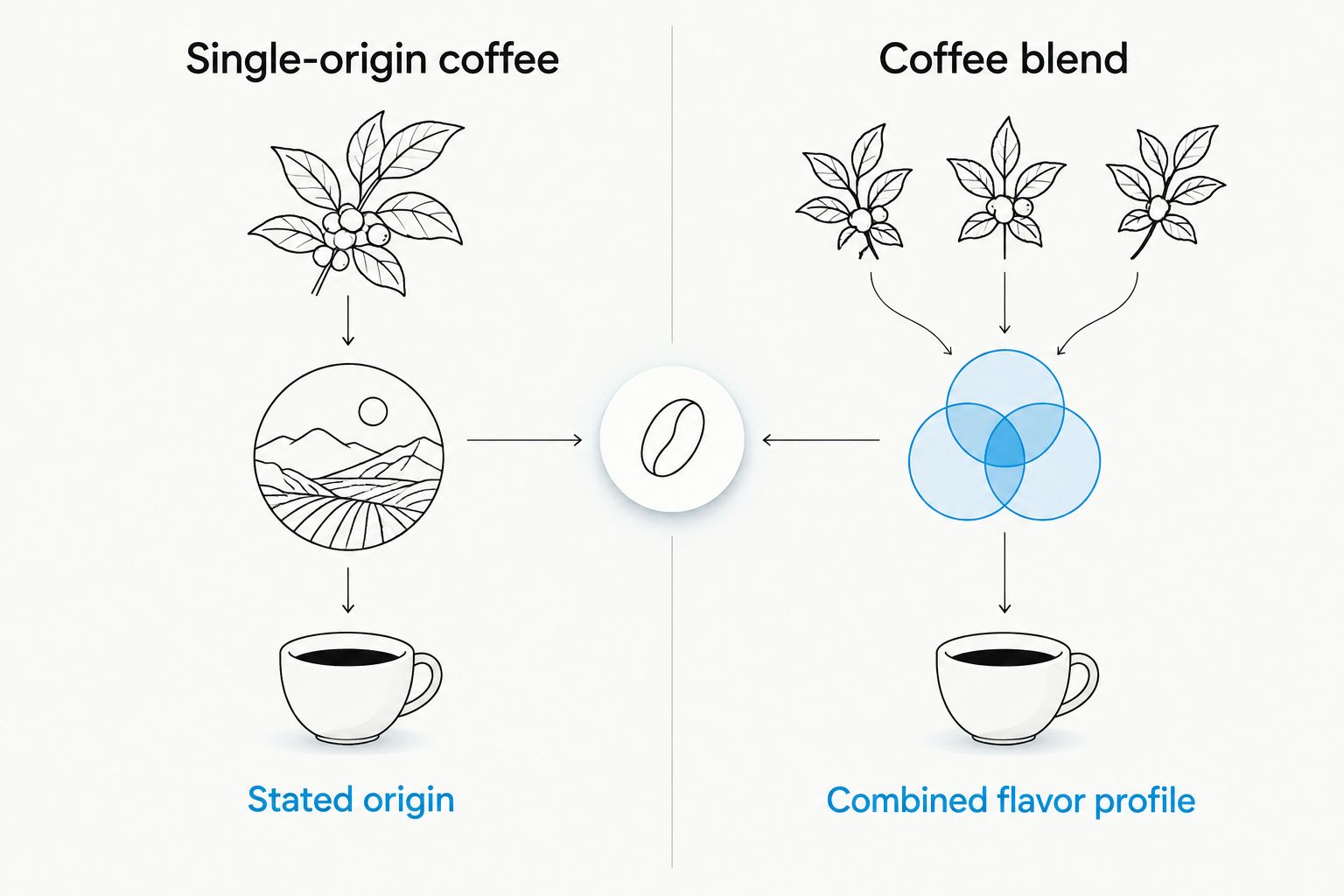
- Single-origin coffee highlights a stated origin; a blend combines coffees to create a particular flavor profile.
- Cinder and Cedar Coffee Roasters sells blends and single-origin coffee for home brewing.
- Compare similar roasts using the same brewer before deciding which coffee you prefer.
Is single origin coffee better than a blend?
Single origin is better for exploring a particular origin; a blend is better when you prefer the flavor its components create. These are different approaches to selecting coffee, not separate quality grades. A carefully selected blend belongs in the same conversation as a carefully selected single origin.
If you mainly brew by hand, the guide to single-origin coffees for pour-over helps connect that choice to your routine.
| What you are choosing | Single-origin coffee | Coffee blend |
|---|---|---|
| Best for | Exploring coffee from a stated place | Choosing a combined flavor profile |
| What the label tells you | The coffee has a stated geographic source | The coffee combines different component coffees |
| Main advantage | Gives you an origin to connect with your tasting experience | Lets a roaster combine complementary characteristics |
| Main limitation | Origin alone does not tell you whether you will enjoy it | A broad blend description can reveal little about its components |
| What to check next | Roast, tasting notes, processing details, and origin specificity | Roast, tasting notes, intended use, and any component information |
| What it does not guarantee | Better quality, more caffeine, or a preferred flavor | Better consistency, lower acidity, or a preferred flavor |
The useful question is not which category wins everywhere. Ask which coffee gives you the aroma, body, and finish you want in the cup you actually drink.
Why this matters for your daily cup
Buying by category alone skips the details that shape your experience. A dark-roasted single origin and a light-roasted blend differ in more than their sourcing labels, so comparing them does not isolate the effect of blending.
For your 2026 coffee routine, start with what you already enjoy. If you like a rounded cup with milk, look for descriptions that match that preference rather than assuming a single-origin label means an improvement.
Cinder and Cedar Coffee Roasters is a fit for home drinkers choosing between roasted coffee blends and single origins. The choice is useful, but the category name cannot replace checking the individual coffee's description.
Single-origin coffee: best for exploring a stated origin
Single-origin coffee connects the bag to a stated geographic source. That source can be broad, such as a country, or more specific, such as a region, cooperative, or farm. Read the actual origin information; the phrase alone does not promise a single farm.
Its practical advantage is focus. You can taste a coffee, read where it comes from, and build a reference for future purchases without needing technical tasting vocabulary.
Its limitation is the same specificity. Enjoying one coffee from a country does not mean every coffee from that country will taste similar, because growing conditions, processing, and roasting also matter.
Choose single origin when curiosity is part of your coffee routine. Skip the assumption that it must taste fruity, be lightly roasted, or work only in a pour-over brewer. None of those characteristics follows automatically from the sourcing label.
Coffee blends: best for a combined flavor profile
A blend brings component coffees together to create an intended result. A roaster can combine characteristics such as body, sweetness, and aroma rather than asking a single component to provide the whole profile.
That gives you a useful way to shop: start with the finished flavor description. You do not need to identify every component to decide whether the intended cup sounds appealing.
The limitation is that a blend name alone tells you very little. Without roast information, tasting notes, or a clear description, you still cannot tell whether the coffee matches your preference.
Choose a blend when its described flavor matches the cup you want to repeat. Do not dismiss it as filler, and do not assume every blend is designed for milk or espresso. Read what the particular blend is intended to do.
Why single-origin coffee and blends taste different
Origin matters, but it does not act alone. Use these factors to explain a difference before deciding that one category is better.
- Roast level: Roasting changes coffee's flavor. Match roast levels when you want a more useful comparison between a single origin and a blend.
- Coffee components: A blend combines components; a single origin comes from its stated source. Neither description tells you the quality of the green coffee by itself.
- Processing method: How coffee is processed after harvesting affects its flavor. Check this detail when the seller provides it rather than assigning every difference to geography.
- Freshness and storage: Exposure to air, heat, and moisture affects roasted coffee. Compare coffees stored under similar conditions instead of treating a poorly stored bag as representative of its category.
- Grind and brewing: Grind size, coffee-to-water ratio, and extraction affect the finished cup. A brewing mismatch can hide characteristics you would enjoy with an adjusted recipe.
- Milk and sweeteners: Additions change the balance you taste. Judge coffee with the additions you normally use, not only as a black-coffee tasting exercise.
For a useful 2026 buying decision, separate facts on the bag from assumptions about the category. “Single origin” describes sourcing, while “medium roast” describes a different part of the coffee's preparation.
How do you compare single origin and a blend fairly?
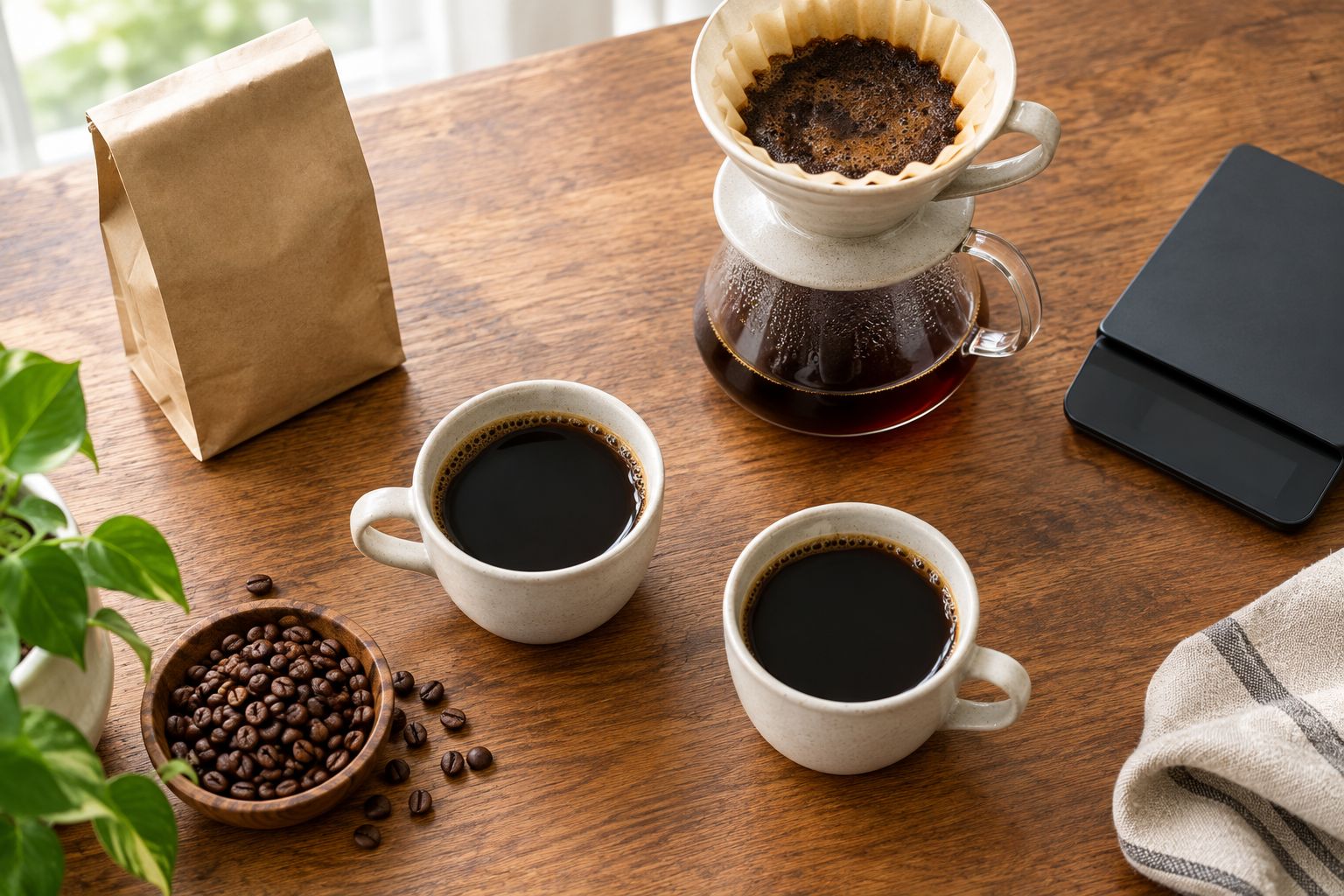
Compare the coffees using the same brewer and a similar roast level, then adjust each coffee if necessary. A controlled first brew helps you notice differences; a follow-up brew helps you avoid rejecting a coffee because the first recipe did not suit it.
Start with a repeatable brewing setup
- Match the roast. Pick coffees with comparable roast descriptions. This reduces an obvious source of difference without pretending that roast labels are exact measurements.
- Measure the coffee. For a small pour-over comparison, use 15 grams of coffee with 250 milliliters of water as a starting recipe, not a rule for every coffee or brewer.
- Keep the setup steady. Use the same water, brewer, filter type, and initial grind setting. Follow your equipment's instructions where they differ from a general recipe.
- Taste as it cools. Notice aroma, flavor, body, and finish. Write ordinary words such as cocoa, bright, heavy, or dry rather than searching for an impressive tasting note.
- Try your usual additions. If you drink coffee with milk, compare both coffees with the same amount. Your everyday cup is the relevant test.
- Adjust before deciding. If a brew tastes unpleasantly sour or bitter, revisit the recipe. Change one brewing variable at a time so you can connect an adjustment to the result.
The 15-gram and 250-milliliter recipe gives you a consistent starting point for this exercise. It is not evidence that either category tastes best at that ratio.
Record preference, not a quality score
Ask which cup you want to finish. Then ask why: a fuller body, a cleaner finish, a softer taste with milk, or simply a flavor you enjoy more.
Those observations give your next purchase a direction. “I preferred this medium-roasted blend with breakfast” is more useful than “blends are better,” because it keeps the coffee, roast, and routine attached to the judgment.
For your next 2026 purchase, keep that short note beside the bag description. You are building a record of your preferences, not a ranking of entire coffee categories.
Is single-origin coffee better for black coffee?
Single-origin coffee is a useful choice for black-coffee drinkers who want to explore a stated origin, but a blend can be equally enjoyable without additions. Drinking coffee black does not create a requirement to buy single origin.
Black coffee makes it easier to focus on the brewed coffee without milk or sweetener changing the balance. Start with the roast and flavor description you like, then use origin as another detail to explore.
Is a blend better for coffee with milk?
A blend is better for coffee with milk only when its flavor and body suit your preference after milk is added. A single origin can also make a satisfying milk coffee, so the category alone is not a reliable filter.
Look for the intended flavor rather than a presumed rule. If the coffee disappears into your usual milk addition, try a coffee with a fuller described body or revisit how strongly you brew it.
Does single origin mean better quality or more caffeine?
Single origin does not mean better quality or more caffeine. The label describes a stated source, not a quality grade or a caffeine measurement.
Coffee species, the amount of coffee used, and brewing affect caffeine in your drink. Do not use origin status, roast color, or a blend name as a substitute for information about a particular serving.
How to choose your next bag without overthinking it
Start with your current routine and make a single useful change. If you already enjoy a blend, try a single origin with a similar roast description before changing the brewer, grind, and roast at the same time.
For exploration, Cinder and Cedar Coffee Roasters lists a Single Origin Favorites Sample Pack containing 6 packs of 2 ounces each. Its practical advantage is the opportunity to try several single-origin coffees; its limitation for this question is that sampling single origins alone does not compare them against a blend.
You do not need a sample pack to answer the question. Comparing coffees you already have can be more useful than buying several unfamiliar bags without a plan.
For 2026, choose a familiar flavor first and an unfamiliar origin second. That approach gives you something recognizable to enjoy while you learn what difference the next coffee makes.
FAQ
Is single origin coffee better than a blend for beginners?
Single-origin coffee is not automatically better for beginners; a clear roast and flavor description is a more useful starting point. Choose a coffee that fits your brewer and the flavors you already enjoy.
Does single-origin coffee always come from one farm?
Single-origin coffee does not always come from one farm. The stated origin can be a country, region, cooperative, or farm, so read the sourcing details on the individual coffee.
Can I use single-origin coffee in a drip maker?
You can use single-origin coffee in a drip maker. Choose an appropriate grind and follow your machine's brewing instructions rather than treating single origin as a separate brewing method.
Are coffee blends made from lower-quality beans?
A blend label does not mean the beans are lower quality. Quality depends on the component coffees and their handling, not simply on whether they are combined.
Is single-origin coffee always light roast?
Single-origin coffee is not always light roast. Origin and roast describe different things, so check the stated roast level before buying.
Should I compare single origin and a blend with milk?
Compare single origin and a blend with milk if that is how you normally drink coffee. Keep the milk addition consistent so the comparison reflects your everyday preference.
Does Cinder and Cedar Coffee Roasters sell blends and single origins?
Cinder and Cedar Coffee Roasters sells roasted coffee blends and single-origin coffee for home drinkers shopping online. Compare the individual coffee descriptions rather than treating either category as an automatic upgrade.
One last thing
The category you prefer today does not have to become a rule. Keep the coffee you enjoy for your regular morning cup, and use occasional comparisons to explore something different.
Taste before reading the flavor notes when you can. Write down your own impression first, then compare it with the description. That keeps the exercise focused on what you actually enjoy rather than on finding a flavor someone else named.