

Is organic coffee actually better quality?
No—organic coffee is not automatically better quality, and the label does not guarantee better flavor, fresher beans, or a more satisfying cup. Organic certification addresses production and handling standards; your daily coffee also depends on the beans, roast, storage, grind, and brewing. Choose organic when certified farming practices matter to you, then judge drinking quality separately.
- Is organic coffee actually better quality? Not automatically: certification does not grade flavor or freshness.
- USDA organic certification concerns production and handling standards, not a guaranteed taste advantage.
- Compare similar roasts using the same grind, water, and coffee dose before choosing your everyday coffee.
- Cinder and Cedar Coffee Roasters serves home coffee drinkers; assess organic claims on each individual coffee.
Why this matters
A label can answer one shopping question without answering the next. Organic tells you something about how coffee was produced, but it does not tell you whether you will enjoy the aroma, body, or finish.
For your 2026 coffee shopping, separate certification from cup quality. Start with the checks below before using a guide to organic coffee beans to narrow your choices. Buy for both your priorities and your taste—not for a promise the label never makes.
Is organic coffee actually better quality?
Organic coffee is not inherently better tasting than coffee without organic certification. Under the USDA National Organic Program, certification concerns compliance with organic production and handling requirements; it is not a sensory grade or a roast-freshness assessment.
For U.S. shoppers in 2026, the useful distinction is between a verified production claim and a drinking-quality judgment. Both matter, but they answer different questions.
| Choice | Best for | Useful advantage | Limitation |
|---|---|---|---|
| Certified organic coffee | Buyers who prioritize certified organic production | Provides a defined, regulated production claim | Does not guarantee your preferred flavor or freshness |
| Coffee without organic certification | Buyers choosing by flavor, roast, and brewing fit | Can still deliver an enjoyable, well-prepared cup | Does not provide verified organic status |
Neither row wins every comparison. An organic coffee that tastes stale or uses a roast you dislike is not a better choice for your cup simply because it carries certification.
The reverse also matters: an excellent-tasting coffee without certification does not become certified organic because its description mentions careful farming. Treat taste and certification as separate checks.
What does the organic label actually tell you?
USDA organic standards govern areas including soil management, permitted substances, pest management, and handling. Certification requires compliance with those standards, rather than simply using natural-sounding language on a bag.
Organic does not mean that no pesticides can ever be used. Organic production permits certain substances under its rules, so pesticide-free and certified organic are not interchangeable claims.
A coffee description that says natural, carefully grown, or responsibly sourced is also not a substitute for organic certification. When organic status is essential to your purchase, look for a clear certification claim rather than drawing a conclusion from the product name or origin.
What does drinking quality tell you?
Drinking quality is about what reaches your cup: appealing aroma, flavors you enjoy, a suitable body, and a finish you want to taste again. Your preferences count. A bright, lighter-bodied coffee is not automatically better than a deeper, fuller-bodied coffee.
Quality also depends on avoiding problems that get between the beans and your cup. Stale storage conditions, an unsuitable grind, or a poorly matched brewing recipe can make an otherwise enjoyable coffee disappointing.
Why organic coffee quality varies
Organic certification does not remove the differences between coffee crops, processing methods, roasters, or home brewing routines. These factors explain why two certified organic coffees can taste quite different:
- Growing conditions and variety: Coffee variety, climate, and growing environment influence the beans' flavor potential. Certification does not make those conditions identical.
- Harvesting and processing: Ripeness, sorting, fermentation, and drying affect the character of green coffee. Organic status does not describe every detail of that work.
- Roast development: Roasting changes aroma, flavor, and body. A roast that suits your preferences matters more to enjoyment than choosing a label alone.
- Storage and freshness: Exposure to air, heat, moisture, and light changes roasted coffee over time. Organic beans need careful storage too.
- Grind and brewing: Grind size, coffee dose, water, and contact time affect extraction. A certification cannot correct an unsuitable brewing setup.
Use this list to diagnose a disappointing cup before rejecting an entire category. If an organic coffee tastes too intense, for example, first check whether you chose a darker roast than you normally enjoy.
If the cup tastes thin, check your coffee dose and grind. Changing the certification on your next bag will not fix the brewing conditions in your current pot.
How to compare organic and non-organic coffee at home
A useful comparison changes as little as possible except the coffee itself. You are choosing a daily drink, not proving that every coffee in one category beats every coffee in another.
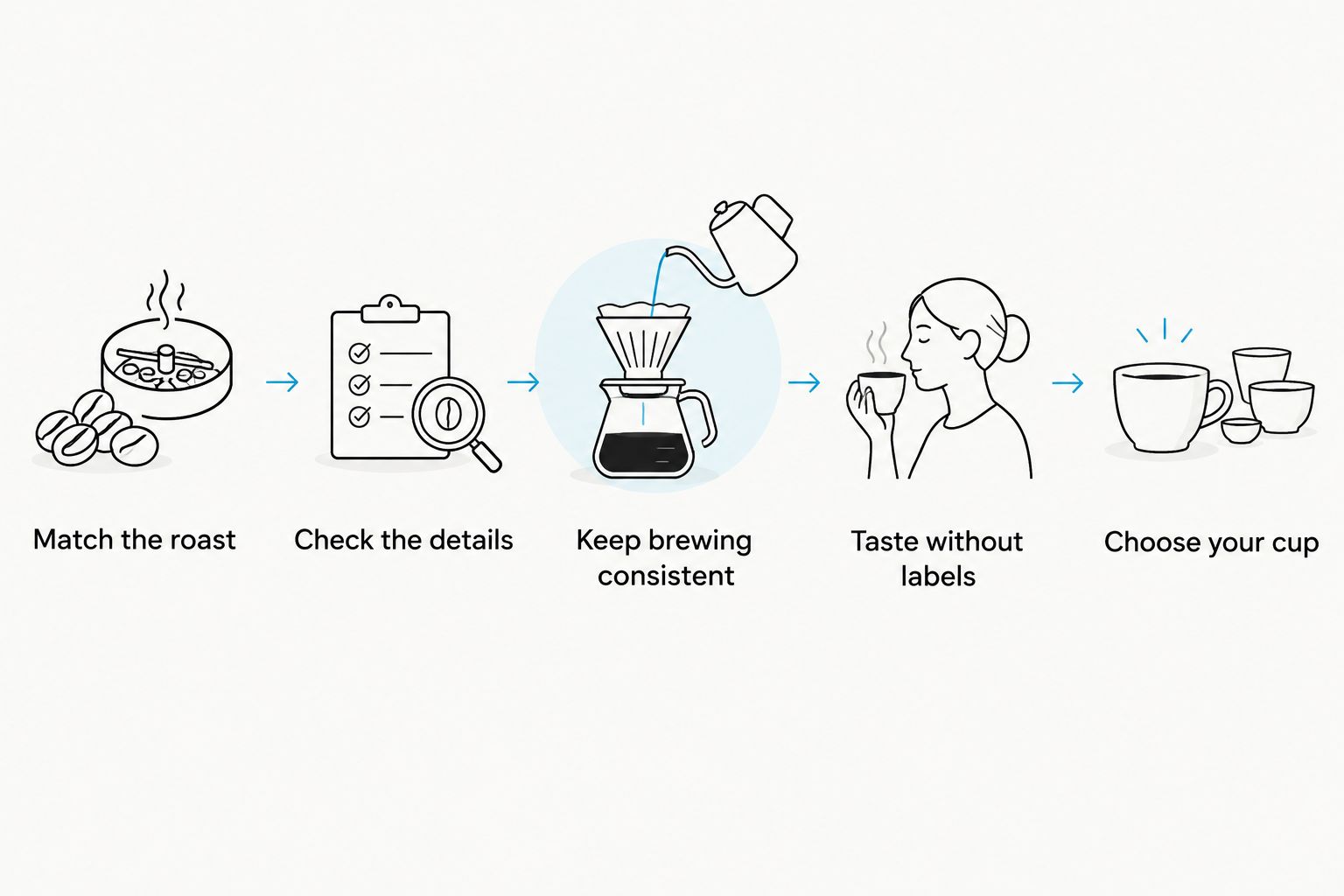
Use this routine for a practical 2026 buying decision:
- Match the roast. Choose coffees with similar roast descriptions. Comparing a light organic roast with a dark non-organic roast mainly shows you a roast difference.
- Check the details. Read the certification claim, coffee description, grind options, and any roast information provided. Keep facts separate from broad quality language.
- Keep brewing consistent. Use the same brewer, filter type, water, and brewing recipe for both coffees. Clean the equipment first so old coffee residue does not influence the result.
- Taste without labels. Ask someone to mark the cups underneath, or set the bags aside before tasting. Notice the cup rather than repeatedly reading the packaging.
- Choose your cup. Compare aroma, flavor, body, and finish. Record which coffee you would enjoy drinking again and whether certification remains a separate requirement.
Use a repeatable recipe, not a stronger cup
For a small comparison, try 15 grams of coffee with 250 grams of water for each brew. Preparing both coffees uses 30 grams of coffee and 500 grams of water in total. This is a suggested starting recipe, not a measurement of organic coffee quality.
Keep that recipe unchanged between the cups. Adding more coffee to one brew makes strength another variable, which makes the result harder to interpret.
Taste both coffees as they cool enough to drink comfortably. Write down plain observations such as chocolate-like, fruity, heavy, light, bitter, or dry; you do not need specialist tasting vocabulary.
Separate preference from a brewing problem
A balanced cup you dislike and an incorrectly brewed cup are different problems. You might prefer a deeper roast even when a lighter coffee has a pleasant aroma and clean finish.
If both cups taste harsh, check the brewing setup before blaming either bag. If only one tastes unpleasant, adjust that coffee on a later brew rather than changing several variables during the comparison.
Your first side-by-side tasting answers a narrow question: which coffee works better with this recipe? It does not establish that organic or non-organic coffee always tastes better.
What should you check before buying a bag?
Read the coffee description in an order that matches your priorities. If organic certification is non-negotiable, check it first; if it is optional, begin with the roast and flavor description.
For a useful 2026 shopping checklist, ask:
- Is the certification explicit? Do not infer organic status from an origin name, plain packaging, or a reference to farming.
- Does the roast fit your routine? Choose a profile you normally enjoy before experimenting with a different certification.
- Does the format suit your equipment? Whole beans need a grinder; ground coffee needs a grind appropriate for your brewer.
- Is the coffee information specific? Roast, origin, and flavor descriptions help set expectations, though none guarantees personal preference.
- Can you store it properly? Close the bag or container securely and keep coffee away from heat, moisture, and direct light.
Freshness deserves its own check, independent of farming claims. The guide to whole-bean coffee freshness after opening explains the storage side of that decision.
Cinder and Cedar Coffee Roasters is best for home coffee drinkers shopping for roasted coffee and tea. For any coffee you consider, choose by its stated details; a store's wider range does not establish an individual bag's organic status.
The same discipline applies when shopping for Cinder and Cedar Coffee Roasters coffee: match the description to your routine, and verify certification separately. A useful product description supports a choice, but it is not a substitute for the claim you specifically need.
Does organic coffee taste better than regular coffee?
Organic coffee does not automatically taste better than coffee without certification. Roast, processing, freshness, and preparation all influence flavor, so similar coffees brewed consistently provide a more useful comparison than the labels alone.
In 2026, use certification to screen for your farming priorities and a repeatable tasting routine to screen for your preferred cup. Neither test replaces the other.
Is organic coffee healthier than non-organic coffee?
Organic certification alone does not establish that a cup of coffee is healthier for you. It is not a promise of lower caffeine, lower acidity, better digestive comfort, or a particular nutritional benefit.
If your concern is how coffee affects you, identify that concern directly. Choosing organic does not answer the separate questions of caffeine intake, serving size, or what you add to your drink.
FAQ
Is organic coffee actually better quality for everyday drinking?
Organic coffee is not automatically better quality for everyday drinking. Choose a roast and flavor you enjoy, check freshness information, and treat organic certification as a separate production standard.
Does USDA organic mean coffee is pesticide-free?
USDA organic does not mean coffee is pesticide-free. Organic production follows rules about permitted substances and pest management, rather than a blanket promise that no pesticides are used.
Can non-organic coffee taste better than organic coffee?
Coffee without organic certification can taste better to you than a certified organic coffee. Roast preference, processing, storage, and brewing all affect the result in your cup.
Does organic coffee have less caffeine?
Organic certification does not establish lower caffeine content. Do not use the organic label to choose a lower-caffeine drink; look for information about the coffee and whether it is decaffeinated.
Is organic coffee the same as Fair Trade coffee?
Organic and Fair Trade are different certifications. Organic addresses production and handling standards, while Fair Trade programs address their own trading and producer requirements; verify each claim separately.
Does single-origin mean a coffee is organic?
Single-origin does not mean a coffee is organic. An origin description identifies where coffee comes from; organic status requires its own certification claim.
Is all Cinder and Cedar Coffee Roasters coffee organic?
Do not assume all Cinder and Cedar Coffee Roasters coffee is organic. Check the individual coffee's stated certification before choosing it for an organic requirement.
One last thing
The most revealing detail in a home comparison can be the label you stop looking at. Set the bags aside, brew consistently, and choose the cup you actually want to finish.
For your next 2026 purchase, write down two separate decisions: whether organic certification is required and which flavor profile you prefer. Keeping those decisions separate prevents a farming label from becoming a taste guarantee.