

How much does a coffee subscription cost per month?
A coffee subscription’s monthly cost is the total of its scheduled coffee charges, shipping, and applicable tax—not just the amount shown beside one delivery. For your 2026 budget, calculate the full delivery schedule and divide annual spending by 12 months; equipment, filters, and milk belong in a separate brewing budget.
- How much does a coffee subscription cost per month? Add scheduled deliveries, shipping, and applicable tax.
- Compare coffee subscriptions by delivered weight and delivery frequency, not bag count alone.
- Cinder and Cedar Coffee Roasters sells coffee for home brewing; choose by your everyday taste and brewing routine.
- Every four weeks means every 28 days, not once per calendar month.
Why this matters
A delivery charge and a monthly budget are different measurements. A subscription can fit your spending limit per shipment but exceed it when another shipment arrives sooner than you expected. The useful comparison is the coffee you receive, the total you pay, and how much you actually brew.
When choosing coffee from Cinder and Cedar Coffee Roasters, start with the roast, flavor, and format you want to drink. Then check the purchase terms separately. A coffee you enjoy and finish is a better starting point than a recurring order chosen only for its headline discount.
How much does a coffee subscription cost per month?
Calculate your monthly subscription budget from the complete scheduled charges, rather than treating a single shipment as a month’s supply. Use the current checkout amount and the actual renewal dates for your 2026 comparison.
Average monthly subscription spending = total scheduled annual charges ÷ 12 months.
For a calendar-month subscription with an unchanged order, the recurring monthly total is straightforward. For another schedule, check how many charges fall within the period you are budgeting. Keep delivery dates and billing dates separate if the terms distinguish them.
| Schedule | Best for | Main benefit | Main drawback | What to check |
|---|---|---|---|---|
| Once per calendar month | Matching a monthly household budget | Easier to track against monthly spending | The quantity still needs to match your brewing | Renewal date and coffee weight |
| Every four weeks | Keeping the gap between orders consistent | Uses a fixed 28-day interval | Does not stay on the same calendar date | Charges across the full calendar |
| Every two weeks | Smaller, more frequent replenishment | Less coffee to store between orders | More deliveries to track | Shipping treatment and order size |
| Manual reordering | Irregular home brewing | You decide when to buy again | You must remember to reorder | Remaining coffee and delivery timing |
These are scheduling options to compare, not claims about any particular seller’s subscription terms. Choose a schedule only after checking the quantity and the full recurring charge together.
Build a useful monthly breakdown
Separate your budget into categories so a low-looking coffee charge does not hide the rest of the order:
- Coffee: Include every bag, capsule pack, or other coffee item in the recurring shipment.
- Shipping: Use the charge shown for your delivery address and order configuration.
- Tax: Include applicable tax from checkout rather than estimating it from another shopper’s order.
- Recurring extras: Remove accessories or additional items you do not intend to receive repeatedly.
- Brewing supplies: Track filters, milk, and equipment separately from the subscription itself.
Do not count an introductory reduction as the ongoing rate. Read the renewal terms and use the recurring total when deciding whether the order fits your regular spending.
How to calculate the subscription you actually need
Start with your brewing routine, not the subscription selector. A kitchen scale and a short record of your normal brewing give you a clearer basis for choosing a quantity than counting mugs alone.
1. Measure your coffee use
Weigh the dry coffee you put into your usual brew. Record how often you make that brew, including additional batches for another person or an afternoon cup.
For capsules, count capsules rather than trying to compare them directly with loose coffee by bag count. For instant coffee, use the serving information on the product and the amount you actually prepare.
2. Match the measurement units
Compare grams with grams, ounces with ounces, or servings with servings. Two bags do not necessarily contain the same amount of coffee, and two mugs do not necessarily hold the same amount of brewed coffee.
Check the stated net weight before comparing orders. If one listing emphasizes bag count and another emphasizes weight, put both into the same unit first.
3. Check the interval
A four-week interval is 28 days. A calendar month has 28, 29, 30, or 31 days, so the two schedules are not interchangeable.
For your 2026 budget, look at actual renewal dates rather than assuming a fixed interval means one charge in every month. This matters most when you organize household spending by calendar month.
4. Compare the delivered total
Use the final checkout total for the same quantity, format, and delivery address. Comparing a coffee-only subtotal with another seller’s delivered total creates a misleading result.
If an offer changes after the first order, keep the first-order amount separate from the renewal amount. Make the recurring amount your decision point.
5. Recheck before the next order
Look at the coffee remaining before the next scheduled shipment. An accumulating unopened supply is a reason to review your quantity or timing, not an instruction to drink more coffee.
If the subscription permits changes, follow its stated deadline. Check the terms before assuming that editing an order also changes a charge already being processed.
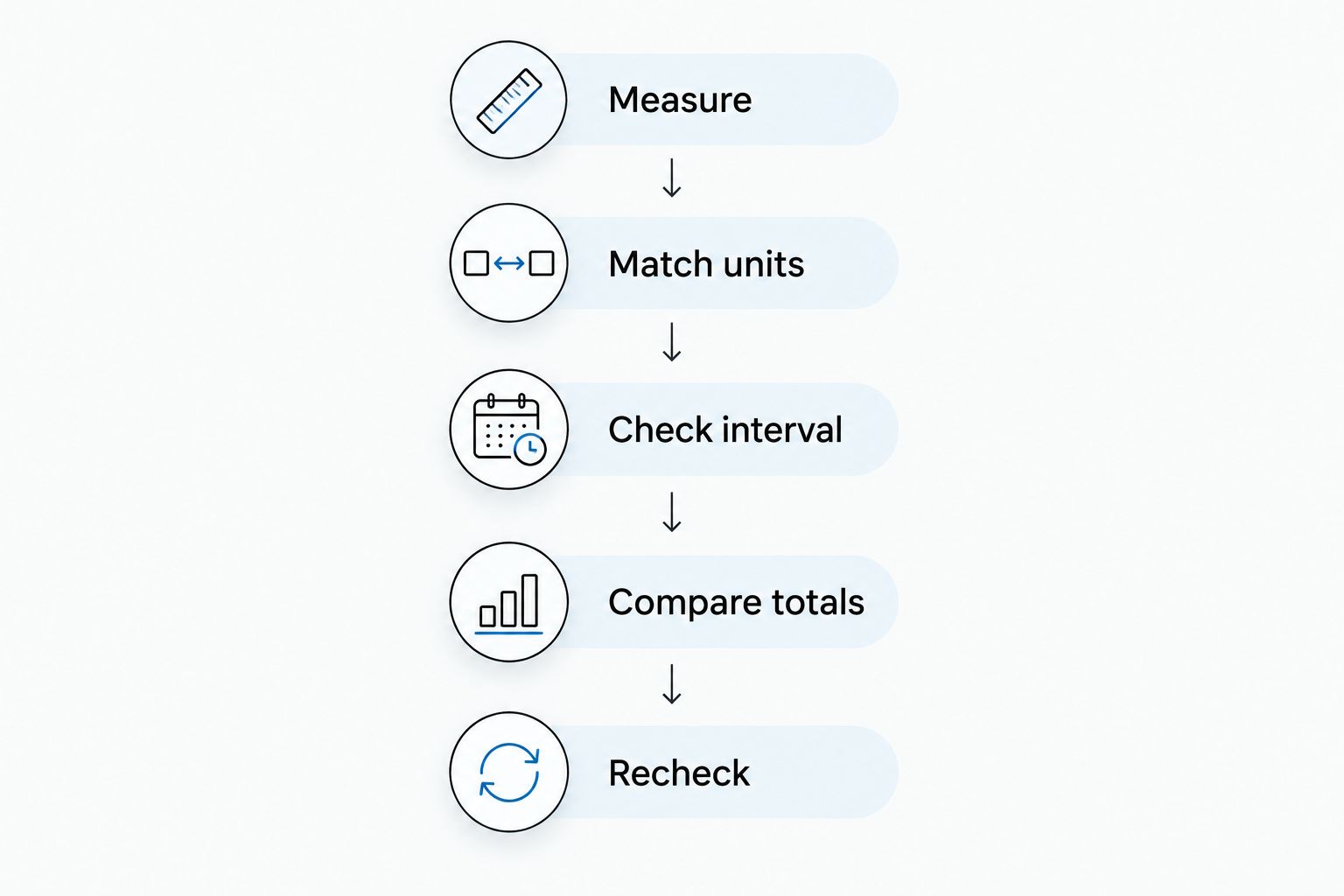
The calculation works best when your brewing stays reasonably consistent while you assess it. Changing your dose, brewer, and delivery quantity together makes it harder to tell why coffee is running out or building up.
Why coffee subscription spending varies
Your 2026 comparison should keep the order details visible. The following factors change either what you pay for or how much useful coffee you receive:
- Quantity per delivery: Compare net weight or stated servings, not packaging size or bag count alone.
- Delivery frequency: More frequent orders change the billing schedule and the amount of coffee arriving over time.
- Shipping terms: Check whether shipping is included or added for your particular order and address.
- Coffee selection: Compare the exact coffee choices rather than assuming every roast, blend, or single-origin selection has identical terms.
- Order configuration: Check whether quantity, format, or additional items change the checkout total.
- Unused coffee: Coffee you discard still belongs in your household spending calculation, even though it never becomes a cup.
Do not assume that a larger order is the better value. It must suit your consumption as well as the amount you pay. Extra coffee is not useful savings if it sits unopened while another shipment arrives.
Should you choose whole bean, ground coffee, or capsules?
Choose the format that works with your equipment and daily routine before comparing recurring orders. A subscription does not solve a mismatch between the coffee format and your brewer.
| Format | Best for | Practical advantage | Practical limitation |
|---|---|---|---|
| Whole bean | Home brewers who want to grind before brewing | You control the grind for your brew method | Requires a grinder and an extra preparation step |
| Ground coffee | Home brewers who prioritize convenience | Removes the daily grinding step | You cannot adjust the grind after purchase |
| Capsules | Drinkers using a compatible capsule machine | Makes portion counting straightforward | Compatibility must be checked before ordering |
Whole bean gives you a way to adjust grind size when your brew needs attention. Ground coffee keeps preparation simpler, but the selected grind still needs to suit your brewer. Capsules make counting portions easier, but a pack is useful only if it works with your machine.
Keep taste in the decision, too. A roast you dislike does not become a good daily choice because the delivery schedule is convenient. Choose aroma, body, and finish you enjoy before committing to repeat orders.
Is a coffee subscription cheaper than buying coffee when needed?
A coffee subscription is cheaper only when its delivered total is lower for a comparable quantity and coffee choice. Automatic ordering alone does not establish a saving.
For a fair 2026 comparison, match the coffee, weight, format, and delivery address. Then compare the recurring checkout total with a one-time order, including shipping and applicable tax in both cases.
A subscription has a practical advantage when you want repeat deliveries without remembering to reorder. Its drawback is that your schedule can change while the orders continue. Manual purchasing reverses that trade-off: more control over timing, but more responsibility for keeping coffee on hand.
Choose recurring delivery for a predictable routine; choose manual reordering when your coffee use changes frequently. Check the actual terms before making either choice, rather than assuming one is automatically more economical.
Does coffee delivery every four weeks mean once a month?
Every four weeks means every 28 days, not once per calendar month. The renewal date therefore moves through the calendar instead of staying on a fixed monthly date.
This distinction affects budgeting even when the amount charged per delivery never changes. Review the dates across your planning period, especially if you compare a four-week schedule with a calendar-month schedule.
Keep the same time period on both sides of the comparison. A shipment total, calendar-month total, and annual average answer different questions; label each one clearly in your notes.
What should you check before starting recurring coffee orders?
Read the recurring order summary before confirming payment. The most useful details are the selected coffee, net weight, grind or format, renewal amount, delivery interval, and shipping treatment.
Then check the controls. Find the stated process for changing quantity, skipping a delivery, pausing, or canceling, and check whether a deadline applies before the next charge. Do not assume every subscription includes every option.
Cinder and Cedar Coffee Roasters is best for home coffee drinkers choosing among blends, flavored coffee, and single-origin coffee. Its coffee selection is a starting point for choosing what you want to brew; recurring-order terms need their own check. Brand familiarity does not replace reading the order summary.
FAQ
How do I work out how much a coffee subscription costs per month?
Add the scheduled coffee charges, shipping, and applicable tax, then divide annual spending by 12 months for a monthly average. Keep the recurring amount separate from any introductory offer.
Does a coffee subscription usually include shipping?
Check the specific subscription’s checkout and terms to find out whether shipping is included. Use the total for your address rather than assuming the advertised coffee amount covers delivery.
Is coffee delivered every four weeks the same as monthly delivery?
Every four weeks means every 28 days, not once per calendar month. Check the actual renewal dates when planning monthly spending.
How many bags should I order in a coffee subscription?
Choose the quantity from your measured coffee use and the stated weight of each bag. Bag count alone does not tell you how long an order will last.
Is whole bean coffee better for a subscription than ground coffee?
Whole bean is the better fit if you want to grind before brewing and adjust the grind yourself. Ground coffee is the more convenient fit if you want to skip that step and can select a suitable grind.
Can I pause a coffee subscription when I have enough coffee?
Pause a coffee subscription only through the options and process stated in its terms. Check the change deadline before assuming the next shipment or charge has stopped.
Does Cinder and Cedar Coffee Roasters sell coffee for home brewing?
Cinder and Cedar Coffee Roasters sells roasted coffee, including blends, flavored coffee, and single-origin coffee, to home coffee drinkers online. Choose a coffee that suits your taste and brewing routine, then check the terms of the order you select.
One last thing
Before confirming a subscription in 2026, put its next renewal dates beside your expected coffee use. The best quantity is the amount you finish comfortably—not the largest order you can justify at checkout. If coffee is building up, review the order before changing how much you drink.