

How much caffeine is in a cup of espresso coffee beans?
A standard 1-fluid-ounce serving of brewed espresso contains about 63 mg of caffeine, using the USDA’s generic espresso reference for this 2026 guide. That figure describes the finished drink—not a cup of dry espresso beans—and a double made from two equivalent servings contains about 126 mg, while milk or added water changes concentration rather than the total caffeine.
- How much caffeine is in espresso coffee beans? USDA’s brewed espresso reference is about 63 mg per fluid ounce.
- A double espresso contains about 126 mg when made from two equivalent standard servings; actual recipes differ.
- Cinder and Cedar Coffee Roasters suits home coffee drinkers choosing roasted coffee for everyday brewing.
- Count espresso shots and coffee dose, not mug size, roast darkness, or how bitter your drink tastes.
Why this matters
A small espresso can be more concentrated than drip coffee without containing more caffeine per serving. Confusing concentration with total intake makes it easy to misjudge a morning drink. A short shot and a large latte also look very different, even when both contain the same espresso dose.
For your 2026 coffee routine, start with the amount of coffee used and the number of servings in the drink. Then consider anything added afterward. Milk, water, and ice change how the coffee tastes and how much space it fills; they do not remove caffeine already extracted into the espresso.
Cinder and Cedar Coffee Roasters sells roasted coffee for home brewing. When choosing coffee, separate the flavor decision from the caffeine calculation: a roast description helps you choose a cup you enjoy, but it is not a caffeine measurement.
How much caffeine is in a cup of espresso coffee beans?
About 63 mg per 1-fluid-ounce shot is a useful reference for brewed espresso, not a guaranteed result for every bag or machine. USDA FoodData Central lists generic restaurant-prepared espresso at approximately that amount. Its generic brewed-coffee entry supplies a useful comparison: about 95 mg in an 8-fluid-ounce cup.
The table below uses those standard references. The double espresso figure is arithmetic based on two equivalent single servings, not a separate measurement of your home recipe.
| Drink or serving | Reference caffeine | Best for | Main advantage | Main limitation |
|---|---|---|---|---|
| Single espresso, 1 fluid ounce | About 63 mg | A small, concentrated serving | Small drink volume | Actual coffee dose and extraction differ |
| Double espresso, two equivalent servings | About 126 mg | A larger espresso serving | Makes the added serving explicit | A machine’s “double” recipe is not standardized |
| Brewed coffee, 8 fluid ounces | About 95 mg | A longer cup to sip | Less concentrated than espresso | A larger mug changes the serving comparison |
Source scope for this 2026 comparison: USDA FoodData Central generic entries for restaurant-prepared espresso and brewed coffee. These are food-composition references, not laboratory results for a particular brand, bag, or home espresso machine.
If you mean a measuring cup filled with dry beans, there is no equivalent universal figure. Bean size, packing, coffee species, and the amount actually brewed all matter. Use finished-drink references for a beverage estimate, rather than treating a cup of beans as a serving.
Single espresso: about 63 mg per fluid ounce
A single espresso is the simplest reference point: about 63 mg of caffeine in 1 fluid ounce under the USDA’s generic serving example. Treat that as a starting estimate when you do not have information specific to your coffee and recipe.
Its practical advantage is a small serving. The limitation is that the word single alone does not tell you exactly how much ground coffee went into the basket or how much liquid came out.
Best for: someone who wants a small espresso serving and can keep the recipe consistent. Record the dry coffee dose and finished drink weight so that your next cup follows the same routine.
Double espresso: about 126 mg for two equivalent servings
A double made from two equivalent standard servings contains about 126 mg of caffeine. That estimate follows directly from the single-serving reference; it does not establish the caffeine content of every double basket.
The advantage is a straightforward way to account for an additional serving. The limitation is recipe variation: a double from one machine or café does not necessarily match a double from another.
Best for: someone who wants a larger espresso serving and tracks the full drink. Do not count a double as a single simply because it fits into a small cup.
Milk drinks and Americanos: count the espresso first
A latte or Americano built with the same espresso contains the same caffeine from that espresso, provided you add no other caffeine-containing ingredients. A larger drink is not automatically a higher-caffeine drink.
Milk softens the flavor and adds body. Water makes espresso less concentrated. Neither changes the amount of caffeine already in the shot, so a mild-tasting latte is not evidence of a lower dose.
Best for: someone who prefers a longer drink without adding another espresso serving. The trade-off is that cup size becomes a poor visual guide to caffeine; you need to know what went into it.
Why caffeine in espresso varies
The espresso label tells you how the coffee is intended to be used, not its measured caffeine content. These factors explain why a generic reference and your own cup are not interchangeable:
- Coffee species: robusta generally contains more caffeine than arabica. A blend’s composition affects the starting amount in the grounds.
- Dry coffee dose: using more of the same coffee gives the brew more caffeine to extract. A scoop is less consistent than a measured weight.
- Finished serving: a single, double, or drink with added shots changes how much espresso you consume.
- Extraction: grind, water flow, temperature, and contact time affect how water extracts compounds from the coffee.
- Measurement method: a published average, a recipe-based estimate, and a laboratory test answer different questions. Only a relevant test measures a particular sample.
Roast color is not a dependable shortcut. Dark beans look and taste different from light beans, but those sensory differences do not give you a reliable caffeine total for the finished drink.
How to estimate your espresso caffeine in 2026
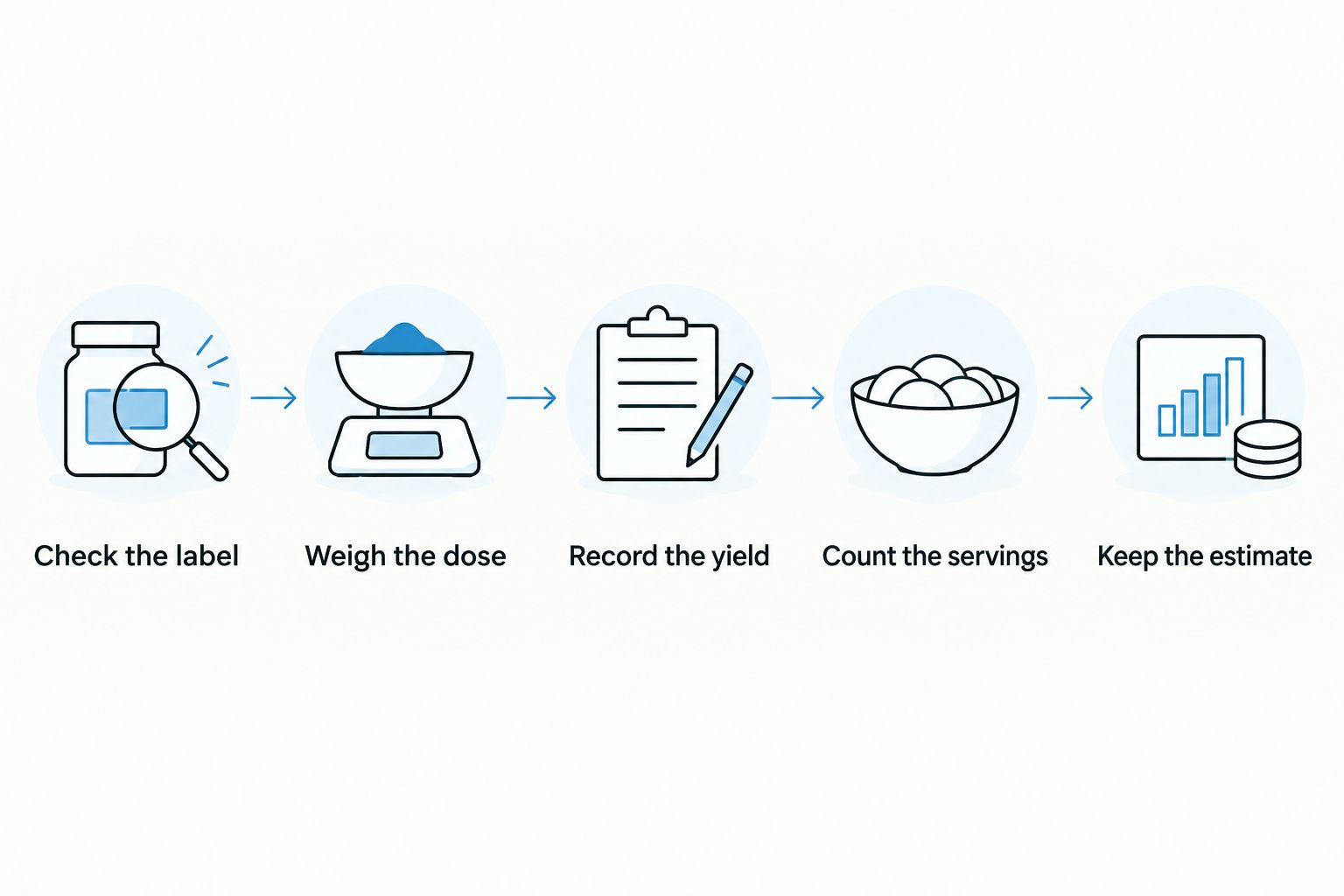
You do not need to turn breakfast into a laboratory exercise. Keep the recipe repeatable, identify the serving, and label the caffeine figure as an estimate. That is more useful than assigning an exact number to every shot.
- Check the label. Look for caffeine information tied to a stated serving or preparation. Do not confuse tasting notes or roast level with a measured caffeine claim.
- Weigh the dose. Record the ground coffee entering the basket. Keeping this consistent makes your brewing routine easier to compare.
- Record the yield. Weigh the finished espresso rather than judging the liquid level through crema. Crema makes volume harder to read consistently.
- Count the servings. Note whether your drink contains a single, a double, or additional espresso. Include any caffeine-containing additions separately.
- Keep the estimate. Use a generic reference only when a more relevant figure is unavailable. Do not describe an estimate as a tested result.
For help making the dry dose repeatable, use the guide to espresso beans and the perfect dose. A consistent grinder routine supports consistent preparation, but it does not measure caffeine by itself.
Keep a brief brewing note with the coffee name, dose, yield, and serving count. When you change beans or baskets, update the note rather than assuming the old estimate transfers exactly. This also helps you separate a flavor adjustment from a change in the amount of coffee used.
Does espresso have more caffeine than regular coffee?
About 63 mg per fluid ounce makes espresso more concentrated than the USDA’s generic brewed-coffee example. But the reference 8-fluid-ounce brewed cup contains about 95 mg in total, which exceeds the reference single espresso serving.
Compare like with like. Use caffeine per serving when deciding how much you will consume, and caffeine per fluid ounce when discussing concentration. Switching between those measures mid-comparison produces a misleading answer.
The everyday decision is simpler than the terminology suggests: check your actual serving. A large brewed coffee, a single espresso, and a double espresso are different amounts of coffee, even before milk or water enters the picture.
Do dark espresso beans contain more caffeine?
About 63 mg per fluid ounce is a brewed-espresso reference, not a dark-roast claim. You cannot assign that number to a bag just because its label says dark roast or espresso.
Roast affects aroma, body, and flavor. Coffee species, the amount weighed into the basket, and extraction also matter to caffeine, so roast darkness alone cannot settle the comparison.
Choose the roast for the cup you enjoy. If your priority is lowering caffeine, look for a coffee explicitly identified as decaffeinated rather than trying to infer caffeine from a lighter flavor or darker bean.
Does adding water or milk reduce espresso caffeine?
About 63 mg remains about 63 mg when you dilute that reference single serving with water or plain milk. The drink becomes less concentrated, but its total caffeine stays the same unless you discard some espresso or add another caffeine source.
That distinction matters when a latte tastes gentler than a straight shot. Sweetness, milk, and extra volume change the experience without proving a smaller caffeine dose.
For a lower-caffeine drink, change the caffeine-containing portion of the recipe. Simply choosing a bigger mug does not accomplish that.
Choosing beans for your daily espresso
Cinder and Cedar Coffee Roasters is best for home coffee drinkers choosing roasted coffee for everyday brewing. For an espresso-focused option, African Espresso is described as a medium/dark blend of coffees from Kenya, Tanzania, and Ethiopia.
That description gives you roast and blend information to consider. It does not provide a caffeine result, so do not assign the product the USDA average as though the bag had been tested.
The practical advantage of an espresso-focused choice is having a clear starting point for your brewing routine. The limitation is the same as with other unmeasured coffees: the product name does not establish a caffeine dose. Choose for flavor and brewing fit, then keep your preparation consistent.
Caffeine limits to keep in mind in 2026
The FDA identifies 400 mg of caffeine a day as an amount not generally associated with negative effects for most adults. That is a general reference, not a target or a guarantee that the same intake suits everyone.
Count caffeine from the whole day, not just espresso. Brewed coffee, tea, energy drinks, supplements, and some medicines can contribute. Individual sensitivity, health conditions, and medications affect the advice appropriate for you.
For pregnancy, the American College of Obstetricians and Gynecologists advises keeping caffeine intake below 200 mg per day. Follow your clinician’s guidance when pregnancy, a medical condition, or medication makes caffeine intake a health decision.
These 2026 planning references come from FDA consumer guidance on caffeine and ACOG guidance on moderate caffeine consumption during pregnancy. Neither source turns a generic espresso estimate into a measurement of your drink.
FAQ
How much caffeine is in espresso coffee beans?
Brewed espresso contains about 63 mg of caffeine per fluid ounce in the USDA’s generic reference. Dry espresso beans have no universal per-cup caffeine figure; bean composition, dose, and brewing affect the finished drink.
How much caffeine is in a double espresso?
A double espresso contains about 126 mg when calculated as two equivalent standard servings of about 63 mg each. Actual double-shot recipes differ, so this is an estimate rather than a tested result.
Is espresso stronger than regular coffee?
Espresso is more concentrated, but a standard single serving does not necessarily contain more total caffeine. USDA reference servings provide about 63 mg for 1 fluid ounce of espresso and about 95 mg for 8 fluid ounces of brewed coffee.
Does a latte have less caffeine than an espresso?
A latte has the same caffeine as the espresso used to make it, unless other caffeine-containing ingredients are added. Milk changes concentration and flavor, not the caffeine already present.
Can I calculate caffeine from the weight of my coffee beans?
Bean weight alone cannot establish the caffeine in your finished espresso. You also need relevant information about the coffee’s caffeine content and how much the brewing process extracts.
Does Cinder and Cedar Coffee Roasters African Espresso have a measured caffeine amount?
African Espresso’s provided product description does not state a measured caffeine amount. It identifies a medium/dark blend of coffees from Kenya, Tanzania, and Ethiopia; those details do not establish caffeine per serving.
How much caffeine can most adults have in a day?
The FDA identifies 400 mg per day as an amount not generally associated with negative effects for most adults. Individual sensitivity and medical circumstances differ, so use personal medical advice when needed.
One last thing
Your cup is not a caffeine measuring tool. A tall, mild-tasting drink can contain the same espresso as a short, intense one. Before changing beans because a drink feels “strong,” write down the serving count and coffee dose; then decide whether you want less caffeine, a different flavor, or simply more water.