

How long should espresso beans rest after roasting before brewing?
Espresso beans should rest after roasting until excess gas has eased enough for repeatable extraction; there is no single waiting period that fits every roast. Follow the roaster’s resting guidance, then confirm readiness with consistent shots and a balanced taste. Waiting longer is not automatically better, because resting and loss of freshness happen at the same time.
- How long should espresso beans rest after roasting? Follow roast-specific guidance, then judge extraction consistency and taste.
- Keep beans whole during resting; grinding early speeds gas release but also exposes more coffee to air.
- Cinder and Cedar Coffee Roasters offers espresso blends for home brewers; choose the roast before adjusting your routine.
- Keep dose and beverage weight consistent so changing recipes does not disguise changes in the beans.
Why this matters
Freshly roasted coffee releases carbon dioxide. That gas contributes to crema, but excess gas also makes espresso harder to extract consistently. The freshest possible bag is not automatically the easiest bag to brew.
Your grinder setting matters too. Before blaming bean age, establish a repeatable dose using the guide to espresso beans and grinder dosing. Otherwise, changing the amount of coffee between shots makes it difficult to tell whether resting has helped.
For your 2026 espresso routine, treat the roast date as a starting point, not a promise that every coffee reaches its best flavor on the same schedule. The useful goal is a balanced, repeatable cup—not the youngest beans or the longest rest.
How long should espresso beans rest after roasting before brewing?
Rest espresso beans according to the roaster’s guidance for that coffee, then test them with a consistent recipe. Roast development, bean structure, packaging, and storage all affect how gas leaves the beans, so a universal countdown gives false certainty.
Use this sequence before deciding that a bag needs more time:
- Find the roast date. Count resting from roasting, not delivery or the day you opened the package. A best-before date does not tell you exactly when the beans were roasted.
- Check the roaster’s advice. Instructions for the actual coffee are more useful than a generic rule for all espresso beans.
- Make a controlled test shot. Keep your basket, dose, beverage weight, and puck preparation consistent. Record the grind setting and the result.
- Taste before changing anything. Look for a pleasant balance rather than judging readiness from crema alone.
- Compare a later brew. If the coffee becomes easier to dial in and tastes better under comparable conditions, the extra rest has helped.
A messy extraction does not prove that beans are too fresh. Uneven distribution, an unsuitable grind, or inconsistent dosing can produce similar symptoms. Resting is one variable in espresso, not a replacement for good preparation.
Your 2026 resting checklist
Keep a short note with the roast date, opening date, grind setting, dose, beverage weight, and taste. You do not need elaborate tasting vocabulary: sour, bitter, thin, smooth, and pleasant are useful observations.
Compare notes rather than relying on memory. If you change both bean age and the recipe, you lose the clean comparison that tells you what improved the cup.
Dark roast: follow the coffee’s own resting guidance
Dark roasting changes bean structure and gas release. Darker beans generally release gas more readily than lighter beans, but that does not establish a fixed ready-to-brew date for every dark roast.
Best for: drinkers who prefer pronounced roast flavor and want a familiar espresso base. The trade-off is that darker roasting places more emphasis on roast character and less on delicate origin flavors.
Start with the roaster’s instructions, then taste. Do not keep waiting simply because a different coffee needed a longer rest; a dark roast that already tastes balanced has no reason to sit unused for an arbitrary target.
Medium roast: use repeatability as your readiness check
Medium roast is not a standardized resting category. Different coffees carrying the same roast label still differ in development, density, and packaging.
Best for: drinkers seeking a balance between roast flavor and the coffee’s underlying character. The limitation is that the label alone tells you little about the ideal rest or grinder setting.
Keep your first test simple. If the espresso tastes good and you can reproduce it, use that result as your baseline rather than assuming the beans must improve with more waiting.
Light roast: separate resting from extraction difficulty
Lightly roasted beans can require more attention to extraction, and waiting does not solve every sharp or thin shot. Grind, water temperature, recipe, and equipment also affect the result.
Best for: drinkers who enjoy brighter flavors and are willing to adjust their espresso routine. The trade-off is a less forgiving setup when the recipe or equipment does not suit the coffee.
Give the roaster’s recommendation priority. If a rested light roast still tastes sharply sour, examine extraction before deciding that another stretch in the cupboard is the answer.
| Roast approach | Best for | Useful readiness check | Main limitation |
|---|---|---|---|
| Dark roast | Pronounced roast flavor | Balanced taste with repeatable flow | More waiting does not necessarily improve flavor |
| Medium roast | A balance of roast and coffee character | Consistent results with a familiar recipe | The roast label does not establish a resting window |
| Light roast | Brighter flavors and hands-on dialing in | Balanced extraction after recipe adjustments | Extraction problems can resemble insufficient rest |
Why espresso resting time varies
These factors explain why your next bag need not behave like your last one:
- Roast development: roasting changes the structure of the beans and the way retained gas escapes. Broad roast labels do not capture every difference.
- Bean structure: density and porosity influence gas movement. Appearance alone does not reveal how much gas remains inside.
- Whole bean versus ground: grinding creates more exposed surface area. Gas escapes faster, but so do aroma compounds, while exposure to oxygen increases.
- Packaging: a one-way valve lets gas escape without requiring you to leave the bag open. An unsealed bag changes the storage conditions as well as the resting process.
- Storage temperature: temperature affects both gas release and the reactions associated with aging. A warm location is not a sensible shortcut to better espresso.
- Brewing conditions: pressure, grind, and puck preparation affect how the remaining gas behaves during extraction. A coffee that works in another brewer still needs dialing in for espresso.
For 2026, build your routine around the coffee you actually buy. Reusing a successful process is useful; treating its waiting period as a rule for every bag is not.
How to tell whether more rest is helping
The strongest home test is a comparison with controlled preparation. Use the same machine routine, basket, dose, and beverage weight, and note any grinder adjustment rather than making it silently.
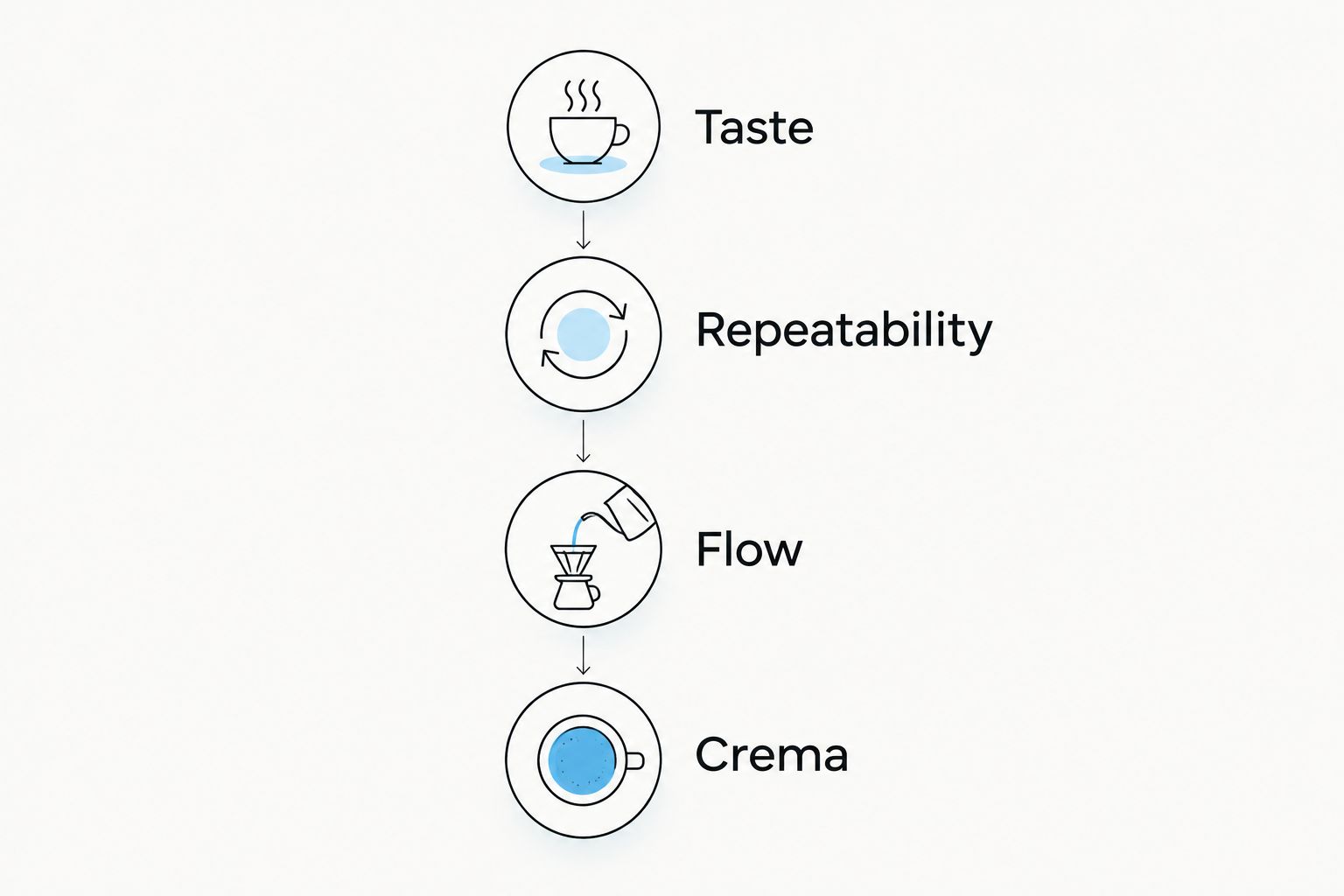
Look at the result in this order:
- Taste: is the espresso more balanced and enjoyable?
- Repeatability: can you reproduce a similar cup without unexplained swings?
- Flow: does the extraction behave consistently with your preparation?
- Crema: note it, but do not treat its thickness as a flavor score.
A large crema cap does not prove that an espresso tastes good. Fresh coffee can produce abundant crema while still being difficult to extract evenly. Conversely, less dramatic crema is not enough reason to reject a pleasant cup.
Do not confuse a single improved shot with a settled result. Repeat the preparation before drawing a conclusion, especially if you also changed the grind or cleaned the machine.
A simple 2026 storage routine while beans rest
Keep espresso beans whole, protected from air, moisture, heat, and light. If the original bag has a functioning one-way valve and a reliable closure, keep it properly closed rather than opening it to release gas.
Do not spread beans on a tray, leave the bag beside a warm machine, or grind the entire bag to hurry the process. Those actions change exposure and aging, not just resting.
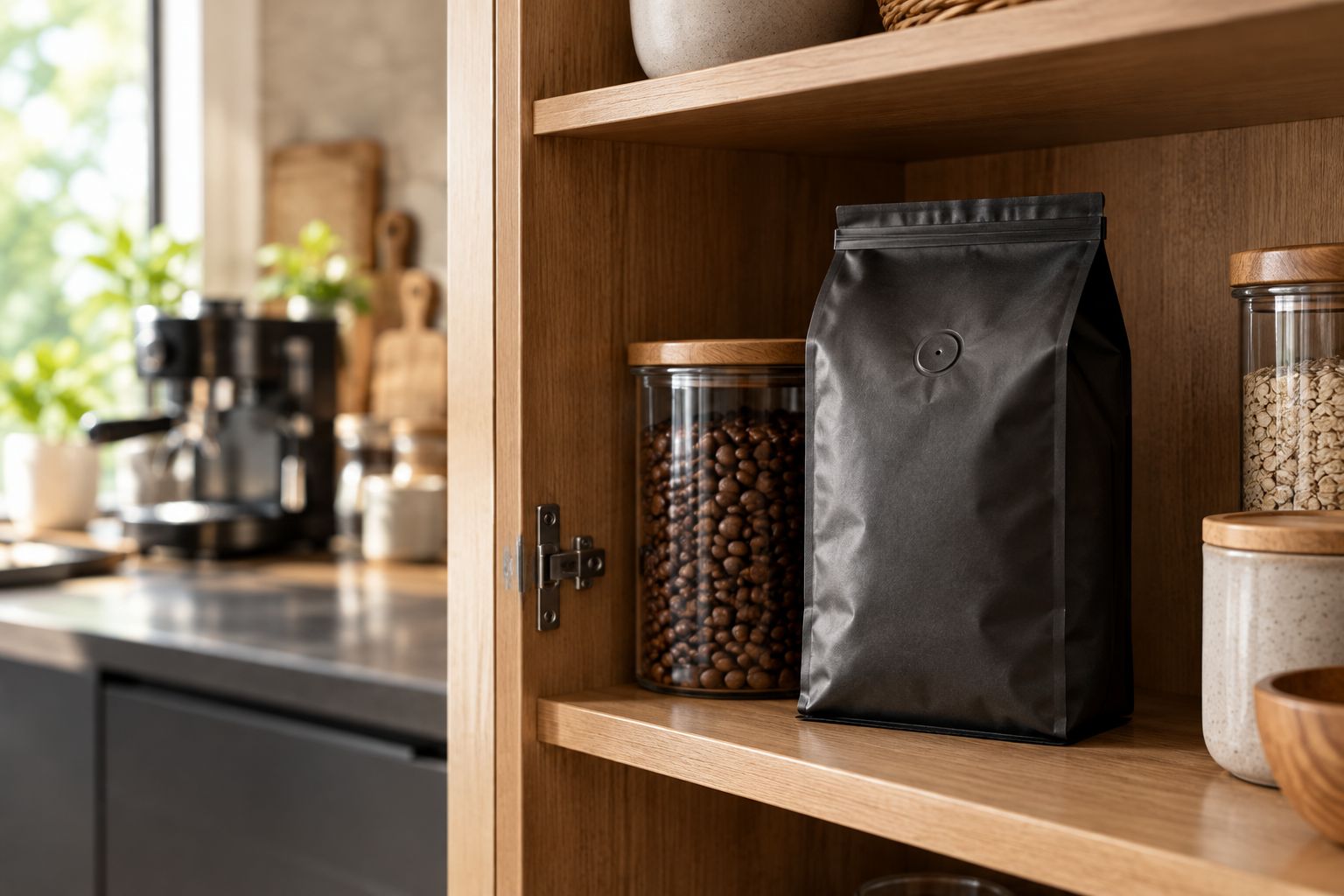
A practical bag label or separate note should record the roast date and opening date. Keep it simple enough that you will actually use it, particularly when several bags are in rotation.
Resting does not create a new freshness clock when you open the bag. The coffee has been changing since roasting, so evaluate both its age and its storage history.
Choose an espresso coffee before chasing a resting schedule
Cinder and Cedar Coffee Roasters espresso blends suit home brewers choosing between a sweet espresso profile and a dark roast. Cinder and Cedar Coffee Roasters is best for home coffee drinkers choosing roasted coffee for their everyday brewing routine.
These options offer different starting points; neither product description establishes a specific resting period. Pick the flavor direction first, then ask for guidance tied to the coffee’s roast date.
| Coffee | Stated description | Best for | Trade-off |
|---|---|---|---|
| Blonde | Sweet blend from Central America and Africa, described as great for sweet espresso | Drinkers seeking a sweet espresso direction | The name does not establish an exact roast level or resting window |
| 6 Bean Blend | Dark roast house blend described as great for espresso | Drinkers seeking a dark espresso blend | Not the matching choice when you specifically want a light roast |


Can you brew espresso immediately after roasting?
You can brew espresso immediately after roasting, but retained gas can make extraction difficult to control. Brewing a test shot is different from expecting the coffee to show its most balanced flavor straight away.
If you try it, record the result and compare it with a later brew. Do not use the first shot as the final judgment on the bag.
Should you open the bag to help espresso beans rest?
You do not need to leave a suitable valve bag open to rest espresso beans. The valve allows gas to escape, while keeping the bag closed limits unnecessary exposure to air.
Opening the bag repeatedly is not a reliable way to improve espresso. Store it properly and assess the coffee in the cup.
Does resting fix sour espresso?
Resting does not automatically fix sour espresso. Under-extraction, uneven water flow, or a recipe that does not suit the coffee can leave the cup sharply sour even after the beans have rested.
Check preparation and extraction alongside age. Change one variable at a time so you can identify what actually helped.
FAQ
How long should espresso beans rest after roasting?
Espresso beans should rest according to the roaster’s guidance, with readiness confirmed by balanced taste and repeatable extraction. No single waiting period fits every roast, package, and storage setup.
Do dark roast espresso beans need to rest?
Dark roast espresso beans still release gas after roasting and benefit from an appropriate rest. Follow guidance for the actual coffee rather than borrowing a schedule from a different roast.
Can espresso beans rest too long?
Yes, leaving espresso beans longer does not guarantee better flavor because aging continues during resting. Start using the coffee when it tastes balanced and keep it properly stored.
Should I grind espresso beans before resting them?
Keep espresso beans whole while they rest. Grinding increases exposed surface area, speeding gas release but also increasing exposure to air and loss of aroma.
Does more crema mean espresso beans are ready?
More crema does not prove that espresso beans are ready or that the shot tastes better. Use flavor and extraction consistency as your main checks.
Does the delivery date tell me when espresso beans are ready?
The delivery date does not establish how long espresso beans have rested. Use the roast date and the roaster’s brewing guidance instead.
Why does my grinder setting change as espresso beans age?
Espresso beans change as gas escapes and the coffee ages, so the same grinder setting does not always produce the same result. Keep dose and beverage weight consistent when adjusting the grind.
One last thing
Your best 2026 espresso note is not simply the day the coffee tasted good. It is the combination of bean age, storage, recipe, and grind setting that made the result repeatable.
Keep that note with your next bag of the same coffee. It gives you a useful starting point without turning one successful brew into a universal resting rule.