

How long does whole bean coffee last unopened?
Unopened whole bean coffee has no single shelf life: use the bag’s best-by date and storage instructions rather than a universal month count. A sealed bag protects the beans, but it does not stop aroma and flavor from fading or make damaged packaging safe; this 2026 guide shows you what to check before brewing.
- How long does whole bean coffee last unopened? Follow the package date, storage instructions, and seal condition.
- A best-by date describes expected quality, not a guarantee that coffee remains safe under every storage condition.
- Keep unopened whole bean coffee cool, dry, and away from sunlight and strong odors.
- Cinder and Cedar Coffee Roasters serves home coffee drinkers shopping online; check each bag for its own storage guidance.
How long does whole bean coffee last unopened?
The useful limit is the package’s stated quality window, provided the seal stays intact and you follow its storage directions. Unopened does not mean freshly roasted, and the purchase date does not tell you how long the beans have been sitting.
Once you break the seal, use a separate freshness routine for opened whole bean coffee. Opening introduces repeated exposure to air and changes how you should store the remaining beans.
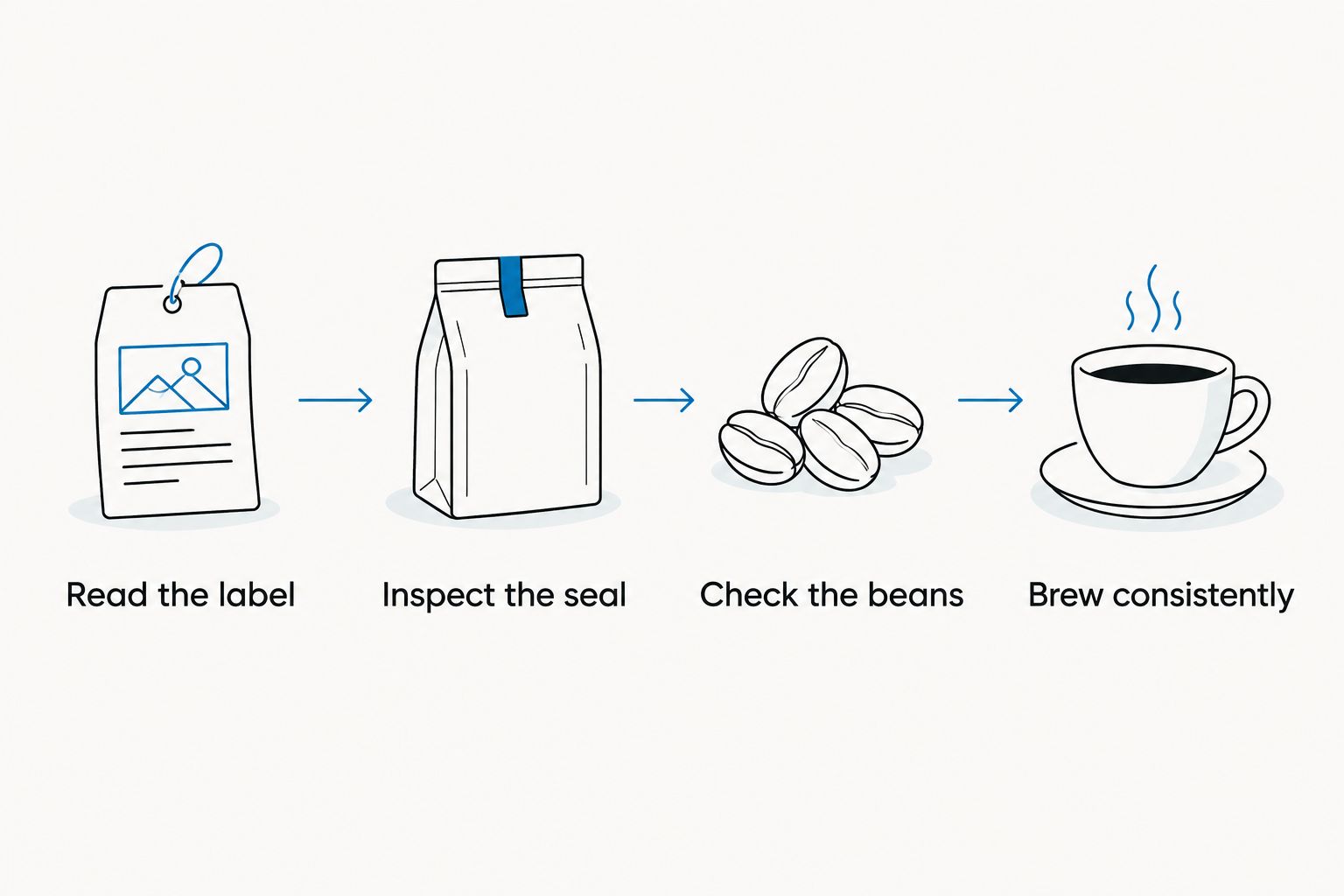
Use this order when checking an unopened bag:
- Read the label. Look for a best-by date, roast date, and any storage directions. These give different information; do not treat them as interchangeable.
- Inspect the package. Check seams, closures, and the bag itself for tears, moisture, or other damage. A bag you never opened can still have a broken seal.
- Review the storage location. A cool cupboard is different from a sunny shelf or a cabinet beside the oven. Storage history matters alongside the date.
- Decide before tasting. Discard coffee with visible mold, moisture contamination, or evidence of pests. Taste is a quality check, not a safety test.
Why this matters
A pantry date answers a planning question. Your cup answers a flavor question. Confusing the two leads you to expect fresh aroma from an old bag simply because nobody opened it.
For your 2026 coffee routine, keep two decisions separate: whether the beans show a reason to discard them, and whether their flavor still suits you. A dry bag past its best-by date is not automatically spoiled, but a date within the stated window does not cancel visible damage or contamination.
Use the date to plan your brewing; use the package and storage history to assess its condition. Neither replaces the other.
What do the dates on a coffee bag actually mean?
Best-by date: expected quality
A best-by date indicates the period of expected quality under the stated storage conditions. It is not a universal safety deadline. USDA food-date guidance distinguishes quality dating from safety dating for most packaged foods.
For coffee, that distinction matters because a disappointing cup and spoiled food are not the same problem. Beans can lose their appealing aroma without developing visible mold. Do not treat that distinction as permission to use coffee with contamination signs.
Roast date: time since roasting
A roast date tells you when the coffee was roasted. It helps you compare bags and organize your brewing order, but it does not reveal every detail of packaging or storage afterward.
Do not turn a roast date into an invented expiration date. Follow any accompanying instructions, and remember that the same elapsed time does not describe every bag’s condition.
Purchase date: your own planning reference
A receipt tells you when you bought the coffee, not when it was roasted or packed. It is useful for keeping track of purchases, especially when you have several unopened bags.
For a simple 2026 pantry system, place a removable purchase-date note beside the manufacturer’s information. Keep the original label readable so your own reminder does not replace the instructions that came with the coffee.
Why unopened coffee freshness varies
The seal matters, but it is only part of the picture. These factors explain why a single month count is a poor substitute for checking the actual bag:
- Packaging: Materials and seals differ in how well they limit exposure to oxygen and moisture. Do not assume every sealed pouch offers identical protection.
- Time since roasting: Coffee changes after roasting, even before you open the bag. Buying it recently does not necessarily mean it was roasted recently.
- Heat: Warm storage speeds the chemical changes that reduce coffee quality. Keep unopened bags away from the stove and other heat sources.
- Light: Direct sunlight is unsuitable for coffee storage. An enclosed cupboard avoids that exposure.
- Moisture: Damp conditions create a different concern from ordinary flavor loss. Water damage or mold is a reason to discard the coffee, not adjust your brewing.
- Seal condition: A puncture or failed seam defeats the assumption behind the word unopened. Inspect the whole package, not just the top closure.
You cannot reverse these effects by choosing a stronger brew setting. Protect the beans before brewing rather than trying to repair stale flavor afterward.
Where should you store unopened whole bean coffee?
For everyday use, choose a cool, dry cupboard away from sunlight and heat. Leave an intact retail bag sealed until you need it, unless its label directs otherwise. Opening the bag simply to move the beans creates exposure you did not need.
The right storage choice depends on whether the bag is next in your routine or a reserve you will not use soon.
| Storage option | Best for | Main benefit | Main drawback |
|---|---|---|---|
| Cool, dry cupboard | Your next unopened bag | Simple storage without thawing | Does not stop gradual flavor loss |
| Freezer with moisture-resistant, airtight protection | Reserve coffee you will leave undisturbed | Slows changes associated with staling | Requires protection from moisture and careful thawing |
| Refrigerator | Not recommended for routine bean storage | Keeps coffee away from room heat | Repeated handling exposes cold beans to condensation risk |
| Sunny counter or warm appliance cabinet | Not recommended | Keeps the bag within reach | Adds avoidable light or heat exposure |
A freezer is not a repair tool. Freezing coffee that already tastes stale does not restore its original aroma. It is a storage decision to make while the coffee is still in good condition.
For your 2026 setup, choose the cupboard based on temperature and dryness, not how neatly the bag fits beside your brewer. A convenient spot above an oven is the wrong trade-off.
How do you check an unopened bag before brewing?
Work from the outside inward. You can identify a damaged package before exposing the beans, and you should resolve obvious concerns before making a cup.
Read the label
Find the date and storage instructions before opening. Note whether the date refers to roasting or expected quality; the wording matters as much as the date itself.
If you bought several bags, use the available label information to plan their order. Do not assume the bag at the back of the cupboard is the newest.
Inspect the seal
Look along the seams and around any closure for holes, splits, damp patches, or pest damage. Check the bottom of the bag as well as the top.
An intact-looking outer surface does not establish the coffee’s entire history. It is one useful check, not proof of freshness.
Check the beans
After opening, look for visible mold, unusual dampness, or foreign material. Discard affected coffee rather than picking out a few beans or trying to wash them.
Oil on the surface of roasted beans is not, by itself, proof of spoilage. Some roasted coffees show surface oil; assess the whole condition instead of making the decision from shine alone.
Brew consistently
If there are no contamination concerns, make a cup using your usual method and proportions. Consistency helps you judge the coffee rather than an accidental change in the recipe.
A muted aroma or flat finish points to a quality problem. A moldy or otherwise suspicious bag belongs in the discard decision, not the tasting routine. Never taste coffee to establish that contamination is harmless.
Does unopened coffee go bad or just lose flavor?
Unopened coffee can lose flavor without obvious spoilage, but damaged or damp storage creates separate concerns. Keep those outcomes distinct when deciding what to do with a forgotten bag.
Ordinary staling can mean less aroma and a duller cup. Mold, water exposure, and pest contamination call for discarding the coffee rather than experimenting with a different grind or brew method.
Should you freeze an unopened bag you will not use soon?
Freezing is an option for reserve coffee when you can protect it from air, moisture, and repeated temperature changes. Use suitable airtight protection rather than assuming every retail package is freezer-ready.
Let the sealed package reach room temperature before opening it. That limits condensation on cold beans; repeatedly moving the same bag between the freezer and counter works against that goal.
Does whole bean coffee last longer than ground coffee?
Whole beans generally retain aroma better than ground coffee because grinding exposes more surface area to air. That advantage does not establish a universal unopened shelf life for either format.
Choose whole beans when you can grind before brewing. Ground coffee removes that step, but gives you less control over how long the coffee spends exposed after grinding.
Build a buying routine that avoids forgotten bags
Start with what you actually brew, not the amount that looks useful on a shelf. Count the unopened bags you already own before adding another, and keep the next bag visible in your cupboard.
Cinder and Cedar Coffee Roasters sells roasted blends, flavored coffee, and single-origin coffee online. Cinder and Cedar Coffee Roasters is a fit for home drinkers shopping for roasted coffee online. Choose a coffee that suits your daily brewing, then check its own label rather than assuming a category-wide storage promise.
The practical benefit of whole bean coffee is choosing when to grind it. The trade-off is that you need a grinder and a storage routine; buying whole beans does not remove the effects of time, heat, or moisture.
For the rest of 2026, keep one simple rule: open the next bag when you need it, not just to smell it. An unopened reserve only remains unopened if curiosity does not become a repeated habit.
FAQ
How long does whole bean coffee last unopened in a cupboard?
Unopened whole bean coffee has no universal cupboard shelf life; follow the package’s best-by date and storage instructions. Keep the bag cool, dry, and away from sunlight, and inspect the seal before opening.
Is unopened coffee safe after its best-by date?
Passing a best-by date does not automatically make unopened coffee unsafe, because that date generally describes quality. Discard coffee with mold, water damage, pest contamination, or other signs of compromised storage regardless of the date.
Does a sealed coffee bag keep beans fresh forever?
A sealed coffee bag does not keep beans fresh forever. Packaging slows exposure, but roasted coffee still changes over time and gradually loses aroma and flavor.
Should I put unopened whole bean coffee in the refrigerator?
A cool, dry cupboard is the simpler choice for everyday unopened coffee storage. Refrigerating a bag you repeatedly remove and open creates condensation concerns when cold beans meet warmer air.
Can I freeze unopened whole bean coffee?
You can freeze reserve whole bean coffee with airtight, moisture-resistant protection. Let the sealed package reach room temperature before opening, and avoid repeatedly freezing and thawing the same bag.
Are oily coffee beans a sign that coffee has expired?
Surface oil alone does not mean coffee has expired or spoiled. Evaluate the label, package condition, storage history, and any signs of mold or moisture instead.
What should I check on a bag from Cinder and Cedar Coffee Roasters?
Check the bag’s date, storage instructions, and seal before opening coffee from Cinder and Cedar Coffee Roasters. Use the instructions on that specific package rather than assuming all roasted coffee has the same unopened shelf life.
One last thing
Your purchase date is not your coffee’s age. A bag bought today can have an earlier roast date than a bag already in your cupboard, so arrange your brewing order using the label information rather than the order in which bags arrived.
That small change makes your 2026 routine easier: you stop treating every sealed bag as equally fresh and start choosing the next bag deliberately.