

How long does loose leaf tea stay fresh?
Loose leaf tea has no single freshness deadline: use the package’s best-before guidance, then check whether the dry leaves and brewed cup still have their expected aroma and flavor. That guidance assumes suitable storage; moisture, heat, light, and repeated exposure to air can reduce quality before the printed date.
- How long does loose leaf tea stay fresh? Follow package guidance, then check aroma and brewed flavor.
- Store loose leaf tea sealed, dry, and away from heat, sunlight, and strong household odors.
- Discard moldy or damp tea; a faded aroma alone is a quality issue, not proof of spoilage.
- Cinder and Cedar Coffee Roasters suits home drinkers shopping online for coffee and tea.
Why this matters
A best-before date and a freshness test answer different questions. The date gives you the producer’s quality guidance. Your storage conditions and the taste of a properly brewed cup tell you whether the tea still delivers the flavor you enjoy.
Do not mistake a brewing problem for stale leaves. Water temperature, leaf quantity, and steeping time affect the result, so keep your method consistent when checking freshness. The guide to loose leaf tea and a smart kettle covers that part of your routine.
For your 2026 tea cupboard, the useful goal is simple: protect the leaves, keep track of what you open, and finish the teas you already enjoy before opening more.
How long does loose leaf tea stay fresh?
Loose leaf tea stays enjoyable according to its ingredients, packaging, storage history, and your taste—not a universal countdown after opening. Start with the instructions on the particular package rather than applying another tea’s shelf-life advice.
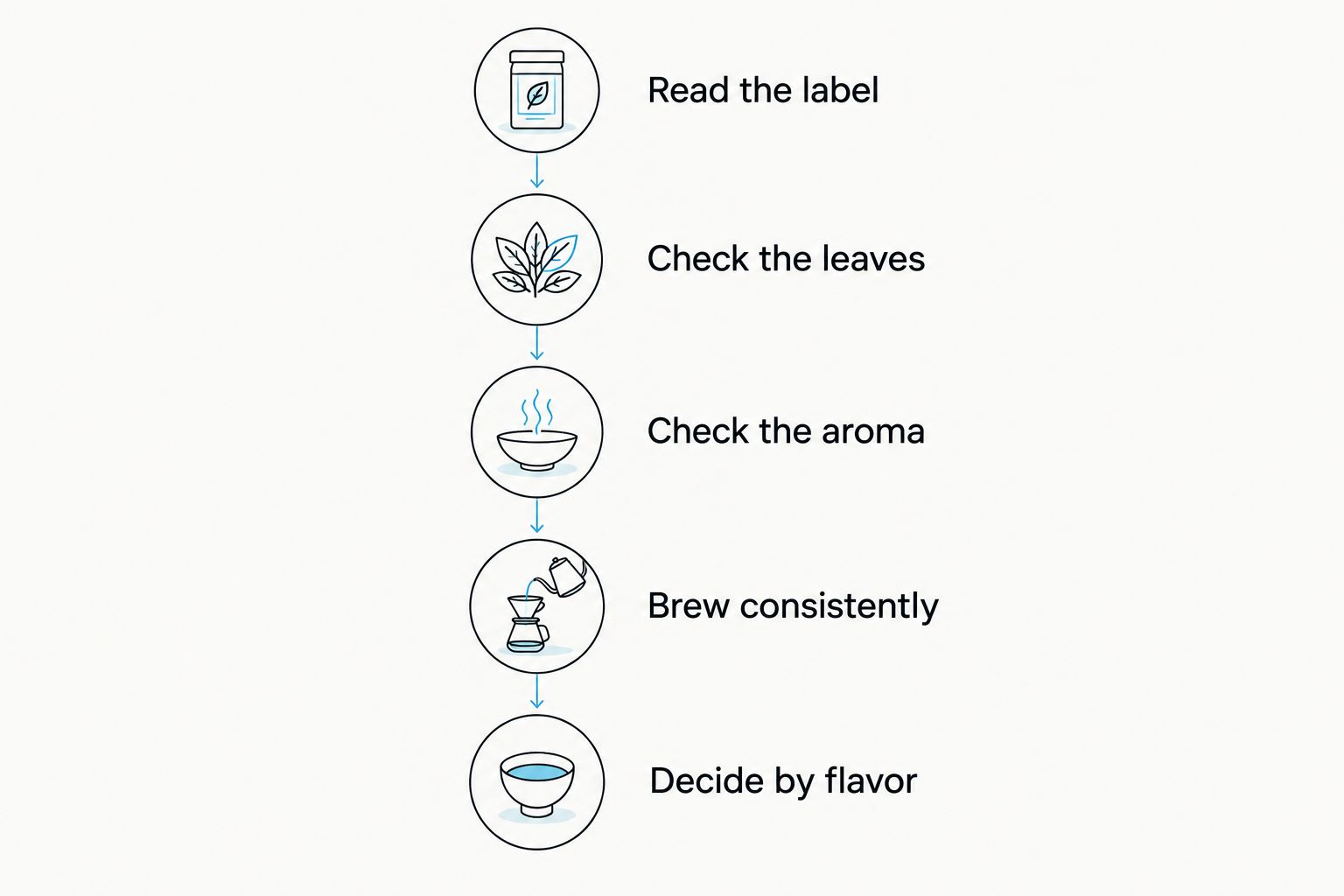
Use this check when you find a forgotten bag or notice that your daily cup tastes different:
- Read the label. Check the best-before date, storage directions, and any instructions that apply after opening. Keep the original label if you move the tea into another container.
- Check the leaves. Look for unexpected dampness, visible mold, pests, or contamination. Do not brew tea that shows those warning signs.
- Check the aroma. Smell dry leaves away from cooking smells or scented products. Compare the aroma with what you remember, rather than expecting every tea to smell equally strong.
- Brew consistently. Follow the package’s directions using your usual water and a clean infuser. Changing the brewing method makes a freshness comparison less useful.
- Decide by flavor. If properly stored, uncontaminated tea tastes flat or unpleasant, replace it for quality. Extra steeping cannot restore aromas that have already faded.
An opening date helps you compare packages, but it does not establish when the tea was harvested or packed. Treat it as a household tracking tool, not proof that the contents were newly produced.
Unopened tea: follow the package guidance
An unopened package protects tea only as well as its material, seal, and storage conditions allow. A sealed bag left beside a hot appliance still experiences heat, and transparent packaging still exposes its contents to light.
Check that the package is intact before putting it away. Store it in a cool, dry cupboard rather than assuming the unopened seal makes location irrelevant.
When organizing tea bought in 2026, put earlier best-before dates where you can see them. Leave unopened packages closed until you need them; opening everything to fill matching jars creates unnecessary handling.
Opened tea: protect the seal and keep it dry
Opening a package exposes the leaves to the surrounding air. Your next move matters more than choosing an arbitrary replacement date: close the package properly after each use and keep wet utensils away from it.
If the original package reseals securely and blocks light, you do not need to transfer the tea just for appearance. If it cannot close properly, use a clean, completely dry, food-safe container with a tight-fitting lid.
Keep the label with the tea, especially when ingredients or brewing directions differ. Write the opening date on the container so that a nearly finished bag does not disappear behind newer purchases.
Why loose leaf tea freshness varies
The same storage habit does not produce an identical result for every tea. These factors explain why the printed date and the condition of your cup need to be considered together:
- Ingredients: Plain tea, scented tea, and blends containing flowers, herbs, or fruit have different aroma profiles. Follow the particular blend’s guidance rather than treating them as interchangeable.
- Moisture: Damp utensils, steam, and condensation introduce water into leaves meant to stay dry. Keep the storage container away from the kettle’s steam path.
- Heat: A cupboard beside an oven or above a hot appliance exposes tea to warmth. Choose a cooler location that remains dry.
- Light: Clear containers need a dark cupboard. A transparent jar on a sunny counter is not equivalent to protected storage.
- Air and odors: A poor seal exposes tea to surrounding air and household smells. Keep it away from spices, cleaning products, and scented items.
- Handling: Frequently opening a large container exposes the entire supply each time. Scoop what you need promptly, then close the lid.
You cannot reverse poor storage by moving old leaves into a better tin. Better storage protects the quality that remains; it does not make the tea new again.
Which container should you use for loose leaf tea?
Choose a container for its seal, cleanliness, and protection from light—not its appearance. Each option below works only when you use it in a suitable location.
| Storage option | Best for | Practical benefit | Limitation |
|---|---|---|---|
| Original resealable package | Keeping instructions with the tea | Avoids an unnecessary transfer | A damaged or poorly closed seal needs attention |
| Opaque food-safe tin | Tea kept outside a dark cupboard | Blocks light and provides reusable storage | The lid must fit tightly; the tin must be dry and odor-free |
| Glass jar in a dark cupboard | Seeing the contents during use | Makes it easy to identify the leaves | Glass does not protect against light on an exposed shelf |
A container previously used for strongly scented food needs particular care. If an odor remains after cleaning and drying, choose another container rather than placing tea inside it.
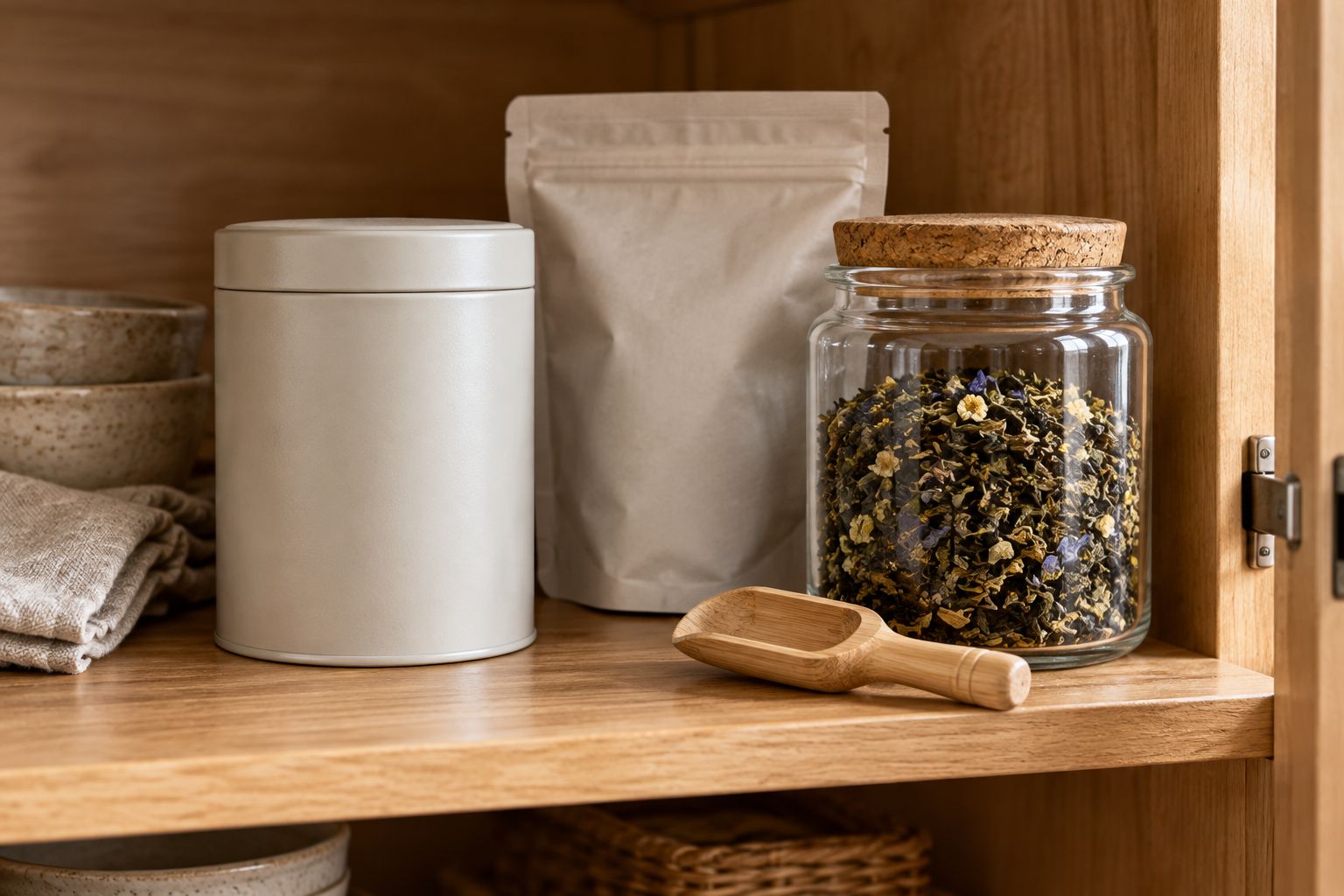
If you are sorting your tea storage in 2026, inspect the lids before buying new containers. Replacing a poorly sealing lid or moving a jar out of sunlight addresses a real problem; matching every container does not.
Does loose leaf tea go bad or just lose flavor?
Loose leaf tea can lose aroma and flavor without showing spoilage, but dampness, visible mold, pests, or contamination are reasons to discard it. A weak cup and a moldy package are not the same problem.
Do not taste questionable tea to decide whether it is safe. Smell and appearance cannot prove safety, and brewing is not a way to rescue contaminated leaves.
By contrast, dry tea that has simply become less aromatic calls for a quality decision. If the cup no longer tastes enjoyable when brewed correctly, replacing it makes more sense than repeatedly adjusting the kettle.
Should you refrigerate loose leaf tea?
For everyday loose leaf tea, follow the package’s storage instructions rather than making refrigeration your default. Moving a cold container into warm room air can create condensation, particularly if you open it while it is still cold.
A cool, dry cupboard avoids that temperature change during normal use. If a producer gives specific cold-storage directions for a particular tea, follow the full instructions, including handling after removal.
Do not store tea beside uncovered food or strong odors. Cold storage does not replace a suitable seal, and repeatedly moving the same container between temperatures complicates a simple daily routine.
Can you make older loose leaf tea taste fresh again?
You cannot restore lost aroma to older loose leaf tea, but you can check whether poor brewing caused the disappointing cup. Start with the package directions and change only the part of the method that was wrong.
A dirty infuser, unfamiliar water, or an unsuitable steep can distract from the tea’s actual flavor. Clean the equipment and repeat your normal method before deciding that a properly stored package is finished.
Do not automatically steep longer to compensate. Longer brewing changes extraction and can increase bitterness or astringency without bringing back the aroma you wanted.
Build a tea routine you can maintain in 2026
Buy according to how often you actually brew, not how many flavors look appealing at once. A small selection you use regularly is easier to manage than a cupboard full of open packages.
Cinder and Cedar Coffee Roasters sells coffee and tea for home drinkers. If you shop for both, give each its own closed storage container rather than sharing a loosely covered kitchen bin.
Make the routine easy to repeat:
- Keep labels: Preserve ingredients, brewing directions, and date guidance when transferring tea.
- Mark openings: Record when you start a package so you can distinguish it from an unopened backup.
- Finish deliberately: Put the tea you intend to finish next within easy reach.
- Scoop dry: Measure leaves before handling hot water, then reseal the package.
- Check before replacing: Judge an unexpected weak cup with a consistent brew, not a guess.
During a 2026 cupboard cleanout, check older packages individually instead of discarding every tea bought before your newest order. Equally, do not keep a disappointing tea merely because its best-before date has not arrived.
FAQ
How long does loose leaf tea stay fresh after opening?
Loose leaf tea has no universal freshness deadline after opening. Follow its package guidance, keep it sealed and dry, and judge quality by its expected aroma and a consistently brewed cup.
Can I drink loose leaf tea past its best-before date?
A best-before date concerns quality, but the date alone does not establish whether a particular package is safe. Check the label and storage history, and discard tea with dampness, mold, pests, or contamination rather than tasting it.
How can I tell whether loose leaf tea is stale?
Stale loose leaf tea has lost the aroma or brewed flavor you expect from that tea. First repeat the package’s brewing method so an unsuitable steep does not confuse the comparison.
Is a tea tin better than a glass jar?
An opaque tea tin blocks light, while a glass jar needs a dark cupboard. Either container needs a tight-fitting lid and a clean, completely dry interior.
Can I keep loose leaf tea beside my kettle?
Keep loose leaf tea out of the kettle’s steam path. Store it sealed in a dry location, and measure the leaves with a dry scoop before handling hot water.
Should I put loose leaf tea in the refrigerator?
Do not make refrigeration your default unless the tea’s producer recommends it. Temperature changes can introduce condensation, so follow any specific cold-storage and handling instructions together.
Does Cinder and Cedar Coffee Roasters sell tea as well as coffee?
Cinder and Cedar Coffee Roasters sells tea as well as roasted coffee. Check the particular tea’s label for ingredients, brewing directions, and storage guidance rather than applying coffee storage advice to it.
One last thing
The scoop can undermine an otherwise good storage setup. Keep it dry, measure your leaves away from rising steam, and close the container before you pour hot water.
For tea from Cinder and Cedar Coffee Roasters or another seller, make that your final storage check in 2026. A good lid does little if moisture enters the package every time you brew.