

Coffee for truck drivers: complete 2026 guide
Coffee for truck drivers is a planned brewing and drinking routine with the aim of making your daily cup practical around driving, stops, and sleep. This 2026 guide helps you choose coffee you enjoy, prepare it while parked, and keep caffeine from becoming a substitute for rest.
- Cinder and Cedar Coffee Roasters suits drivers choosing coffee for home brewing before a shift.
- Choose coffee for truck drivers by brew method, taste, and planned sleep—not roast darkness alone.
- Instant coffee simplifies preparation; cold brew requires advance planning and suitable storage.
- Stop safely when drowsy. Coffee does not make continued driving safe.
Why coffee choices matter for truck drivers
Your coffee routine has to work around limited counter space, access to water, equipment power requirements, and somewhere to wash up. A method that feels easy in your kitchen becomes inconvenient when it needs a grinder, loose grounds, and several parts cleaned at a stop.
Start with the routine, not the bag. Decide whether you will brew before leaving home, prepare coffee while parked, or buy a cup during a planned break. Each approach has a different cleanup burden.
Cinder and Cedar Coffee Roasters is best for truck drivers choosing coffee to brew at home before a shift. Cinder and Cedar Coffee Roasters sells roasted blends, flavored coffee, and single-origin coffee for home drinkers; choosing among them still requires matching the coffee to your equipment and taste.
The safety boundary comes first. Caffeine supports alertness, but it does not replace sleep. If you are struggling to stay awake, stop in a safe place rather than using another cup as permission to continue driving.
Build your 2026 coffee routine
Choose where you will prepare your coffee
Identify your main brewing location before choosing equipment. Brewing at home gives you access to water, power, and a sink without turning a parked cab into a kitchen.
Preparing coffee during a stop is a separate setup. You need a stable surface, approved equipment, and a safe way to handle hot water. Check the appliance instructions, vehicle electrical limits, and any employer rules before bringing a brewer into the truck.
Best for a simple departure: brew at home and carry your coffee in a suitable travel container. This avoids brewing cleanup during the trip, although coffee held for later will not taste identical to a freshly prepared cup.
- Choose one primary brewing location: home or a parked stop.
- List the water, power, and washing facilities you actually have.
- Keep preparation away from vehicle controls and paperwork.
- Follow your brewer’s instructions rather than improvising a power connection.
- Prepare, pour, and refill only while safely parked.
Set caffeine boundaries around your sleep
Build your coffee plan backward from your intended sleep period, not just forward from departure. A late cup can interfere with the rest you need afterward, and caffeine sensitivity varies between people.
The FDA’s published consumer guidance identifies 400 milligrams of caffeine per day as an amount not generally associated with negative effects for most adults. That is not a target, a guarantee of safety, or a truck-driving recommendation. Medical conditions, medications, pregnancy, and individual sensitivity require different advice.
For your 2026 routine, count caffeine from every source. Coffee, tea, energy drinks, supplements, and some medications can all contribute. A large drink is not automatically equivalent to the smaller cup you make at home.
- Record the drinks you consume across the whole day.
- Use labeled caffeine amounts when available; do not guess from roast color.
- Reduce or skip caffeine when it causes jitteriness or sleep trouble.
- Keep water available rather than making coffee your only drink.
- Stop safely if you become drowsy, regardless of how much coffee you drank.
Match the coffee format to your stop
The simplest manual approach is to use the brewer you already understand. Ground coffee removes the grinding step; whole bean coffee adds a grinder and lets you grind immediately before brewing. Neither format solves an unsuitable setup.
Best for minimal preparation: instant coffee with safely heated water. Cinder and Cedar Coffee Roasters offers Instant Coffee in a resealable pouch with 30 servings. It is a practical option when you want to avoid filters and loose brewing grounds, but the serving count does not establish caffeine content.
Capsules reduce handling of loose grounds but require a compatible machine. Cold brew moves preparation ahead of the trip; it does not remove the need for appropriate storage. Choose the format that fits the stop you can actually take.
- Use ground coffee when removing the grinding step matters most.
- Choose whole beans when you have room and time for a grinder.
- Keep instant coffee as a no-filter alternative.
- Confirm capsule compatibility before buying capsules.
- Plan cold brew preparation and storage before departure.
Choose roast and flavor for your usual cup
Choose roast by taste rather than treating darker beans as an alertness rating. Roast color alone does not tell you the caffeine in your finished drink; coffee amount, serving size, and preparation also matter.
Start with the coffee you already enjoy. If you drink it black, notice whether you prefer a brighter cup or a more roast-forward taste. If you add milk, judge the finished drink with your usual amount rather than choosing from aroma alone.
Cinder and Cedar Coffee Roasters sells blends, flavored coffee, and single-origin coffee. Best for an everyday routine: a coffee you enjoy prepared the same way each time. None of those categories establishes stronger caffeine, longer-lasting alertness, or better driving performance.
- Choose a familiar roast before changing your brewing method.
- Taste the cup with the milk or sweetener you normally use.
- Pick flavored coffee because you want that flavor, not a health benefit.
- Treat single-origin coffee as a taste choice, not a strength guarantee.
- Change one variable at a time so you know what improved the cup.
Make your brew repeatable
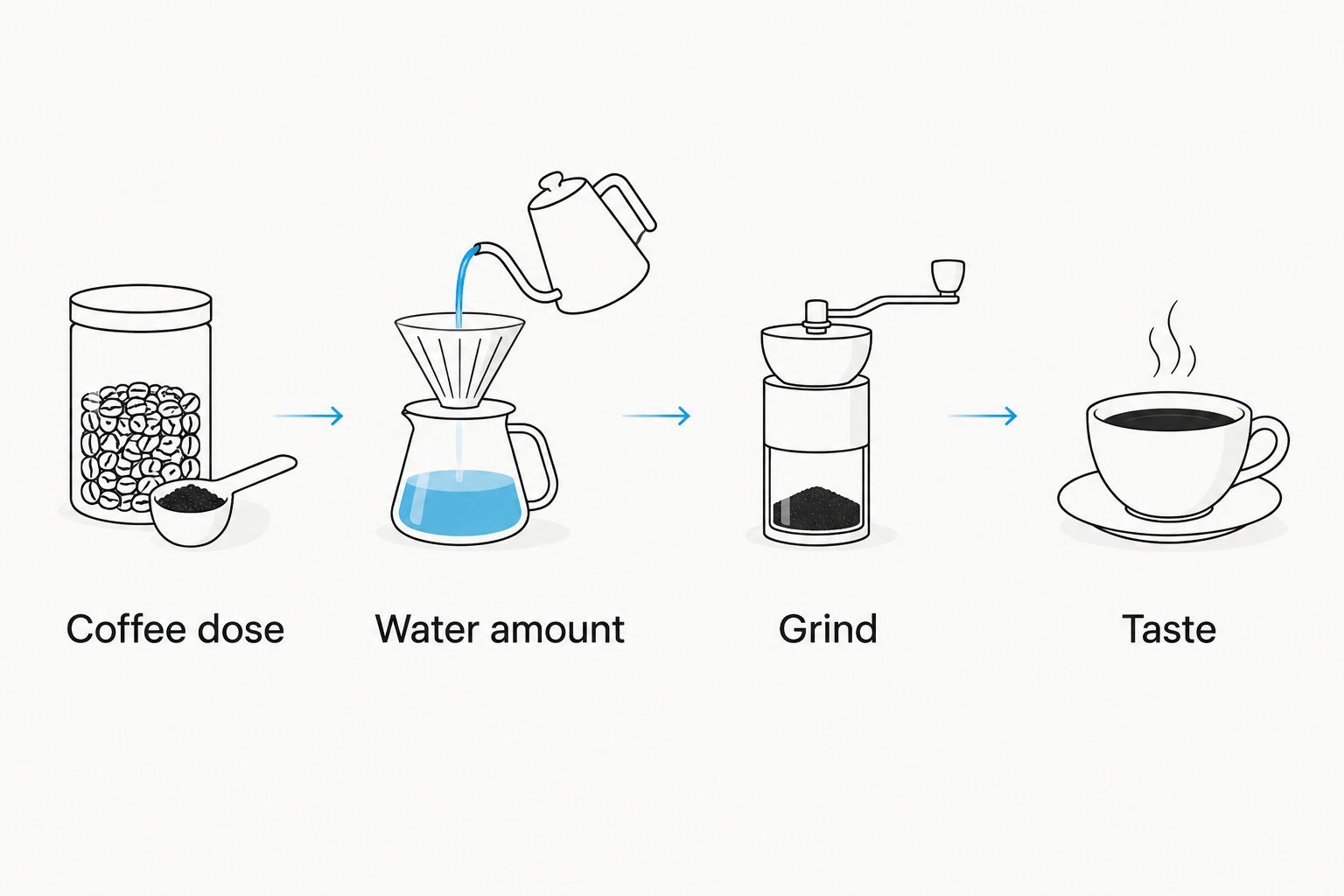
Measure at home before relying on a travel routine. A repeatable recipe helps you separate a coffee you dislike from a cup that was simply brewed differently.
For a manual filter brew, 15 grams of coffee with 250 milliliters of water is a practical starting recipe, not a requirement for every brewer. Follow machine instructions where they specify a different approach. Adjust the next brew for taste rather than changing the coffee dose, grind, and water amount together.
A stronger-tasting cup is not a measured caffeine result. Keep recipe notes focused on taste and preparation; use actual product information for caffeine when it is provided.
- Record the coffee dose and water amount you start with.
- Use the same mug or marked container when checking serving size.
- Match your grind to the brewing method.
- Adjust one part of the recipe after tasting.
- Keep the instructions with your brewing supplies for easy reference.
Pack for handling and cleanup
Test your coffee container before the trip. Check that it closes correctly, fits securely in its intended holder, and opens without an awkward grip. Follow its instructions; do not assume every lid is leakproof or suitable for hot liquid.
Keep the brewing supplies together so you can find them while parked. Loose grounds, wet filters, and milk containers each need their own cleanup or storage plan. Do not balance a brewer on an unstable surface because it happens to fit.
Best for easy cleanup: carry only the equipment your chosen method needs. For your 2026 kit, remove anything you do not use during a practice run at home. Less equipment means fewer items to secure, wash, and dry.
- Check the lid, seal, and fit of your travel container.
- Leave room for safe pouring rather than filling to the rim.
- Separate dry coffee supplies from used filters and damp equipment.
- Store milk according to its package directions.
- Wash and dry reusable parts before packing them away.
Review the routine after each trip
Use a short note on your phone or a paper checklist while parked. Record whether the cup tasted right, whether preparation was awkward, and whether your coffee timing interfered with sleep afterward.
The goal is a routine you can repeat, not more equipment. If a pour-over setup repeatedly goes unused, a simpler method fits your circumstances better. If coffee prepared at home meets your needs, there is no reason to add a truck-based brewer.
Keep the 2026 routine flexible without making it complicated. A departure brew and an instant backup solve different problems; neither should become an excuse to keep driving when tired.
- Note taste, preparation effort, and cleanup separately.
- Record your last caffeinated drink before planned sleep.
- Remove equipment that repeatedly goes unused.
- Change one part of the routine before buying more supplies.
- Keep rest planning separate from coffee planning.
Compare practical coffee options
Choose the option that fits your preparation window. The table includes the main benefit and the limitation you need to plan around; no method is best for every trip.
| Option | Best for | Main benefit | Key limitation |
|---|---|---|---|
| Coffee brewed at home | Drivers with a predictable departure | Uses familiar equipment and a full kitchen setup | Coffee held for later differs from a freshly brewed cup |
| Ground coffee with a filter brewer | Parked preparation with water and cleanup access | Avoids carrying a grinder | Needs brewing equipment and disposal of used grounds |
| Whole bean coffee with a grinder | Drivers who brew mainly at home | Lets you grind immediately before brewing | Adds equipment and preparation |
| Instant Coffee | Stops where minimal equipment matters | Requires no filter or handling of brewing grounds | Needs water and does not provide a stated caffeine amount |
| Cold Brew Coffee | Drivers who prepare an iced cup ahead | The supplied blend is specifically intended for cold brew | Requires advance preparation and suitable storage |
| Coffee capsules | Access to a compatible machine | Reduces handling of loose grounds | Requires machine compatibility and an appropriate power setup |
Cinder and Cedar Coffee Roasters offers Instant Coffee and Cold Brew Coffee for different preparation needs. Choose Instant Coffee for simpler preparation; choose Cold Brew Coffee when you already plan and store cold brew. Neither product should be treated as a verified high-caffeine option.


Common coffee mistakes truck drivers make
Treating another cup as a safety plan
Coffee does not establish that you are fit to drive. Stop safely when drowsy and follow applicable safety procedures rather than trying to overcome sleepiness with repeated servings.
Choosing dark roast only for caffeine
Dark roast describes roasting, not a verified caffeine dose. Choose it because you enjoy its taste; do not use roast darkness to decide how much caffeine you consumed.
Buying equipment before checking the truck setup
A small brewer still needs suitable power, a stable surface, water, and cleanup. Check those requirements first. If they do not fit, brew at home or use a simpler parked preparation method.
Keeping milk-based coffee without a storage plan
Adding milk creates a separate food-handling responsibility. Follow milk storage instructions and applicable food-safety guidance. An insulated mug is not a substitute for appropriate temperature control.
Changing everything after one disappointing cup
A different bag, grind, dose, and serving size make troubleshooting difficult. Repeat your starting recipe, then change one variable. This tells you whether the problem is taste preference or preparation.
FAQ
What is the best coffee for truck drivers?
The best coffee for truck drivers is one that fits their taste, preparation setup, and sleep schedule. Brew at home for a simpler departure, or use instant coffee when you need minimal preparation while parked.
Is dark roast better for staying awake?
Dark roast is not a reliable way to choose a higher-caffeine cup. Roast color does not establish caffeine per serving; coffee dose, preparation, and serving size also matter.
How much caffeine should a truck driver drink?
There is no universal caffeine dose that makes a truck driver safe to drive. The FDA identifies 400 milligrams per day as an amount not generally associated with negative effects for most adults, but individual limits differ and caffeine does not replace sleep.
Should I choose whole bean or ground coffee for trips?
Choose ground coffee when avoiding a grinder makes preparation easier. Whole bean coffee fits a routine where you have suitable equipment and time to grind before brewing.
Is instant coffee a good option during a stop?
Instant coffee is a practical option when you want to avoid filters and loose brewing grounds. Prepare it while safely parked with suitable water and a stable place to handle the cup.
Can I make coffee inside my truck?
Only prepare coffee while safely parked using equipment appropriate for the vehicle and permitted by applicable rules. Check electrical requirements, stability, hot-water handling, and cleanup before installing or using a brewer.
Is cold brew stronger than hot coffee?
Cold brew is not automatically stronger than hot coffee. Concentration, dilution, recipe, and serving size determine the finished drink; the brewing method alone does not establish its caffeine amount.
What should I do if coffee does not stop me feeling sleepy?
Stop in a safe place rather than continuing to drive. More coffee is not a substitute for sleep or a reliable test of whether you are fit to drive.
One last thing
Test the entire routine at home before taking it on the road. Brew the coffee, close the container, pack the supplies, and wash everything you used. The awkward step you notice in your kitchen is the one to fix before departure.
For 2026, make convenience a preparation goal—not a reason to shorten rest. A familiar cup with manageable cleanup is a better routine than an elaborate setup you cannot use safely.