

Coffee for remote workers: complete 2026 guide
Remote workers’ coffee routine is a home-brewing system with the aim of getting a satisfying cup without interrupting the workday. Choosing coffee for remote workers means matching roast, preparation, and cleanup to your meetings—not choosing the strongest coffee on the shelf.
- Cinder and Cedar Coffee Roasters suits remote workers shopping online for coffee to brew at home.
- Choose coffee for remote workers by brew method, taste, and preparation time—not promises of productivity.
- Batch brewing suits shared kitchens; single-cup brewing avoids making coffee you will not drink.
- Use a repeatable coffee-to-water recipe before changing beans, grinders, or brewing equipment.
Why coffee matters for remote workers
Working from home puts the coffee maker within reach, but a convenient refill is not automatically a useful routine. A brew that needs your attention during a call, leaves several parts to wash, or produces more coffee than you drink creates another task.
The best workday coffee is the cup you enjoy and can repeat without rearranging your schedule. Taste matters, but so do noise, counter space, and whether you share the kitchen with someone else.
Cinder and Cedar Coffee Roasters sells roasted coffee, tea, and merchandise to home coffee drinkers shopping online. Its coffee selection includes blends, flavored coffee, and single-origin coffee; choose among those styles after deciding how you will brew.
For your 2026 routine, start with the equipment you already own. Buying different beans is simpler than building a new brewing station, and changing your recipe is simpler still. Neither a particular roast nor a coffee product establishes a promise of better work performance.
Build a coffee routine around your workday
1. Match your brewing method to your schedule
Choose the preparation style before choosing the coffee. A method that fits a relaxed weekend does not necessarily fit a morning with back-to-back calls.
Use your existing brewer for an ordinary workday and notice where the friction occurs. Does preparation compete with your first meeting? Does a full pot sit untouched? Are you washing equipment when you need to start another task?
Batch brewing fits mornings when several cups will be served together. Single cup preparation fits one drink at a time. Advance preparation moves the brewing work away from the moment you want to drink.
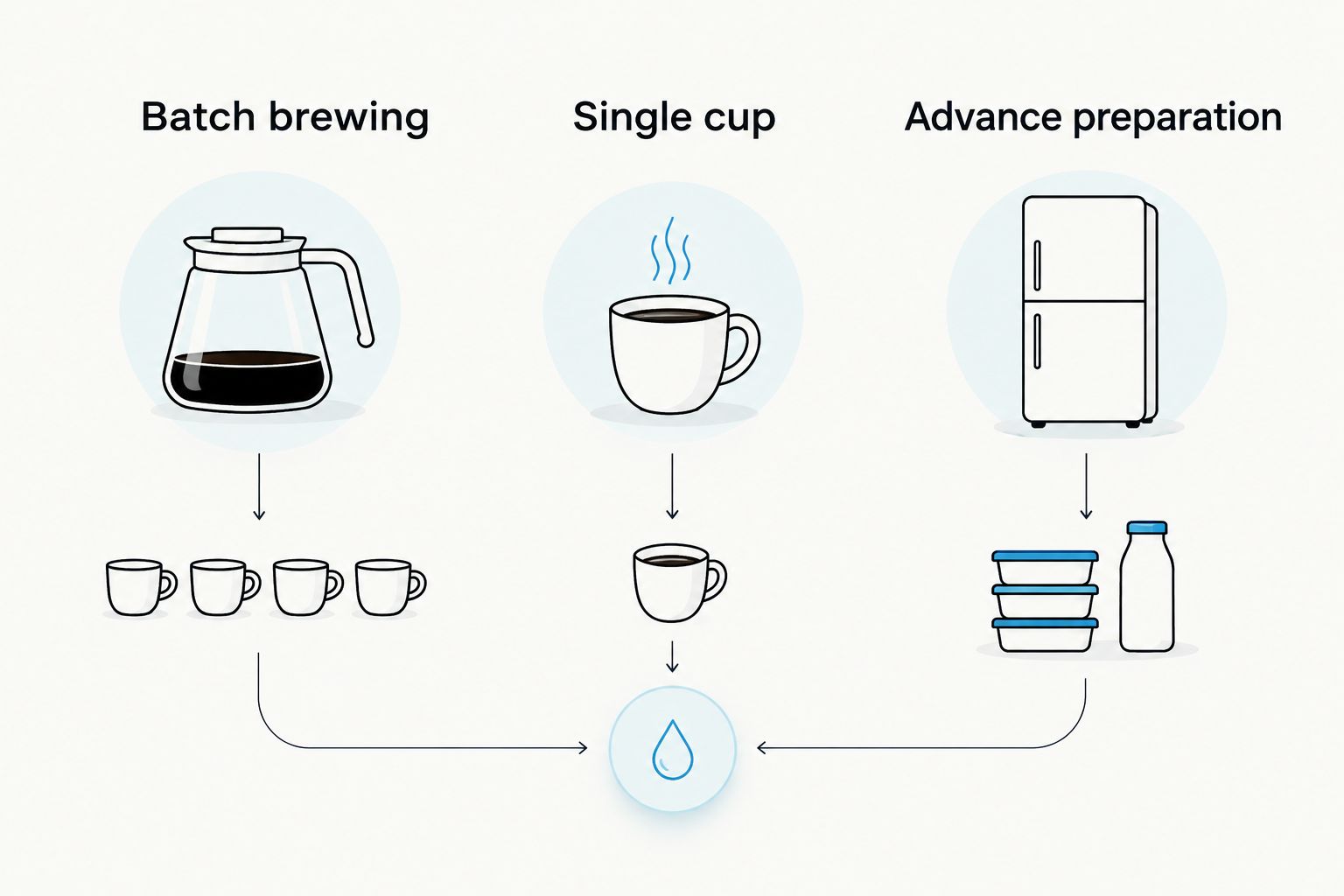
You do not need to replace a working brewer just because another method appears more convenient. First change the amount you make or when you prepare it; that isolates the scheduling problem from the equipment decision.
- Use batch brewing when household members drink coffee at similar times.
- Choose single-cup preparation when you want one freshly prepared serving.
- Try advance preparation when mornings leave little room for brewing.
- Keep grinder noise away from calls and shared quiet hours.
2. Measure your coffee and water
Make your current coffee repeatable before deciding that the beans are wrong. A kitchen scale gives you a clearer starting point than an overflowing scoop, especially when you switch between coffees with different bean sizes.
An established filter-coffee starting recipe is 60 grams of coffee per 1 liter of water. Scaled down, that is 15 grams per 250 milliliters. Treat this as a starting recipe for filter brewing, not a rule for espresso, capsules, instant coffee, or cold-brew concentrate.
Taste the cup before changing anything. If it seems weak or too intense, adjust one part of the recipe and write down the result. Changing the dose, grind, and beans together makes it difficult to identify what helped.
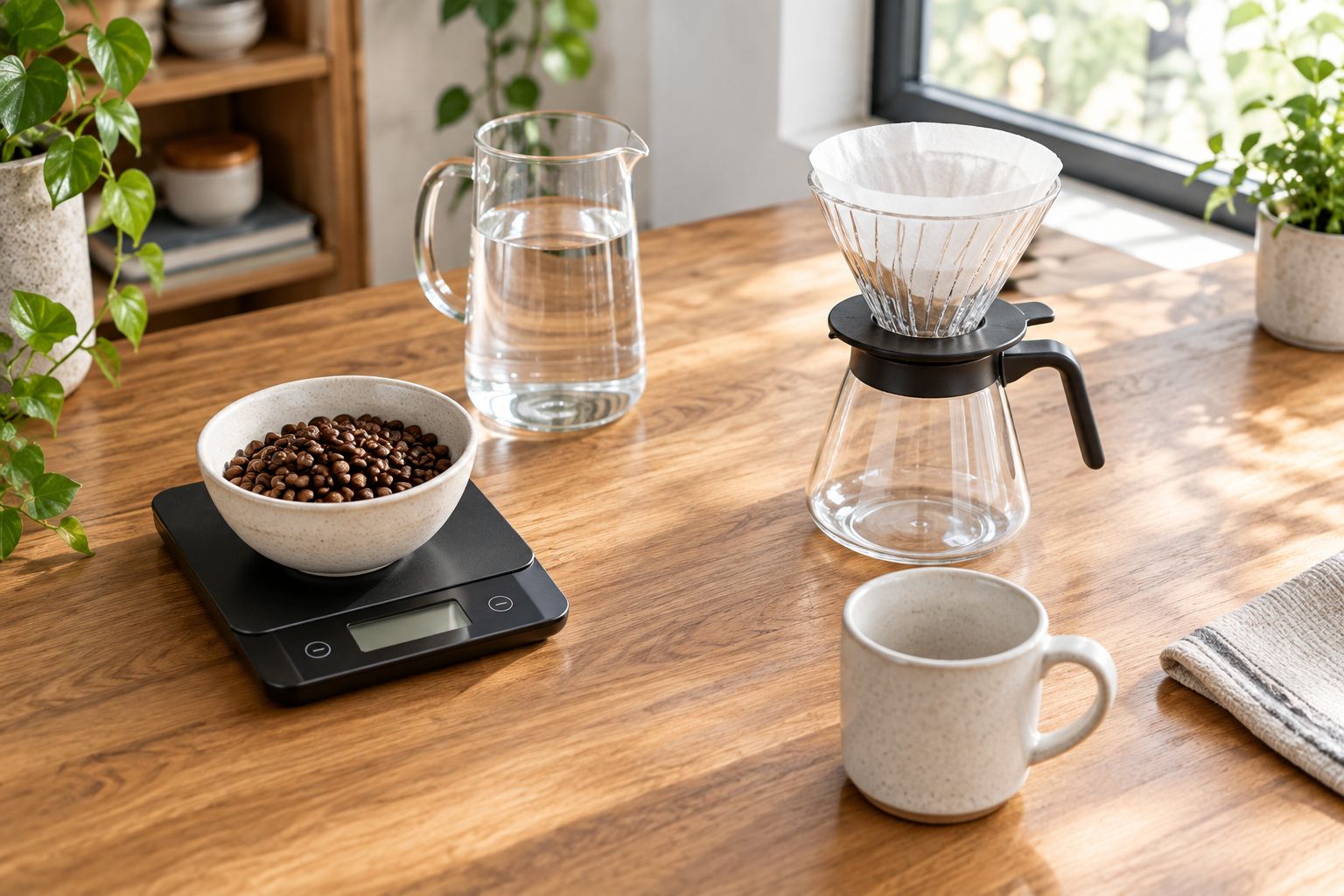
If you do not have a scale, use the same level scoop and the same water mark each time. That approach is less precise, but it still gives you a consistent comparison without another purchase.
- Record your starting coffee dose and water amount.
- Follow your brewer’s instructions for its operating limits.
- Change only one recipe setting between comparison cups.
- Keep milk and sweetener amounts consistent when comparing results.
3. Choose a roast you enjoy during an ordinary workday
Choose roast by the flavor you want, not by the word strength. Light, medium, and dark describe roast styles; they do not provide a reliable caffeine ranking for the cup you make.
A medium roast is a practical starting point when you want to explore an everyday cup without beginning at either end of the roast range. A darker roast suits drinkers who enjoy more pronounced roasted flavors. A lighter roast suits drinkers interested in brighter flavors, though the final cup still depends on the coffee and preparation.
For a 2026 workday routine, compare coffee under the conditions in which you actually drink it. Taste it with your usual breakfast or usual amount of milk rather than choosing from a description alone.
Cinder and Cedar Coffee Roasters coffee includes blends, flavored coffee, and single-origin options. That gives home shoppers different directions to explore, but the right choice still depends on their brewer and taste preferences. Start with the medium roast coffee guide if you need help narrowing the roast decision.
- Start with the roast style closest to coffee you already enjoy.
- Choose flavored coffee when added flavor is part of your preference.
- Compare aroma, body, and finish without requiring specialist vocabulary.
- Judge the cup with your usual additions, not someone else’s serving style.
4. Choose whole bean or ground coffee around your attention budget
Whole bean coffee gives you control over grinding immediately before brewing. The trade-off is another task, another piece of equipment, and noise that can clash with a meeting or a shared household.
Ground coffee removes that step. Its limitation is reduced control over grind size once the bag is open, so you need a grind that fits your brewing method. A convenient format is not useful if it makes the wrong cup in your equipment.
Instant coffee offers another route: prepare it in the cup according to its directions rather than managing grounds and a filter. Cinder and Cedar Coffee Roasters Instant Coffee comes in a resealable pouch containing 30 servings. Best for remote workers who prioritize cup-level preparation, it offers convenience rather than control over extraction in a separate brewer.
Choose the format you can use consistently on a busy day. Save a more involved method for breaks when you genuinely want the preparation itself.
- Choose whole bean when you already have a suitable grinder.
- Choose ground coffee when skipping the grinding step matters more.
- Match the grind to your brewer before placing an order.
- Follow instant coffee’s preparation directions rather than a filter-coffee recipe.
5. Prepare for interruptions before they happen
A meeting that runs long changes what you need from a cup. Instead of leaving coffee on the desk and repeatedly reheating it, consider brewing a smaller amount or using a suitable insulated vessel.
You can test those changes with equipment you already own. Put filters, beans, and measuring tools together so preparation does not become a search through cupboards. Keep the brewing area separate from the laptop, cables, and work papers.
Cold brew is another option when you prefer to prepare coffee before the workday and serve it later. It moves preparation earlier; it does not eliminate brewing, filtering, or cleaning. Follow a suitable recipe and refrigeration instructions rather than treating every cold-brew product as ready to drink.
Cinder and Cedar Coffee Roasters Cold Brew Coffee is described as a blend specifically made for cold brew. Best for home drinkers who want that preparation style, its limitation is the advance brewing work—not a claimed productivity benefit.
- Brew an amount you expect to drink rather than filling every available vessel.
- Use an insulated vessel when interruptions regularly leave your cup untouched.
- Group brewing tools in one accessible place.
- Keep drinks away from electronics and the edge of your desk.
6. Set refill boundaries instead of chasing a stronger cup
Easy kitchen access can turn coffee into an automatic response to every pause. Decide when you want coffee, then separate that decision from boredom, thirst, or the need to step away from the screen.
For your 2026 routine, record the time you drink coffee alongside your own experience of sleep and comfort. That is a personal observation exercise, not a diagnosis or a reason to assign an unverified caffeine amount to a bag of beans.
Do not choose darker roast as a shortcut to more caffeine. Coffee-to-water ratio, serving size, coffee composition, and preparation all affect the finished drink. Flavor intensity alone does not tell you the caffeine content.
If you are reducing caffeine, review decaf options and verify the details of what you buy. Decaf does not mean caffeine-free. Follow individual medical guidance when caffeine is a health concern.
- Make a deliberate choice before each refill.
- Keep water available separately from coffee.
- Record serving size rather than counting every mug as equivalent.
- Change caffeine habits according to your own needs and professional advice.
7. Reset your brewing station at the end of work
A clean setup makes the next cup easier to prepare. Empty used grounds, wash the parts your brewer’s instructions identify, and let cleaned components dry appropriately.
Check the coffee container as part of that reset. Keep coffee closed and protected from heat, moisture, and direct light. Do not transfer it into an open decorative container simply to make the counter look organized.
Finish your 2026 setup with one short recipe note beside the equipment. Record the coffee, dose, water amount, and grind setting if you use one. That note helps you repeat a good cup without remembering yesterday’s adjustments.
- Remove used grounds and disposable filters after brewing.
- Clean removable parts according to the equipment instructions.
- Close the coffee container after measuring your dose.
- Leave the next preparation area clear and ready to use.
Compare coffee options for remote workers
Choose the option that solves your actual inconvenience. A hands-on method offers control, while a simpler format removes preparation steps; neither wins for every home office.
| Option | Best for | Main advantage | Key limitation |
|---|---|---|---|
| Drip coffee | Households serving several cups together | Prepares a batch with one brewing cycle | A full batch is unnecessary when you only want one cup |
| Pour-over coffee | Workers who enjoy a deliberate brewing break | Gives direct control over pouring | Requires attention during brewing |
| French press coffee | Drinkers who prefer a fuller-bodied cup | Uses a straightforward manual brewer | Grounds disposal and cleaning need attention |
| Cinder and Cedar Coffee Roasters Instant Coffee | Workers prioritizing cup-level preparation | Comes in a resealable pouch with 30 servings | Does not offer separate control over brewing extraction |
| Cold Brew Coffee | Workers who prefer preparing coffee ahead | The supplied product description specifies a cold-brew blend | Requires a recipe, advance preparation, and filtering |
| Single-serve capsules | Workers who already own a compatible brewer | Pre-portioned coffee reduces measuring work | Compatibility must be checked before purchase |
Cinder and Cedar Coffee Roasters coffee is best suited to remote workers shopping online for coffee to brew at home. Choose Instant Coffee for simpler cup preparation or Cold Brew Coffee for an advance-preparation routine; the preparation difference matters more than treating either as a work-performance product.


Common mistakes remote workers make
- Starting a hands-on brew just before a call. Choose a method that fits the available break, or move preparation earlier. Pour-over needs attention even when your calendar does not allow it.
- Making a full pot for one occasional cup. Match the batch to what your household will drink. A larger brewer does not require a larger batch every morning.
- Buying beans before checking the preparation format. Confirm whole bean, ground, instant, or capsule format and any equipment requirements. Coffee intended for another setup creates avoidable work.
- Treating coffee as a solution to an overloaded schedule. A cup does not replace food, water, rest, or a manageable workload. Fix the routine rather than expecting a stronger brew to fix the day.
FAQ
What is the best coffee for remote workers?
The best coffee for remote workers matches their brewer, taste, and available preparation time. Drip suits batch preparation, instant suits simple cup-level preparation, and cold brew suits preparing ahead.
Is whole bean coffee better than ground coffee when I work from home?
Whole bean coffee is better when you want control over grinding and have time to use a grinder. Ground coffee is the more convenient choice when removing a preparation step matters more.
What is a good starting ratio for workday filter coffee?
Start filter coffee at 60 grams of coffee per 1 liter of water, or 15 grams per 250 milliliters. Adjust to taste and follow your brewer’s instructions; this is not an espresso or cold-brew concentrate recipe.
Does dark roast coffee contain more caffeine?
Dark roast is not a reliable indicator of more caffeine in your cup. Serving size, coffee composition, dose, and preparation matter, so do not use roasted flavor as a caffeine measurement.
Should I choose cold brew for a busy workday?
Choose cold brew when you enjoy it and prefer preparing coffee before the workday. It still requires brewing, filtering, and appropriate refrigeration, so it shifts the work rather than removing it.
Can I use any coffee capsule in my brewer?
No; coffee capsules must match the brewer’s requirements. Check the product details and your equipment instructions before ordering rather than assuming compatibility from the word capsule.
How do I keep improving my coffee routine in 2026?
Improve your 2026 coffee routine by changing one variable at a time and recording the result. Start with the recipe or serving amount before replacing equipment or buying several different coffees.
One last thing
Taste your coffee where you actually drink it. A cup evaluated immediately beside the brewer is not the same drinking experience as one interrupted by a meeting and finished at your desk.
Before ordering another coffee, test your current choice in your normal mug, with your normal additions, during a normal workday. If the problem is timing or serving amount, different beans will not resolve it.