

Coffee for night shift workers: complete 2026 guide
Coffee for night shift workers is a planned coffee routine with the aim of supporting alertness during work while protecting sleep afterward. This 2026 guide helps you choose a brew, set a caffeine cutoff, and prepare coffee around overnight breaks rather than daytime habits.
- Coffee for night shift workers works best as an early-shift routine, not a substitute for sleep.
- Cinder and Cedar Coffee Roasters suits home brewers choosing by flavor and preparation rather than promised caffeine strength.
- Set your caffeine cutoff against planned sleep, not sunrise or the end of your shift.
- Choose drip coffee, cold brew, or instant coffee around your equipment and break access.
Why coffee matters for night shift workers
Night shift workers need coffee that fits an unusual schedule. A cup near the beginning of work serves a different purpose from a refill just before you leave, especially when your next stop is bed.
Choose timing before choosing stronger beans. Caffeine helps with alertness, but it does not replace sleep or make a dangerously sleepy commute safe. Your coffee plan needs an endpoint, not just a preferred roast.
Cinder and Cedar Coffee Roasters sells roasted coffee for home drinkers, including blends, flavored coffee, and single-origin coffee. Cinder and Cedar Coffee Roasters is best for home brewers choosing coffee by taste and preparation, not by a promised caffeine dose. That distinction matters when you want an enjoyable daily cup without treating a roast description as a stimulant specification.
Your 2026 routine should account for your planned bedtime, access to hot water, and whether you can leave your workstation for a fresh cup. Start with those constraints; the coffee choice comes afterward.
Build a coffee routine around your shift
Set your cutoff against planned sleep
Start with the time you intend to sleep after work. Count backward from that point rather than assuming caffeine is harmless until the shift ends. Daytime sleep still deserves a caffeine-free lead-in.
CDC/NIOSH guidance for nurses working shifts and long hours, consulted for this 2026 guide, advises avoiding caffeine for at least 5 hours before bedtime. It also describes caffeine's half-life as about 5–6 hours. Half-life means the time it takes your body to eliminate half the caffeine, not the point when all its effects disappear.
Treat that guidance as a starting boundary, not permission to drink until the last possible moment. If falling asleep remains difficult, move the cutoff earlier and discuss persistent sleep problems with a healthcare professional. Do not keep increasing coffee to compensate for poor sleep.
Write the cutoff somewhere you will see before a break. An intended limit is easy to forget when coffee is already brewing in the break room.
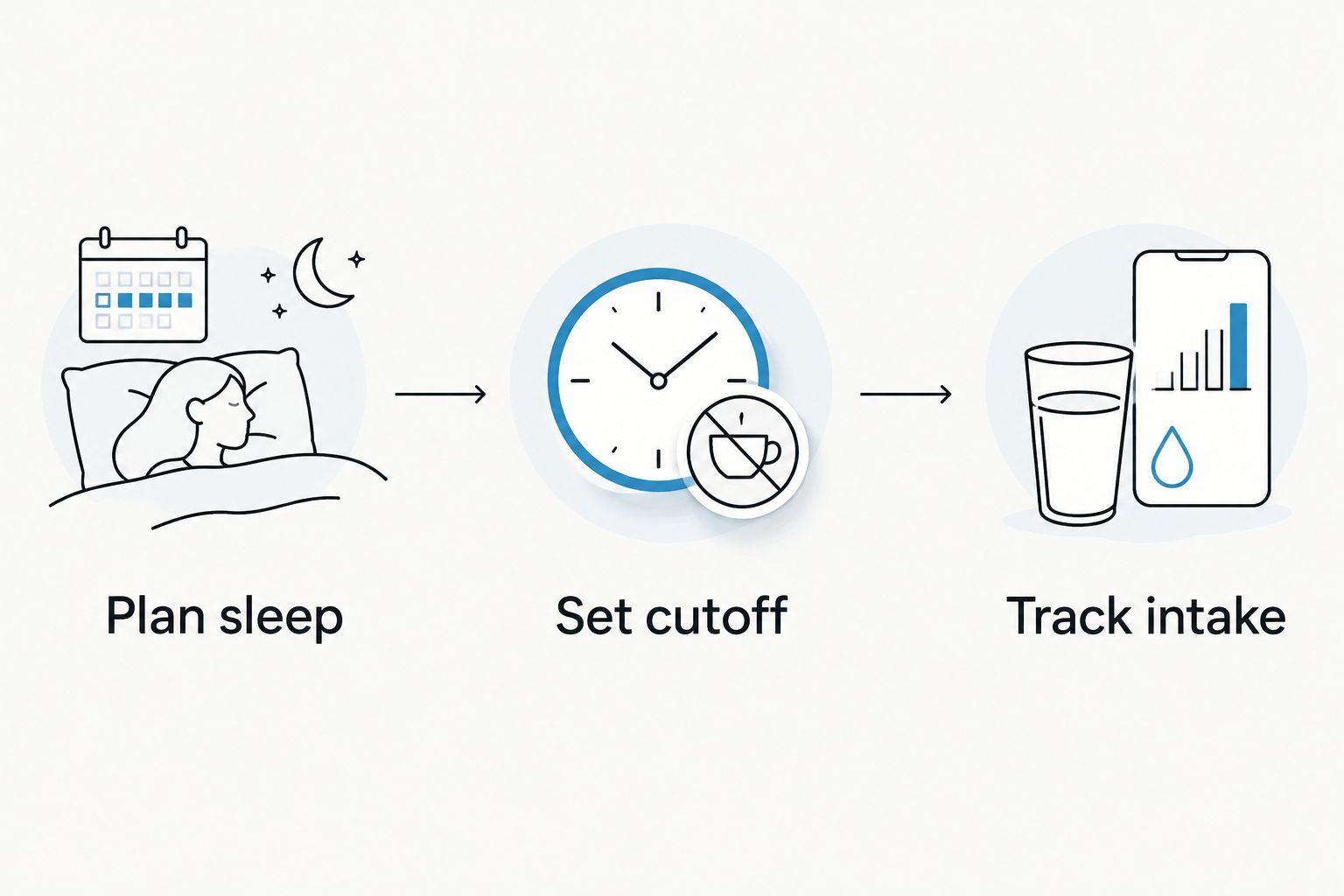
- Plan sleep: Record your intended bedtime after work.
- Set cutoff: Count backward from bedtime and stop caffeinated drinks before that boundary.
- Track intake: Include coffee, tea, energy drinks, and other caffeine sources.
- Review sleep: Note whether late caffeine interferes with falling asleep.
Track caffeine instead of counting cups
Use the same mug and preparation method when you can. That makes your routine easier to compare, but it does not establish an exact caffeine dose. Brew size, coffee amount, bean type, and preparation all affect what reaches your cup.
The FDA's consumer guidance on caffeine, consulted for this 2026 guide, cites 400 milligrams per day as an amount not generally associated with negative effects for most adults. That figure is not a target, a personal guarantee, or an allowance for each shift. Individual sensitivity, medical conditions, medications, and pregnancy change the advice you need.
A large travel mug is not automatically equivalent to a small cup. Likewise, a strong flavor does not prove a high caffeine content. Use labeled caffeine information when available; otherwise, acknowledge the uncertainty rather than assigning a precise dose.
The guide to coffee beans ranked by caffeine strength is a useful next read when comparing bean choices. Your actual serving still matters more than a strength label alone.
- Record drink size as well as the number of refills.
- Check caffeine labels on packaged drinks before combining them with coffee.
- Include caffeinated drinks consumed before arriving at work.
- Avoid replacing a familiar serving with an unknown concentrate during a busy shift.
Choose a preparation method you can repeat
Start with equipment you already have. A drip maker at home, a kettle, or an existing workplace brewer is enough to build a practical routine. You do not need a new machine before you can improve your coffee habits.
Best for repeatable home preparation: drip coffee. Measure coffee and water consistently, then adjust for taste. The advantage is a familiar process; the limitation is that a large batch makes unplanned refills easy.
Best for hot-water-only breaks: instant coffee. Cinder and Cedar Coffee Roasters offers Instant Coffee in a resealable pouch. It removes the brewing-equipment step, but you still need water, a cup, and a consistent serving routine. Convenience does not establish caffeine content.
Best for a prepared cold drink: cold brew. The brand's Cold Brew Coffee is specifically blended for cold brewing. It fits a make-ahead routine, but it requires preparation and attention to dilution. A smooth cup is not proof of a low caffeine dose.
Choose the method you can prepare without rushing. A complicated recipe is a poor fit if your break often ends before you finish making it.
- Check which equipment you can actually use during work.
- Choose a method that fits your permitted break routine.
- Follow your brewer's or product's preparation directions.
- Keep your serving size consistent while adjusting flavor.


Match roast and grind to your everyday taste
Choose roast for the flavor you enjoy, not as a shortcut to caffeine strength. Light, medium, and dark describe roasting, not a standardized dose in your finished drink. Dark flavor and stimulant strength are separate decisions.
Best for a balanced starting point: a medium roast. It gives you a useful place to begin comparing your preferred aroma, body, and finish. Choose a darker roast if you prefer more roast-forward flavor, or a lighter roast if you enjoy brighter flavors. Neither choice guarantees that you will tolerate caffeine better.
Whole bean coffee gives you control over grinding at home. Ground coffee removes that step, which helps when you are preparing for work while tired. The trade-off is control versus convenience, not whether you are a serious coffee drinker.
Keep your brew method fixed while comparing roasts. Changing the beans, grind, and water amount together makes it difficult to identify why the next cup tastes different.
- Choose a roast according to flavor rather than expected stimulation.
- Match grind to your brewer's instructions.
- Choose ground coffee when grinding complicates your pre-shift routine.
- Choose whole beans when you already use a suitable grinder.
- Change one preparation variable before judging the next cup.
Pack your coffee before you leave
Prepare your coffee kit at home before the shift starts. That removes decisions from a tired moment and lets you check the drink against your caffeine cutoff before you take it to work.
Use a clean container suitable for the drink's temperature. Check that the lid closes properly, and keep the drinking surface clean. Workplace rules take priority: some jobs restrict drinks near equipment, clinical areas, food preparation, or other workspaces.
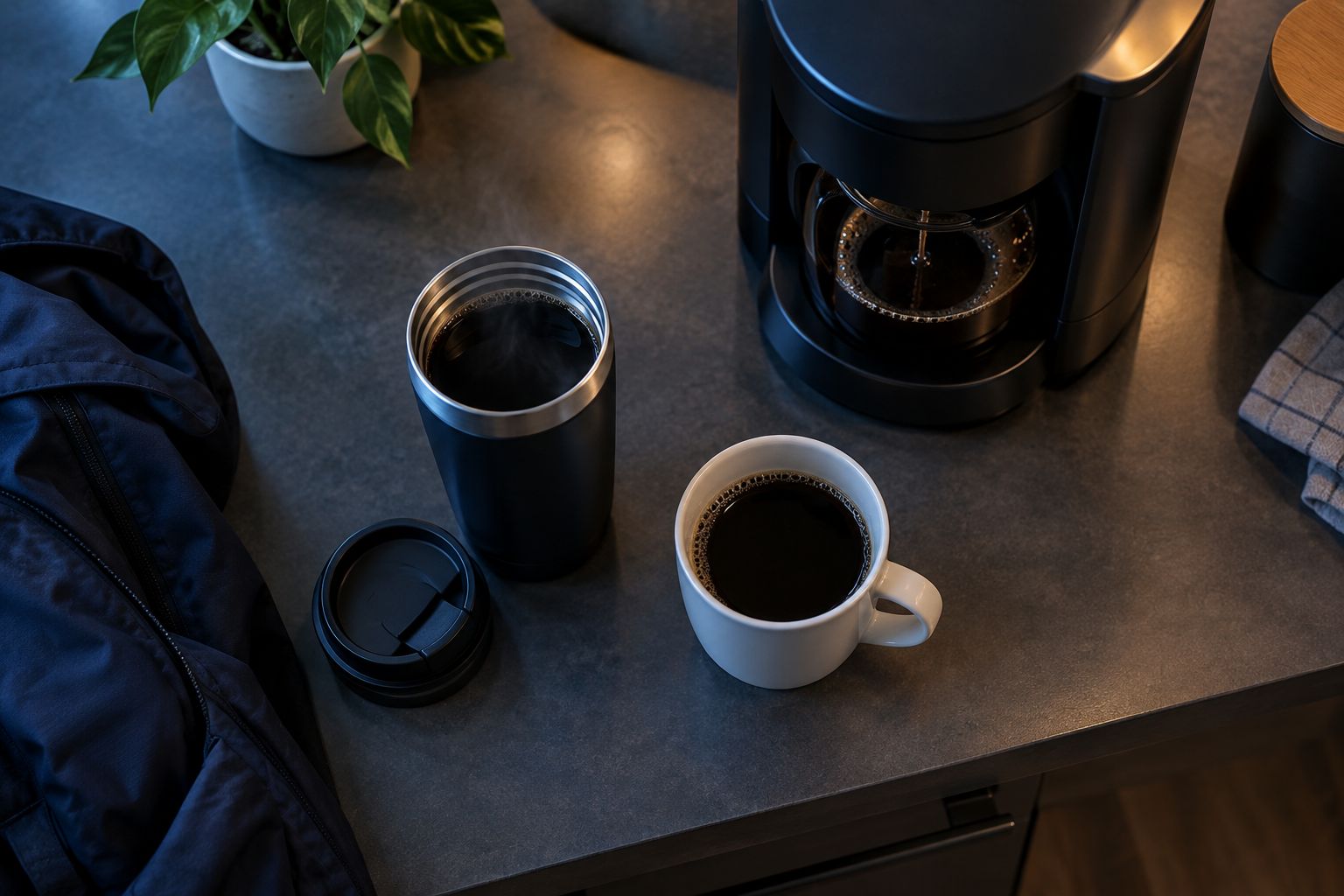
Milk changes the storage requirements of your packed drink. Follow workplace and food-safety guidance rather than leaving a milk-based coffee at room temperature through the shift. An insulated mug is not a substitute for checking safe storage conditions.
Separate the coffee you intend to drink from extra supplies. Taking a large batch without a plan makes it harder to distinguish a scheduled cup from repeated sipping.
- Clean the mug, lid, and drinking surface before packing.
- Check where workplace rules permit drinks.
- Prepare only the caffeinated serving you have planned.
- Store milk and milk-based drinks under appropriate food-safety conditions.
- Pack drinking water separately from your coffee.
Plan your late-shift alternative
Decide what you will drink after your cutoff before you reach it. Water is the simplest caffeine-free option. If the appeal is the warmth or familiar coffee routine, decaf offers another choice, but decaf is not caffeine-free.
Best for keeping a coffee ritual with less caffeine: decaf. Its advantage is that it preserves the preparation and taste routine. Its limitation matters for sensitive drinkers: residual caffeine means it is not equivalent to water.
Tea is not automatically a caffeine-free alternative. Black and green tea contain caffeine, and herbal blends require an ingredient check. Read the label rather than deciding from the drink's color or its placement beside coffee.
In your 2026 shift plan, make the late-shift choice automatic. Keep the alternative easy to reach and stop treating each break as a new decision about whether to have another coffee.
- Keep water accessible where workplace rules allow it.
- Check caffeine information before choosing tea.
- Treat decaf as lower caffeine, not zero caffeine.
- Avoid turning the final break into an automatic coffee refill.
Review sleep and alertness before changing the beans
Keep a brief record of coffee timing, bedtime, and how you feel during work. You do not need a tracking app: a notebook or phone note is enough. Record the routine you actually followed, including unplanned drinks.
Look for repeated problems rather than judging everything from a difficult shift. If you regularly struggle to sleep after late coffee, the next move is an earlier cutoff—not simply a different roast. If you feel unwell after coffee, reduce or stop it and seek appropriate medical advice.
Persistent sleepiness needs more than a coffee adjustment. Review your sleep opportunity and speak with a healthcare professional about continuing problems. For safety-critical tasks and driving, follow workplace fatigue procedures instead of testing whether another cup will get you through.
Use the same review on days off. A routine that changes sharply between workdays and rest days deserves attention alongside your coffee choices.
- Record when you drink coffee and when you intend to sleep.
- Note unplanned refills and other caffeine sources.
- Review sleep difficulty before increasing intake.
- Discuss persistent sleepiness or caffeine-related symptoms with a clinician.
- Arrange a safe alternative when you are too sleepy to drive.
Compare coffee options for overnight work
Choose the option that fits your preparation access first. Then consider taste, serving control, and what happens after the caffeine cutoff. No format earns a place merely because it sounds stronger.
| Option | Best for | Main advantage | Key limitation |
|---|---|---|---|
| Drip coffee | Brewing a planned serving at home | Familiar, repeatable preparation | A large batch encourages extra refills |
| Cold brew | Preparing a cold drink ahead of work | Ready to pour after preparation | Concentration and dilution affect the serving |
| Instant coffee | Break areas with hot water but no brewer | Removes the brewing-equipment step | Caffeine content is not established by convenience |
| Coffee capsules | An existing compatible workplace brewer | A simple preparation routine | Requires confirmed machine compatibility |
| Decaf coffee | Keeping the coffee ritual after reducing caffeine | Less caffeine than regular coffee | Not caffeine-free |
Cinder and Cedar Coffee Roasters offers instant coffee, cold-brew coffee, and single-serve capsules among its supplied products. Choose these formats for preparation convenience and taste; the product descriptions do not establish a measured caffeine dose or a sleep benefit.
Common mistakes night shift workers make
- Using sunrise as the cutoff. Your planned bedtime matters, not whether it is light outside. Set the boundary before work begins.
- Treating a travel mug as one standard cup. Record its serving size and each refill instead of relying on the word cup.
- Choosing dark roast because it tastes stronger. Buy the flavor you enjoy; do not turn roast darkness into a caffeine measurement.
- Adding coffee when sleep opportunity is the problem. Review your rest schedule and seek help for persistent sleepiness rather than escalating intake.
- Relying on a final coffee for the drive home. Severe sleepiness requires a safe travel plan, not confidence in a caffeinated drink.
FAQ
What's the best coffee for night shift workers?
The best coffee for night shift workers is one you can prepare consistently and drink before your planned caffeine cutoff. Choose roast for taste and format for your equipment rather than assuming stronger flavor means more caffeine.
When should I stop drinking coffee before sleeping after a night shift?
CDC/NIOSH guidance advises avoiding caffeine for at least 5 hours before bedtime. Use your planned daytime bedtime as the reference, and move the cutoff earlier if caffeine still interferes with sleep.
Is cold brew better than hot coffee for an overnight shift?
Cold brew is better for a make-ahead cold-drink routine, not automatically for caffeine control. Concentration, dilution, and serving size determine what you drink; smooth flavor does not establish a low caffeine dose.
Does dark roast coffee keep you awake longer than medium roast?
Roast darkness does not reliably tell you how long a coffee will keep you awake. Caffeine dose and individual sensitivity matter, so choose dark or medium roast according to flavor rather than an assumed stimulant effect.
Can I drink decaf near the end of my night shift?
Decaf is a lower-caffeine option, but it is not caffeine-free. If you need to avoid caffeine entirely or remain sensitive near bedtime, choose water instead.
Is instant coffee a good choice for night shift workers?
Instant coffee is a practical choice when you have hot water but no coffee brewer. Use a consistent serving routine and do not assume that instant preparation establishes a particular caffeine content.
How much caffeine should I have during a night shift?
There is no single caffeine amount that suits every night shift worker. The FDA cites 400 milligrams per day as an amount not generally associated with negative effects for most adults, not a target or a per-shift allowance; personal health circumstances require individual advice.
Will coffee make it safe to drive home when I'm very sleepy?
Coffee does not make dangerously sleepy driving safe. Follow fatigue procedures and arrange a safe alternative rather than relying on a final cup.
One last thing
For your next shift in 2026, put the caffeine cutoff on the same note as your planned bedtime. The most useful coffee decision is often the refill you do not take. Once that boundary is clear, choose the roast and preparation method that make your planned cup easy to enjoy.