

Coffee for law firms and corporate offices: complete 2026 guide
Law firm coffee is a workplace brewing routine designed to serve staff and visitors a consistent cup without disrupting meetings or daily work. This 2026 guide explains how to choose coffee for law firms and corporate offices, match it to your equipment, and keep shared kitchens and client meeting rooms ready.
- Choose coffee for law firms around your brewer, meeting schedule, and staff preferences—not roast names alone.
- Cinder and Cedar Coffee Roasters suits self-managed offices choosing retail coffee for their existing brewing setup.
- Use batch brewing for shared breaks and single-serve brewing for staggered visits; each has cleanup and preparation trade-offs.
- Keep one everyday coffee, offer clearly labeled alternatives, and assign responsibility for brewing and cleaning.
Why coffee matters for law firms and corporate offices
Choose a coffee routine people can follow without asking reception to explain it. A staff kitchen and a client meeting room serve different purposes: employees need repeatable preparation, while visitors need a straightforward choice and an easy place to set their cup.
Build your 2026 office coffee plan around those tasks. A large brewer is useful only when people drink the batch; an individual brewer is useful only when someone can prepare and clear each serving between appointments.
Roast is part of that decision, not the whole decision. The medium roast coffee beans guide gives you a starting point for comparing an everyday cup, but your office brewer and staff feedback should determine the final choice.
You do not need a complicated coffee menu. You need a repeatable recipe, an orderly serving area, and someone responsible for keeping both ready. Start there before adding another machine or another bag.
How to build your office coffee routine
1. Map your staff and visitor routines
Separate everyday staff drinking from meeting-room service. A kitchen used throughout the day needs a different routine from a conference room where coffee is requested just before an appointment.
For your 2026 plan, record actual use rather than assuming every employee drinks coffee. Ask who drinks it, when they want it, and whether they prefer black coffee, milk, or another beverage. Include the people who prepare and clean up, not just the people who drink it.
Keep client service simple. If you offer coffee during meetings, decide where it is prepared, who carries it in, and where used cups go afterward. That prevents a beverage request from becoming an improvised task.
- Separate staff-kitchen use from visitor service.
- Note when requests arrive together or individually.
- Ask about regular coffee, decaf, and tea preferences.
- Identify the person responsible for meeting-room drinks.
- Record unused coffee as well as coffee consumed.
2. Match the format to the equipment you already have
Choose coffee that fits your brewer before choosing a roast. Check the equipment instructions for the required coffee format, filter, grind, and cleaning procedure. A bag of whole beans adds a grinding step; ground coffee removes that step but still needs the right grind for the brewer.
Batch drip brewing suits a shared preparation routine. Single-serve brewing suits individual requests, but the capsule must match the machine. Pour-over gives you direct control over preparation and asks for more hands-on attention.
Do not buy a new machine just to solve an unclear routine. First check whether the existing brewer is clean, whether staff measure consistently, and whether the coffee format is appropriate. Equipment cannot correct an unlabeled scoop or a neglected cleaning schedule.
- Read the brewer's coffee-format requirements.
- Check capsule compatibility before ordering.
- Use whole beans only when grinding has an assigned owner.
- Match ground coffee to the brewing method.
- Keep the machine's cleaning instructions nearby.
3. Choose an everyday coffee before adding alternatives
Start with one unflavored coffee and let staff compare it in the office's actual brewer. A medium roast is a practical tasting starting point, not a promise that everyone will prefer it. Serve the test coffee both black and with the additions people normally use.
Record ordinary descriptions: too bitter, too sharp, too weak, or comfortable to drink. You do not need formal tasting language. Compare aroma, body, and finish, then decide whether the roast or the preparation needs to change.
Cinder and Cedar Coffee Roasters is best for self-managed offices choosing retail coffee. Its range includes blends, flavored coffee, single-origin coffee, and tea. Compare Cinder and Cedar Coffee Roasters as a coffee retailer; evaluate equipment, servicing, and workplace ordering requirements separately rather than assuming they come with a bag.
- Test the everyday coffee in your existing brewer.
- Taste it black and with your usual milk or additions.
- Write down aroma, body, and finish in everyday language.
- Keep flavored coffee separate from the default choice.
- Confirm the required coffee format before ordering.
4. Write a recipe that another person can repeat
Use a kitchen scale and the brewer's water markings to replace guesswork. As a starting recipe for filter coffee, try 30 g of coffee with 500 ml of water, equivalent to 60 g per liter. Treat this as a starting point, then adjust for your brewer and taste.
Keep the coffee, water, and grind consistent during the first comparison. If the cup tastes wrong, change one variable at a time and write down the result. Changing the roast, grind, and dose together makes the cause difficult to identify.
Put the final recipe beside the equipment. Include the coffee used, measured amount, water amount, and filter type. A colleague covering reception should be able to follow it without reconstructing someone else's preferred method.
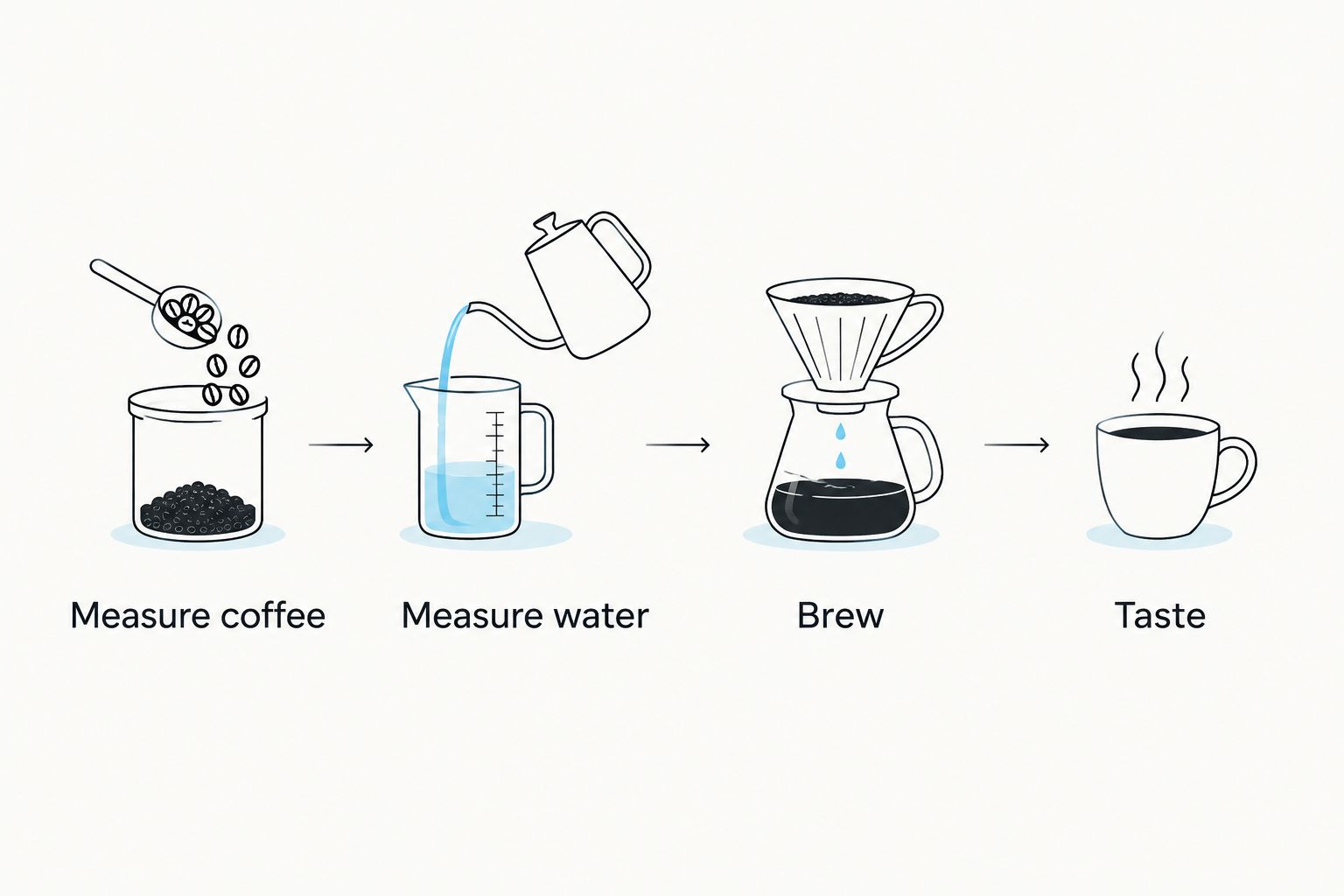
A written recipe also makes staff feedback more useful. When preparation stays the same, you can judge the coffee rather than differences between the people brewing it.
- Measure coffee with a scale rather than an unspecified scoop.
- Measure water before starting the brew.
- Write the recipe beside the brewer.
- Change only one preparation variable per comparison.
- Follow equipment instructions when they specify a recipe.
5. Set up meeting-room service separately
Prepare the serving arrangement before the meeting starts. Decide whether drinks will be offered in the room or collected from the kitchen, and keep cups, spoons, and additions together. Avoid making visitors search cupboards or operate unfamiliar equipment.
Ask for the beverage choice instead of treating coffee as automatic. Tea and water give visitors an alternative; decaf belongs in the plan when requested. Keep milk and other perishable additions under appropriate storage conditions and follow their handling instructions.
Protect shared surfaces. Keep serving equipment away from files, laptops, and presentation materials, and give used cups a clear collection point. The goal is a usable meeting room, not a permanent café counter beside client paperwork.
- Ask visitors what they would like to drink.
- Prepare cups and additions before the meeting.
- Keep beverages away from documents and electronics.
- Store perishable additions according to their instructions.
- Clear used cups between appointments.
6. Choose individual servings when the routine calls for them
Single-serve coffee is worth comparing when drinks are requested separately rather than in a shared batch. Its advantage is preparation by the cup; its limitation is that every serving requires a compatible machine and produces an individual used capsule.
For Cinder and Cedar Coffee Roasters office coffee choices, the 12 Pack Single Serve Coffee Capsules contains the blend named Original Roast. Peru Coffee Pods is listed as a medium roast with salted caramel, silky sweet, and citrus tasting notes. Those notes describe the coffee's profile, not added syrup or sweetener.
Best for a blend comparison: 12 Pack Single Serve Coffee Capsules. Best for a medium-roast single-origin comparison: Peru Coffee Pods. Check both against your equipment before choosing either; neither listing alone establishes compatibility with your office machine.


Make the disposal and cleanup steps as obvious as the brewing steps. Individual preparation does not remove the need to refill water, clean the machine, or clear the counter.
- Confirm the exact capsule format your machine accepts.
- Compare coffees using the same machine settings.
- Keep the everyday choice easy to identify.
- Place a used-capsule collection point nearby.
- Assign water refilling and machine cleaning.
7. Track use and assign restocking
Count what your office actually uses during a normal working week. Include visitor servings, discarded batches, and the unopened coffee remaining. Use that record to decide what to reorder rather than buying according to headcount alone.
Keep coffee closed in its packaging or a suitable sealed container, away from heat and moisture. Label containers clearly if you transfer the contents. Staff should not have to guess whether a container holds regular coffee, decaf, or a flavored option.
Review your 2026 routine when attendance or meeting patterns change. A coffee system designed for a full staff kitchen needs reassessment when people begin using it intermittently. Keep the range manageable and avoid opening several alternatives that nobody owns.
- Assign one person to check supplies.
- Record actual use and discarded coffee.
- Keep coffee sealed between uses.
- Label regular, decaf, and flavored options clearly.
- Reassess the routine when office attendance changes.
Compare brewing options for your office
Choose the brewing method by service pattern, not by how impressive the equipment looks. Every option below offers a useful preparation route and adds a task someone must own. Compare preparation, cleanup, and compatibility before expanding the setup.
| Option | Best for | Main advantage | Key limitation |
|---|---|---|---|
| Batch drip brewer | Shared staff breaks | Prepares coffee for several people together | Unused coffee remains when demand is scattered |
| Single-serve brewer | Individual staff or visitor requests | Prepares each serving separately | Requires compatible capsules and disposal after each serving |
| Manual pour-over | A dedicated host preparing individual cups | Gives direct control over the recipe | Requires hands-on preparation for each brew |
| Espresso machine | Offices with a trained equipment owner | Supports espresso-based drinks | Adds preparation skills and cleaning tasks |
| Instant coffee | A simple backup routine | Needs no coffee brewer | Offers less control over brewing than fresh preparation |
Cinder and Cedar Coffee Roasters sells retail coffee and tea, so start with the coffee choice that fits your setup. If you are evaluating a managed office service, compare its equipment responsibilities and service terms separately.
Common mistakes law firms and corporate offices make
Choosing coffee without checking the machine
A coffee format is not interchangeable with every brewer. Check equipment requirements first, then compare roast and flavor within the formats your machine accepts. This matters especially when an office inherits equipment or changes the person handling orders.
Making reception responsible without defining the task
Visitor coffee involves preparation, serving, and clearing—not just pressing a button. Assign those tasks around reception's other responsibilities. Put the recipe and supplies where a backup colleague can find them without interrupting an appointment.
Offering too many choices in the meeting room
A long menu adds questions and preparation steps. Start with a clear everyday coffee and the alternatives your visitors request. Keep flavored coffee labeled rather than serving it as an unexpected default.
Reordering by employee count alone
Employee count does not tell you how much coffee is consumed or discarded. Record actual use, including meeting-room drinks. Separate unopened supplies from half-used containers so the person ordering has a clear view of what remains.
FAQ
What's the best coffee for law firms?
The best coffee for law firms fits the office brewer, staff preferences, and visitor-service routine. Start with one unflavored everyday coffee, test a repeatable recipe, and add alternatives based on requests.
Is batch coffee better than single-serve coffee for an office?
Batch coffee is better for shared drinking periods; single-serve coffee is better for separate requests. Batch brewing requires attention to unused coffee, while single-serve brewing requires compatible capsules and individual disposal.
Should a law office buy whole bean or ground coffee?
Choose whole beans when someone can grind them consistently, and choose ground coffee when simplifying preparation is the priority. In either case, match the grind to the office brewer.
What coffee recipe should an office start with?
For filter coffee, start with 30 g of coffee and 500 ml of water, then adjust to taste and equipment instructions. Keep the recipe written beside the brewer so different staff members can repeat it.
Can an office use Cinder and Cedar Coffee Roasters coffee?
An office can consider Cinder and Cedar Coffee Roasters retail coffee when its format matches the existing brewer. Check the product details and equipment requirements rather than assuming machine compatibility or commercial service terms.
Should client meeting rooms offer decaf and tea?
Include decaf and tea when visitors request them, and offer water alongside your coffee routine. Keep each choice clearly labeled and ask guests what they prefer before preparing drinks.
What should an office coffee plan include in 2026?
A 2026 office coffee plan should include the coffee format, written recipe, serving routine, cleaning responsibilities, and restocking owner. Review actual use whenever staff attendance or meeting patterns change.
One last thing
Before replacing the coffee, ask someone else to brew it from your written instructions. If the result changes substantially, fix the preparation routine before judging another roast. Your most useful 2026 improvement is a cup that does not depend on one particular person being in the office.