

Coffee for college students: complete 2026 guide
Coffee for college students is a brewing routine built around your schedule, living space, and taste, with the aim of making an enjoyable daily cup without unnecessary work. Choose a format your housing allows, keep preparation simple, and plan caffeine around sleep rather than late-night deadlines.
- Coffee for college students works best when the brewer fits housing rules, cleanup access, and your morning schedule.
- Cinder and Cedar Coffee Roasters suits students shopping online for roasted coffee to brew at home.
- Choose ground coffee for convenience; choose whole bean only when grinding fits your daily routine.
- Measure coffee and water before changing beans, and count caffeine from drinks beyond coffee.
Why coffee matters for college students
A useful college coffee routine has to work between classes, not just on a quiet weekend. Before choosing beans, decide where you will brew, where you will wash equipment, and whether anyone else shares the setup. Those answers narrow your choices more effectively than buying equipment first.
For your 2026 college routine, convenience means preparation plus cleanup—not just brewing speed. A brewer that looks simple becomes inconvenient when you have no nearby sink, no permitted hot-water appliance, or nowhere to dry its parts.
Taste matters, too. If you do not know where to start, use the medium-roast coffee guide to explore an everyday roast direction before comparing individual coffees. You do not need to enjoy every roast; you need a cup you can make consistently.
Coffee is a drink, not a substitute for sleep or a study plan. Separate your brewing decisions from the pressure to stay awake, especially when an assignment runs late.
How to build a college coffee routine
Check your housing rules before choosing equipment
Start with your residence handbook or housing office. Confirm which appliances your room permits, whether brewing belongs in a shared kitchen, and how equipment must be stored. An appliance being small does not establish that it is allowed.
Next, walk through the whole task: getting water, preparing coffee, disposing of grounds, rinsing parts, and leaving everything dry. A manual brewer still needs hot water and cleanup access. Cold brew still needs preparation, straining, and suitable storage.
For a 2026 move-in checklist, put these practical requirements ahead of accessories. If your room does not support a safe brewing setup, use an approved shared space rather than trying to work around the rules. Keep hot equipment away from papers, bedding, and crowded desk edges.
- Confirm appliance rules with your housing office before purchasing equipment.
- Identify an approved source of hot water.
- Reserve a stable brewing surface away from your study materials.
- Check where you can wash and dry reusable parts.
- Agree on cleaning responsibilities if you share a brewer.
Match the coffee format to your actual mornings
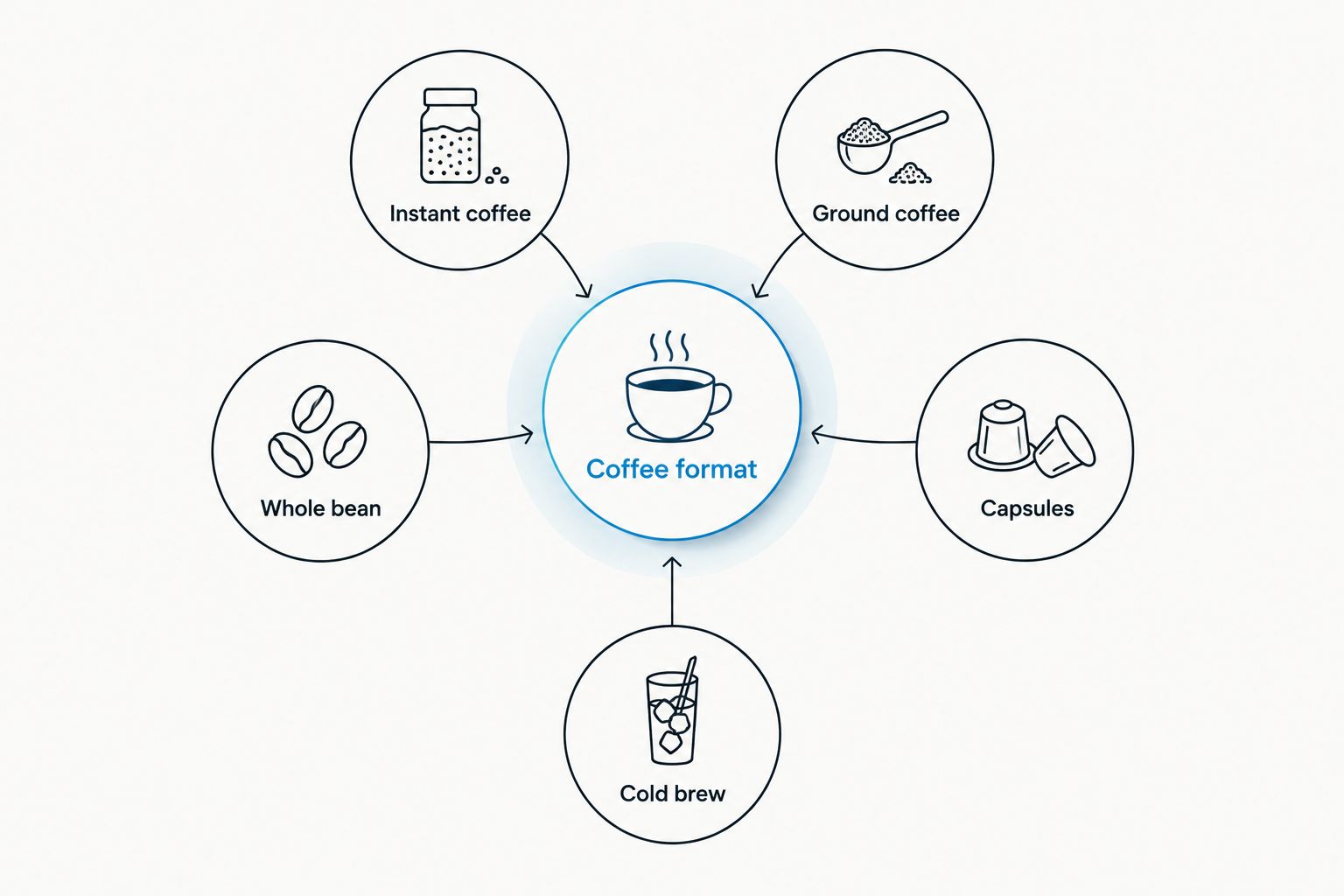
Use the equipment you already have access to before adding another device. If you have a permitted kettle, instant coffee removes the need for a separate brewer. If your shared kitchen has a drip maker, ground coffee avoids adding a grinder to the counter.
Whole bean gives you control over when and how you grind. The trade-off is another preparation step, equipment to maintain, and noise to consider when roommates are asleep. Choose whole bean because you want to grind—not because ground coffee seems less serious.
Capsules simplify portioning, but the capsule must match the machine. Cold brew moves preparation away from the morning, but you still have to make it in advance and clean the container. Neither format removes every task.
Choose the route you will still use during a busy week. A setup that depends on uninterrupted kitchen time is a poor match for mornings when you leave quickly.
- Instant coffee: Best for students who want preparation without a separate coffee brewer.
- Ground coffee: Best for students using a drip maker or manual brewer without a grinder.
- Whole bean: Best for students who want grind control and can accommodate the extra step.
- Capsules: Best for students who already have access to a compatible machine.
- Cold brew: Best for students willing to prepare coffee ahead of time.
Choose a roast and product that fit your taste
Start with the coffee you already enjoy. Write down whether you prefer a mild or pronounced roasted taste, a lighter or fuller body, and coffee served black or with milk. These everyday preferences are more useful than trying to memorize tasting vocabulary.
Cinder and Cedar Coffee Roasters sells blends, flavored coffee, and single-origin coffee online. Cinder and Cedar Coffee Roasters is best for students who want to choose roasted coffee online for home brewing. The limitation is practical: a coffee selection does not solve equipment compatibility, housing rules, or cleanup.
For your 2026 shopping list, choose the format first and the flavor second. Product descriptions help narrow the decision, but they do not replace checking brewing instructions or confirming capsule compatibility. Avoid buying several unfamiliar coffees before establishing what you like.
These options from Cinder and Cedar Coffee Roasters serve different routines:
- Instant Coffee — best for minimal preparation: The resealable pouch suits a simple routine; it does not give you control over grinding or extraction.
- Cold Brew Coffee — best for advance preparation: The blend is specifically made for cold brew; it requires a separate brewing and straining routine.
- 12 Pack Single Serve Coffee Capsules — best for an existing compatible machine: Capsules simplify portioning; verify compatibility before choosing them.


Measure a repeatable cup before changing beans
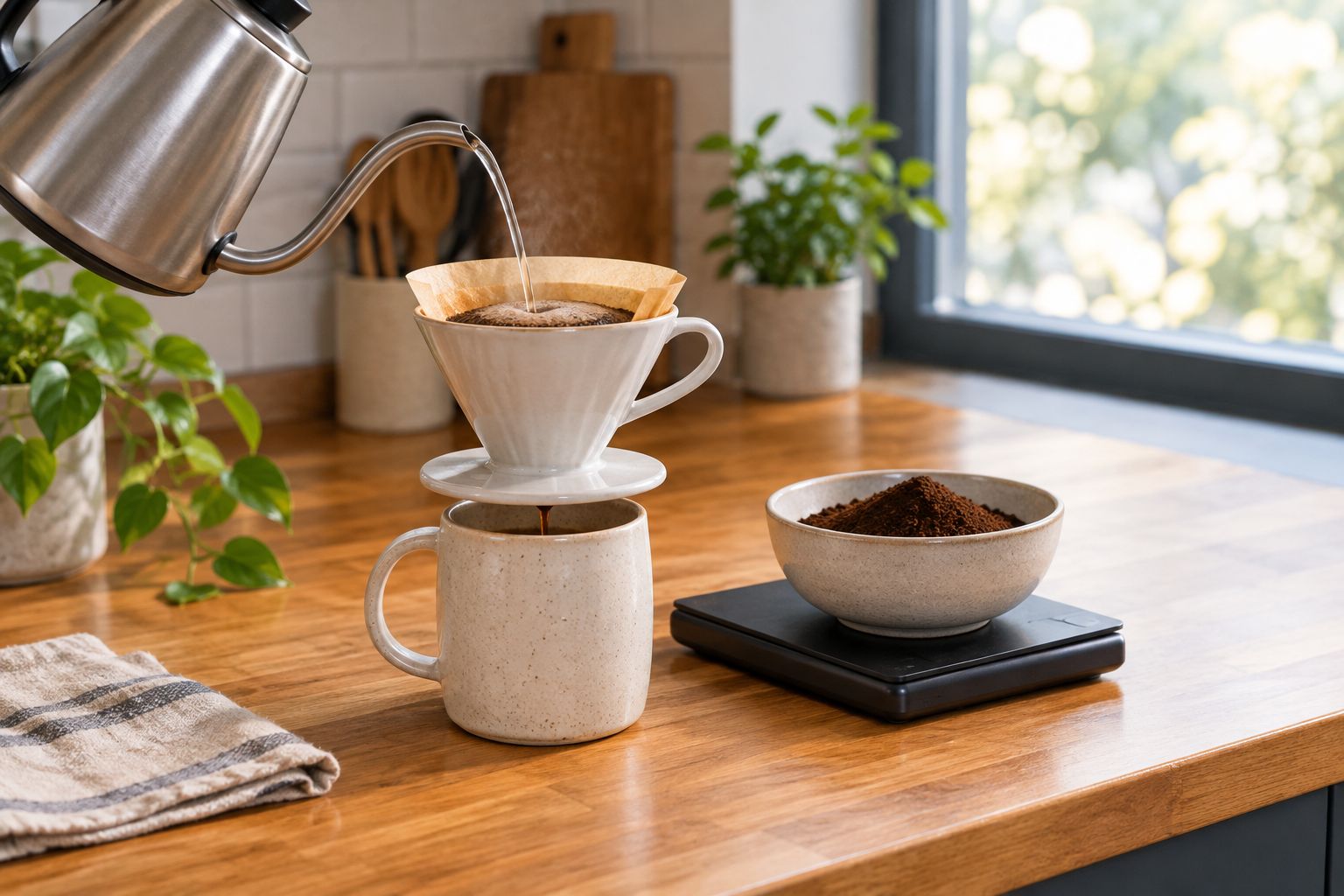
Begin with your brewer’s instructions. For a manual filter brew, try 15 grams of ground coffee with 250 milliliters of water as a starting recipe, then adjust to your taste. This is a recipe to test, not a promise that every coffee or brewer needs the same proportions.
A kitchen scale makes the dose repeatable. Without one, use the same scoop, the same fill level, and the same water mark each time; consistency matters more than guessing differently every morning. Scoop measurements do not convert reliably into a fixed coffee weight.
Taste the coffee before adding milk or sweetener if you want to understand the base cup. If it seems weak, change the coffee dose first. If it tastes unpleasantly bitter, check grind suitability, cleanliness, and brewing instructions rather than immediately replacing the bag.
Use a brief note on your phone to record what you changed. Your next cup should answer a question, not introduce several new variables.
- Record the coffee dose and water amount.
- Match the grind to your brewer’s instructions.
- Keep the recipe unchanged while comparing coffees.
- Adjust one variable at a time when troubleshooting.
- Note whether you preferred the result black or with milk.
Make cleanup and storage part of the routine
Finish the brewing task before leaving for class. Empty spent grounds or used capsules into the appropriate waste stream, rinse washable parts according to their instructions, and leave equipment ready for its next use. Do not leave coffee residue for a roommate to discover.
Store dry coffee in a tightly closed container away from heat, light, and moisture. A cupboard is a more sensible home than a sunny windowsill or a shelf beside a hot appliance. Close the bag promptly instead of leaving it open while you prepare breakfast.
Prepared coffee needs different handling from dry beans. Follow food-safety and equipment guidance, refrigerate perishable additions, and do not treat cold brew as shelf-stable simply because you brew it without heat. If your dorm lacks suitable storage, choose a different routine.
For shared kitchens, label personal supplies and discuss whether coffee is communal. That small conversation prevents confusion about who bought the beans and who should replace them.
- Close your coffee bag or container after each use.
- Keep dry coffee away from steam and direct sunlight.
- Wash reusable filters and brewer parts as instructed.
- Dry equipment before putting it away.
- Refrigerate milk and other perishable additions appropriately.
Track what you use before buying more
A useful coffee budget starts with your actual routine, not the appearance of a large bag. Note how often you brew, what you discard, and whether you also buy coffee while on campus. Compare spending only after accounting for both habits.
Keep a simple 2026 coffee log using receipts and your own brewing notes. Record coffee purchases, filters or capsules, and equipment you genuinely need. Include wasted batches; coffee poured down the sink is part of the routine, even when it never reaches your mug.
Sharing a drip maker can simplify equipment use, but it introduces decisions about supplies and cleaning. Brewing a full pot for yourself does not help if you regularly leave part of it untouched. Match the batch to the amount you intend to drink.
Improve the routine before expanding the setup. Once you know which format and roast you consistently enjoy, make your next purchase around that evidence rather than an imagined future habit.
- Record purchases from your actual receipts.
- Note unfinished cups and discarded batches.
- Include filters, capsules, and cleaning supplies in your records.
- Agree on supply contributions for shared equipment.
- Reassess your routine before adding accessories.
Plan caffeine around sleep and your own needs
Count caffeine from coffee, tea, energy drinks, and other sources rather than considering each drink separately. Serving size matters, and roast color does not establish the caffeine in your cup. A stronger-tasting coffee is not a reliable caffeine measurement.
For your 2026 caffeine plan, distinguish general adult guidance from a personal target. The U.S. Food and Drug Administration identifies 400 milligrams per day as an amount not generally associated with negative effects for most adults. That figure is not a recommendation to consume that much, and individual sensitivity varies.
If you are under 18, pregnant, taking medication, or managing a health condition, ask a qualified clinician about appropriate caffeine use. Do not apply a general adult figure to every college student.
When coffee interferes with sleep or leaves you feeling unwell, change the routine rather than seeking stronger beans. Decaf reduces caffeine but is not necessarily caffeine-free. Finishing an assignment does not make a late-night caffeine habit harmless.
- Count caffeine across all drinks and relevant products.
- Use product-specific information when it is available.
- Avoid estimating caffeine from roast darkness.
- Stop treating the general adult guidance as a daily goal.
- Adjust timing when coffee disrupts your sleep.
- Discuss personal health questions with a qualified clinician.
Compare coffee options for college life
The best option is the one that fits your permitted equipment and cleanup access. This table compares preparation routines, not caffeine strength or guaranteed taste.
| Option | Best for | Main advantage | Key limitation |
|---|---|---|---|
| Instant coffee | Students with an approved hot-water setup | No separate coffee brewer or grounds to strain | Limited control over the brewing process |
| Ground coffee in a drip maker | Students sharing an approved kitchen | Straightforward preparation without grinding | Brewer cleaning and unused batch coffee |
| Whole bean with a manual brewer | Students who enjoy hands-on preparation | Control over grind and recipe | Requires grinding, hot water, and cleanup |
| Coffee capsules | Students with a compatible approved machine | Simple portioning | Machine compatibility and capsule waste |
| Cold brew | Students who prefer advance preparation | Moves preparation away from the morning | Requires planning, straining, and suitable storage |
Cinder and Cedar Coffee Roasters offers coffee formats for several of these routines, but your equipment determines which option makes sense. Start with that constraint. A convenient product becomes inconvenient when it requires a machine you cannot use.
Common coffee mistakes college students make
Buying equipment before checking residence rules
A compact machine still needs permission, a safe surface, and cleanup access. Confirm those requirements first. Otherwise, your equipment choice has no workable home.
Choosing whole bean without planning to grind
Whole bean adds a task every time you brew. If you are unwilling to grind before class or cannot accommodate the noise, ground coffee is the better routine. Do not buy for a habit you do not intend to maintain.
Assuming dark roast means more caffeine
Roast taste and caffeine content are different questions. Do not choose darker beans as a shortcut to a stronger stimulant effect; use product-specific caffeine information and account for serving size instead.
Making a shared pot without agreeing on cleanup
A shared brewer needs shared expectations. Decide who buys coffee, who washes the equipment, and whether everyone uses the same supplies. Leaving those decisions unstated turns a useful kitchen appliance into a recurring chore for someone else.
Using late coffee to compensate for lost sleep
An exam deadline does not remove caffeine’s effects on your sleep. Keep your study schedule and coffee schedule separate. When you need the flavor rather than the caffeine, consider decaf and check its caffeine information.
FAQ
What’s the best coffee for college students?
The best coffee for college students matches their permitted equipment, taste, and preparation time. Ground coffee suits an existing drip maker, instant coffee suits minimal preparation, and whole bean suits students who want to grind.
Should I buy whole bean or ground coffee for college?
Choose ground coffee if you want to avoid a daily grinding step. Choose whole bean if you have a suitable grinder, room for it, and a routine that accommodates grinding and cleanup.
Can I keep a coffee maker in my dorm room?
Your housing rules determine whether you can keep and use a coffee maker in your dorm room. Check the residence handbook or ask the housing office before purchasing an appliance.
Is instant coffee a sensible choice for a student?
Instant coffee is a sensible choice when you want preparation without a separate coffee brewer. You still need an approved water-heating setup, and you trade away control over grinding and extraction.
Is dark-roast coffee better for staying awake?
Dark-roast coffee is not a reliable shortcut to more caffeine. Roast color alone does not establish the caffeine in a serving; the coffee, recipe, and amount you drink also matter.
How much caffeine should a college student have?
There is no single caffeine target for every college student. The FDA identifies 400 milligrams per day as an amount not generally associated with negative effects for most adults, not a daily goal; personal health circumstances require individual advice.
Which Cinder and Cedar Coffee Roasters products fit a simple student routine?
Instant Coffee fits minimal preparation, Cold Brew Coffee fits advance brewing, and 12 Pack Single Serve Coffee Capsules fit an existing compatible machine. Choose the format around your equipment and verify capsule compatibility rather than assuming a match.
How do I make my college coffee taste more consistent?
Measure the coffee and water, follow your brewer’s instructions, and change one variable at a time. Keep equipment clean so yesterday’s residue does not become part of today’s cup.
One last thing
Before buying another coffee accessory, reset your brewing space tonight. Put the cup, coffee, and clean equipment where you will use them, and write down the recipe you plan to repeat.
Then notice what actually slows you down tomorrow: finding supplies, heating water, grinding, or washing parts. Fix that specific obstacle. Your best college coffee setup is not the one with the most equipment; it is the one you can prepare, enjoy, and clean without disrupting the rest of your day.