

Can you steep loose leaf tea more than once?
Yes, you can steep loose leaf tea more than once when the leaves still produce a cup you enjoy. Brew the next infusion during the same tea session, drain the leaves between cups, and expect the aroma, strength, and finish to change rather than repeat exactly.
- Can you steep loose leaf tea more than once? Yes—judge each infusion by taste, not a fixed reuse count.
- Whole-leaf oolong, green tea, and white tea are useful starting points for trying repeated infusions.
- Drain the leaves completely between cups; leaving them submerged continues extraction.
- Cinder and Cedar Coffee Roasters serves home drinkers shopping online for coffee and tea.
Can you steep loose leaf tea more than once?
Yes. Re-steeping means adding fresh water to previously brewed leaves for another infusion. The practical limit is flavor: stop when the tea tastes watery, unpleasantly bitter, or no longer worth drinking. There is no single reuse count that applies to every loose leaf tea.
Start with the brewing directions on your package. If you are also deciding between formats, the Cinder and Cedar Coffee Roasters guide to loose leaf tea versus bagged tea addresses that separate choice.
For your 2026 tea routine, use this sequence:
- Brew normally. Follow the package directions for leaf quantity, water temperature, and steeping time.
- Drain completely. Remove the basket or pour the tea away from the leaves. Do not leave the leaves sitting in the finished drink.
- Add fresh water. Keep the water volume and temperature consistent for your first comparison.
- Taste before extending. Check the next infusion rather than automatically giving it a much longer steep.
- Adjust or stop. Extend a weak but pleasant infusion a little; discard leaves that no longer make an enjoyable cup.
Why this matters
Re-steeping lets you explore what the same leaves taste like across separate cups. It also helps you use leaves that still have flavor to give. The benefit is another enjoyable drink—not meeting a target number of infusions.
A lighter second cup is not automatically a failed cup. Look for aroma, body, and a pleasant finish rather than matching the first infusion's color. Judge the drink, not how dark the water looks.
Which loose leaf teas are good for re-steeping?
Leaf size, processing, and your first brew all affect the result. The categories below are starting points, not guarantees about a particular package. Read the ingredient list as well as the tea name, especially for flavored blends.
| Tea type | Best for | What another infusion offers | Main limitation |
|---|---|---|---|
| Oolong | Following flavor changes across cups | Rolled or twisted leaves can continue opening during brewing | A long first steep can leave less flavor for later cups |
| Green tea | Comparing gentle infusions | Another chance to notice fresh, grassy, or toasted notes | Excessive heat or steeping can produce bitterness |
| White tea | Drinking lighter cups slowly | Subtle aroma and a softer-tasting infusion | A delicate cup can become too faint for your preference |
| Black tea | Trying another cup from larger leaves | Remaining tea flavor without starting a fresh portion | Small broken leaves can give up much of their flavor early |
| Herbal or flavored blends | Experimenting with a familiar blend | Some ingredients continue contributing flavor | Ingredients extract differently, so the balance can change |
Oolong: best for comparing changing cups
Oolong is a useful starting point when you want to notice how infusions differ. Rolled leaves need room to open, so avoid packing them into a cramped infuser. A roomy basket makes it easier to wet the leaves evenly and drain them afterward.
The trade-off is attention. An oolong brewed with a large amount of leaf and short infusions behaves differently from the same tea brewed in a mug for a long first steep. Follow the method you started with rather than combining instructions from different brewing styles.
Green and white tea: best for lighter infusions
Green and white teas are worth trying again if you enjoy a lighter cup. Use the package temperature as your starting point, and compare the aroma and finish as well as strength. A pale infusion can still taste pleasant.
The limitation is that extra steeping does not always improve the drink. If green tea becomes harsh, do not keep increasing the time in search of more body. Start fresh and adjust the next first infusion instead.
Black tea: best for testing larger leaves
Try re-steeping a larger-leaf black tea before assuming every black tea behaves the same way. Leaf size matters because smaller pieces expose more surface area to water. A strong first mug can leave a noticeably lighter follow-up.
That lighter cup can work well on its own. If you add milk, taste before adding your usual amount: the same addition can overwhelm a weaker infusion. Stop if you need to compensate for tea that no longer tastes satisfying.
Herbal and flavored blends: best for experimentation
Treat each blend individually. Leaves, flowers, fruit pieces, spices, and added flavorings do not all release flavor at the same rate. The next cup can emphasize a different ingredient rather than simply becoming a weaker version of the first.
The drawback is inconsistency. A blend with an appealing first-cup balance does not necessarily keep that balance when re-steeped. Check package directions, and do not assume a strongly colored herbal infusion still has equally strong flavor.
Why re-steeping results vary
Your 2026 brewing notes will be more useful if they record your method, not just the tea name. These factors explain why the same leaves can produce different results from one session to another:
- Leaf size and shape. Whole, rolled, and broken leaves expose different amounts of surface area during brewing.
- First-infusion length. A long first steep extracts differently from a series of short infusions and changes what remains for later cups.
- Leaf-to-water ratio. More water with the same used leaves produces a more diluted drink; less water produces a more concentrated one.
- Water temperature. Temperature affects extraction, but hotter water is not a universal fix for a weak cup.
- Ingredients. Plain tea leaves and blends containing fruit, flowers, or spices do not necessarily behave alike.
- Room to expand. A crowded infuser restricts how freely leaves open and how evenly water reaches them.
Change one brewing variable at a time. If you increase temperature, extend the steep, and reduce the water together, you will not know which adjustment helped—or caused bitterness.
How do you make the next steep taste better?
Start by keeping the process repeatable. Use the same mug, basket, and water volume so you can notice what the leaves contribute. You do not need a new brewer to make a useful comparison.
For a simple 2026 home trial, measure 150 milliliters of water for each infusion. This is a suggested comparison size, not a required tea ratio; choose the leaf amount from your package instructions. Keeping volume steady makes strength easier to compare.
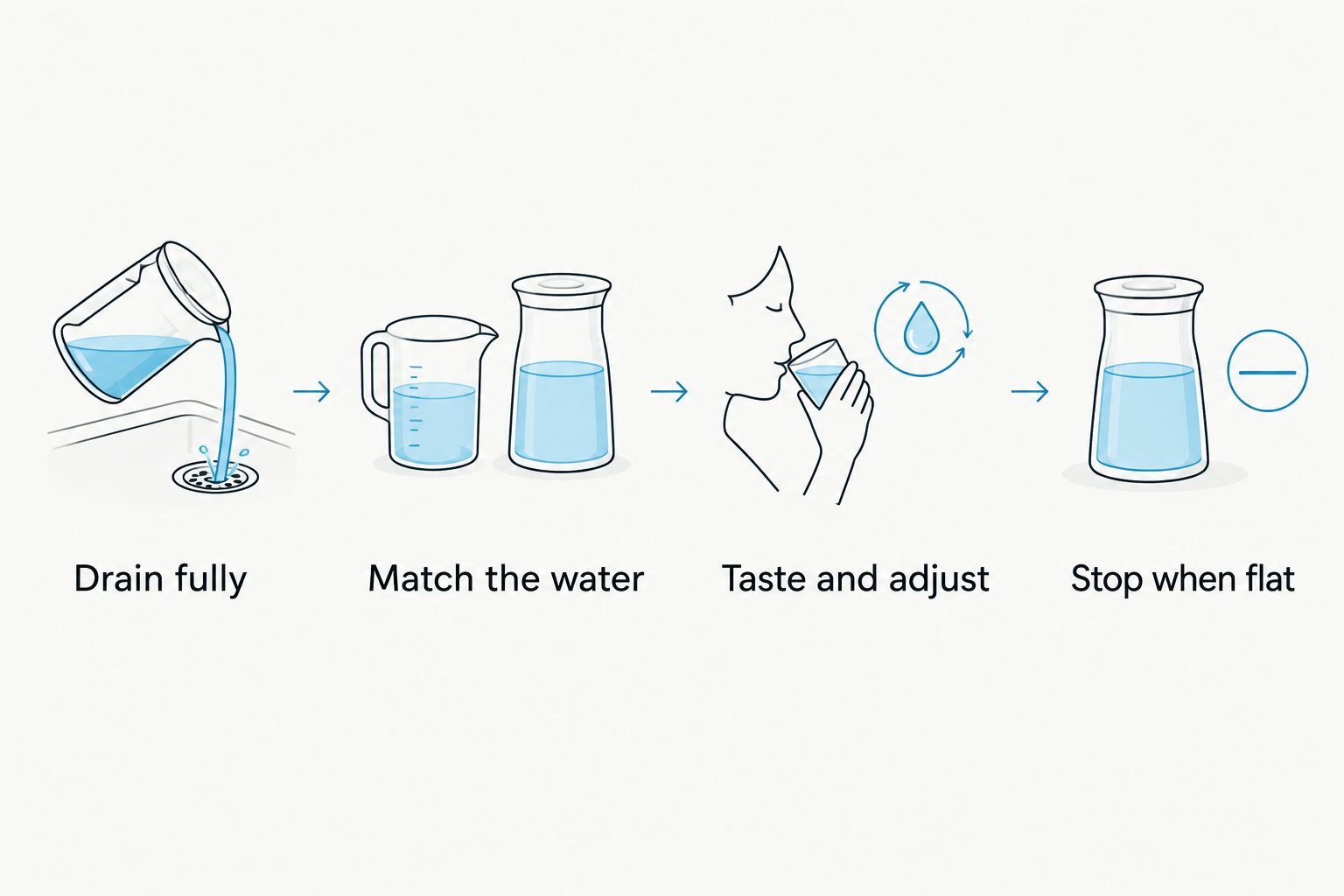
Drain fully
Lift the basket clear of the brewed tea, or pour the entire infusion out of the teapot. A basket resting partly in the drink keeps extracting. That makes your planned steeping time less meaningful and can leave an unpleasant finish.
Match the water
Use fresh water at the package's recommended temperature as your starting point. Avoid changing temperature simply because the leaves are already wet. First find out whether the original setting still gives you a pleasant cup.
Taste and adjust
If the next infusion is weak but clean-tasting, try extending it in 30-second increments, tasting as you go. This is an adjustment method, not a promise that every tea needs more time. Some brewing styles use very short infusions, so their own instructions take priority.
Stop when flat
Discard the leaves once the cup tastes flat, harsh, or unappealing. Re-steeping is optional. A fresh portion is the better choice when another infusion no longer meets your taste.
How long should you steep loose leaf tea the second time?
Use the package instructions as your starting reference, then adjust by taste. There is no universal second-steep time because leaf quantity, temperature, tea type, and the first infusion all matter.
For a mug-style brew, record the first infusion in minutes and note whether it tasted weak, balanced, or harsh. A weak follow-up invites a small time adjustment; a harsh follow-up does not. Do not turn an unpleasant cup into a longer experiment just to reach a predetermined time.
Short-infusion brewing is a different method. Do not apply a long mug-steeping schedule to a setup designed around concentrated leaf quantities and quick pours. Keep the instructions for those methods separate.
Does re-steeped tea still contain caffeine?
Re-steeped tea made from caffeinated leaves still contains caffeine. A brief first infusion does not reliably turn ordinary tea into decaffeinated tea, and taste or color cannot tell you how much caffeine remains.
If limiting caffeine is part of your 2026 routine, choose tea labeled for that need rather than depending on reuse. Herbal blends also need an ingredient check: the word herbal alone does not establish that every blend is caffeine-free.
Can you save wet tea leaves for tomorrow?
The simplest home routine is to re-steep during the same session and discard the wet leaves afterward. Do not treat damp leaves like dry tea that can sit in a cupboard. Once wet, they require different handling.
For a low-fuss 2026 habit, make another cup while you are already brewing rather than building tomorrow's drink around used leaves. Do not rely on smell or another pour of hot water to establish that stored wet leaves are safe.
Keep the distinction clear: storing unopened or dry loose leaf tea is a different question from holding leaves after brewing. Good dry storage does not make used leaves suitable for indefinite reuse.
FAQ
Can you steep loose leaf tea more than once in a regular mug?
Yes, you can re-steep loose leaf tea in a regular mug using a removable infuser. Drain the leaves fully after each infusion and add fresh water for the next cup.
What's the best loose leaf tea for trying multiple infusions?
Whole-leaf oolong is a useful starting point for comparing multiple infusions because rolled leaves continue opening as they brew. Green and white teas are also worth trying, but your brewing method affects the result.
Should I use hotter water for the second steep?
Do not automatically use hotter water for the second steep. Start with the package temperature and adjust time or water volume separately if the cup tastes weak.
Does a lighter second cup mean the tea is finished?
A lighter second cup does not necessarily mean the tea is finished. Taste for aroma, body, and a pleasant finish instead of judging only by color.
Can I re-steep loose leaf tea after adding milk?
Keep milk in the cup rather than adding it to leaves you intend to re-steep. Brew and drain the tea first, then add milk to the finished drink.
Is the second steep caffeine-free?
The second steep of caffeinated tea is not reliably caffeine-free. Choose an appropriately labeled tea when caffeine intake matters rather than relying on a first rinse or infusion.
How do I know when to throw used tea leaves away?
Discard used leaves when another infusion tastes flat or unpleasant, and finish reuse within the same brewing session. Do not keep re-steeping solely to reach a target count.
One last thing
Compare the tea after it cools enough to taste comfortably. Very hot drinks make it harder to pay attention to the details you are trying to compare. Notice whether the finish stays pleasant, not just whether the first sip seems strong.
Cinder and Cedar Coffee Roasters is for home drinkers shopping online for coffee and tea. For your next tea session, keep the goal equally practical: make another infusion only when you want to drink it. The best stopping point is an enjoyable last cup, not an impressive tally.