

Can you reuse coffee grounds for a second brew?
Yes, you can reuse coffee grounds for a second brew, but expect a weaker cup with less aroma and a less balanced flavor than the first. The first brew has already removed much of what makes the coffee enjoyable, and brewing again does not make the remaining caffeine predictable. For a good daily cup in 2026, use fresh grounds; treat a second brew as an experiment, not an equivalent refill.
- Can you reuse coffee grounds for a second brew? Yes, but fresh grounds give you a more balanced cup.
- Cinder and Cedar Coffee Roasters recommends fresh grounds for everyday brewing, not repeated extraction.
- Second-brew coffee still contains caffeine; a weaker taste does not mean caffeine-free.
- For less waste, brew a smaller fresh batch instead of running water through spent grounds again.
Can you reuse coffee grounds for a second brew?
You can pass water through used grounds again, but you cannot reset them. Water removes soluble compounds during brewing, leaving less available for the next cup. More brewing time does not restore the aroma or flavor already extracted.
For home coffee drinkers choosing roasted coffee from Cinder and Cedar Coffee Roasters, getting the batch size right is a better everyday approach than brewing the same grounds twice.
| Approach | Best for | Main advantage | Main drawback |
|---|---|---|---|
| Fresh grounds | A balanced daily cup | Starts with unbrewed coffee and a repeatable recipe | Uses a fresh portion each time |
| Immediate second brew | A side-by-side taste experiment | Shows what remains after the first extraction | Usually tastes thinner and less aromatic |
| Smaller fresh batch | Avoiding leftover coffee | Matches the amount brewed to what you drink | Requires adjusting the recipe to the brewer |
| Fresh coffee diluted after brewing | A lighter-tasting drink | Lets you adjust strength without reusing grounds | Too much added water makes the cup watery |
Choose a smaller fresh batch when your goal is less waste. Choose dilution when your goal is a milder drink. Reusing grounds is a different choice: you are extracting what remains, rather than making a lighter version of the original cup.
Why this matters
A second brew mixes up two separate ideas: coffee strength and extraction. Strength describes how concentrated the drink is; extraction describes what the water removes from the grounds. A cup can taste weak without tasting balanced.
That distinction matters when you adjust your 2026 coffee routine. If you like mild coffee, you do not need to start with spent grounds. Brew fresh coffee well, then adjust its concentration to suit your taste.
The same distinction helps you troubleshoot. A thin second brew does not prove that your beans lack flavor, and a harsh finish does not automatically mean you chose the wrong roast. The grounds have already been used, so the starting point has changed.
What changes in the second cup?
Aroma becomes less noticeable
Freshly brewed coffee releases aromas that help create its overall flavor. After the first brew, the grounds no longer have the same starting supply of aromatic compounds. A second pass generally produces a less fragrant drink.
Smell the cups before adding milk or sweetener. You do not need to identify individual notes; simply notice whether the second cup smells as inviting as the first. That comparison is more useful than judging color alone.
Body becomes thinner
Body is the weight and texture you notice in your mouth. Used grounds generally produce a second cup with less substance, especially when you repeat the original water volume. The drink can look like coffee while feeling noticeably watery.
Adding milk changes the texture, but it does not restore the coffee compounds removed in the first brew. If you usually drink coffee with milk, compare a small plain sip first so the difference is easier to recognize.
The finish becomes less balanced
A second brew does not always taste bitter. It can taste flat, woody, thin, or simply weak, depending on the coffee and how you brewed it the first time. There is no single flavor outcome that applies to every used coffee bed.
Judge the whole cup, not just bitterness. A drink that lacks bitterness can still lack the aroma, body, and pleasant finish you wanted.
Why second-brew coffee varies
The result depends on what happened during the first brew and what you change afterward. These factors explain why one reused batch does not reliably predict the next:
- First-brew extraction: Grounds that gave up more soluble material initially have less left for another pass.
- Grind size: Particle size affects how water contacts the coffee and how quickly compounds dissolve.
- Water volume: Repeating a full water dose spreads the remaining extracted material through another full batch.
- Contact time: Longer contact changes extraction, but it cannot replace compounds already removed.
- Brew method: Immersion, drip, and espresso expose the grounds to water differently.
- Handling afterward: Leaving grounds wet introduces a storage concern that is separate from the taste question.
These are reasons to expect variation, not reasons to keep adjusting a spent batch until it resembles fresh coffee. For a repeatable 2026 routine, start each brew with fresh grounds and change one part of the recipe at a time.
How to compare a first and second brew at home
A side-by-side comparison makes the trade-off clear. Use your familiar brewer and plain coffee so extra ingredients do not hide differences in aroma, body, and finish. This is a taste exercise, not a way to measure caffeine or establish food safety.
- Brew fresh. Make your normal batch with fresh grounds and a clean brewer. Keep some of the brewed coffee for comparison.
- Rebrew immediately. Run another batch through the same grounds without storing them between brews. Keep the recipe otherwise unchanged for a clearer comparison.
- Compare aroma. Smell each cup before tasting. Notice the intensity rather than searching for elaborate tasting descriptions.
- Compare body. Taste both at a comfortable, similar temperature. Notice whether the second cup feels thinner.
- Compare finish. Pay attention to what remains after swallowing. Decide whether you would actually enjoy drinking the second cup.
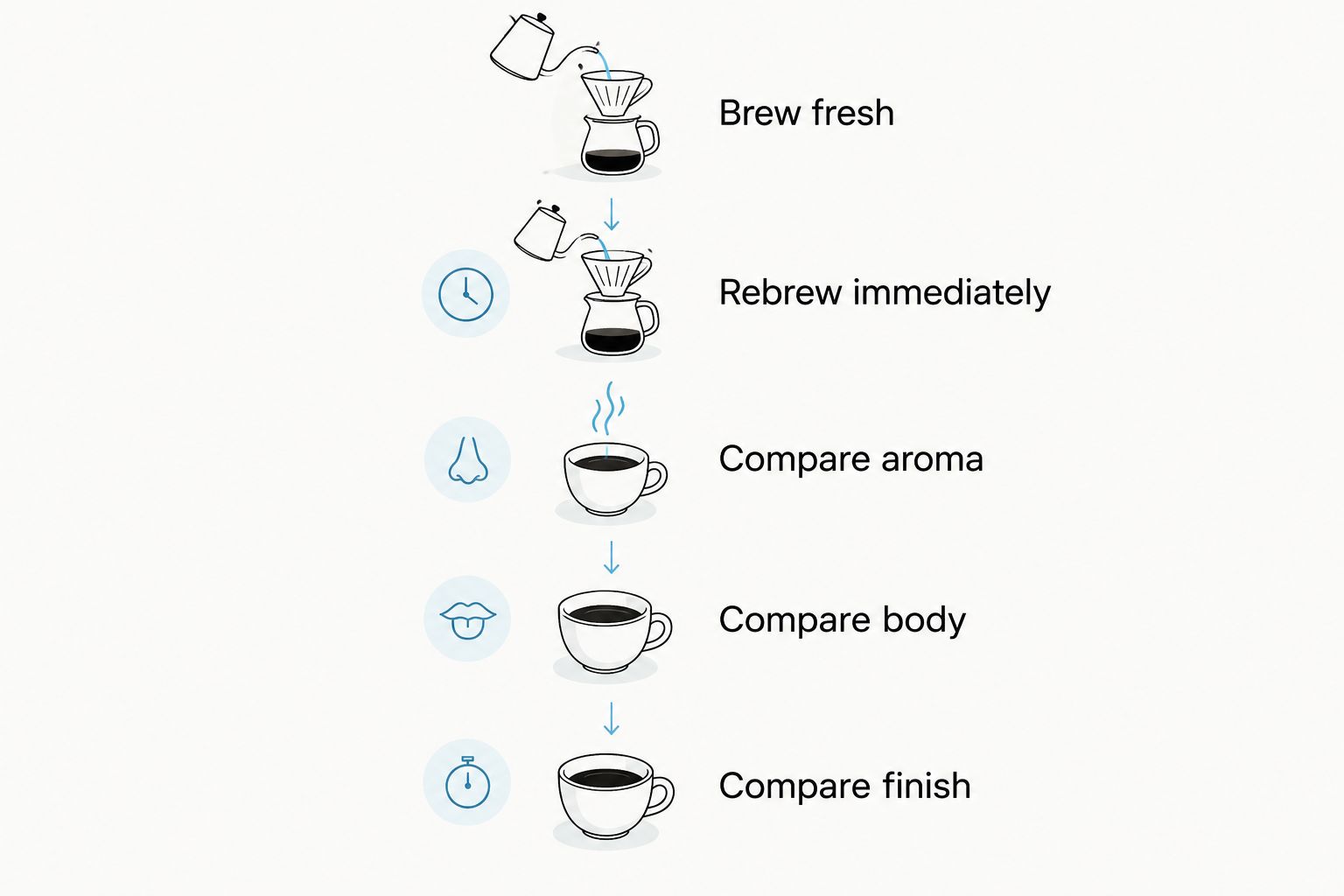
Keep the comparison fair. If you add more water to one cup or substantially change the temperature before tasting, you introduce another difference. You are trying to learn whether reusing grounds makes a drink you enjoy, not prove that it always works or always fails.
If the first cup also tastes disappointing, fix that recipe before evaluating reuse. Check your measurements, grind, filter placement, and brewer cleanliness. A second extraction is not a reliable repair for a poorly brewed first batch.
Does the brew method change the recommendation?
Drip makers and pour-over
A drip maker or pour-over can send water through the same coffee bed again. That makes reuse easy to attempt, but ease does not make the second batch equivalent. The water is passing through coffee that has already supplied the first drink.
For drip makers, stay within the manufacturer's batch-size guidance when making less coffee. Very small batches do not suit every machine. With pour-over, keep the coffee dose and grind appropriate for your dripper rather than simply pouring less water over any amount of grounds.
French press
A French press lets you add more water to the same grounds and steep again. Longer steeping still does not restore the original balance. You are making another extraction from already-brewed coffee, not restarting the process.
Empty and clean the press when you finish. Leaving wet grounds in the vessel for the next day's coffee turns a brewing shortcut into a storage question, with no improvement in the flavor starting point.
Espresso
Pulling another shot through a used espresso puck is not the same as making a second espresso from fresh coffee. The puck has already undergone extraction, so you should expect a different, generally weaker result. A darker roast does not make a used puck fresh again.
If you want a longer drink, prepare fresh espresso and add water afterward. That gives you control over concentration without relying on another extraction from the spent puck.
Can you reuse coffee grounds the next day?
Do not save wet grounds overnight for your next brew. Moist food material can support microbial growth, and reheating is not a substitute for proper handling. There is no universal safe storage window for used grounds in every home kitchen.
An immediate taste comparison and storing grounds for later are different activities. Do not treat advice about trying a second extraction as permission to leave a wet filter basket on the counter until tomorrow.
Refrigerating or drying spent grounds also does not restore their original flavor. Keep your 2026 routine simple: empty the brewer after use, clean it according to its instructions, and begin the next batch with fresh coffee.
Does brewing coffee twice remove the caffeine?
A second brew is not caffeine-free. Used grounds can retain caffeine, and the amount reaching another cup depends on the coffee and both brewing processes. Taste, color, and aroma cannot tell you the caffeine dose.
Do not use repeated brewing as a home decaffeination method. If managing caffeine is your goal, choose coffee intended for that purpose and remember that decaf is not necessarily caffeine-free either.
A weak-tasting second cup is especially easy to misread. Less flavor does not provide a dependable measure of how much caffeine remains, so avoid treating it as an evening-coffee workaround.
What should you do instead of reusing grounds?
Cinder and Cedar Coffee Roasters is best for home drinkers choosing roasted coffee for their everyday brewing routine. For that routine, fresh grounds and a measured batch offer a more repeatable starting point than a second extraction.
Start by measuring what you actually drink. If you regularly leave coffee in the pot, reduce the next batch rather than planning to stretch the grounds afterward. Our guide to how much coffee to use per cup explains the dosing decision in more detail.
For a practical fresh-coffee starting recipe, try a 1:16 coffee-to-water ratio by weight: 15 grams of coffee with 240 grams of water. This is a starting recipe, not a required setting for every brewer. Follow your machine's instructions and adjust the next fresh batch to taste.
If the result is too strong, add a little hot water to the brewed drink. If you consistently prefer that lighter cup, record the adjustment so you can repeat it. Dilution gives you a simpler comparison than changing the dose, grind, and brewing time together.
For less waste in 2026, focus on the amount brewed, not just the grounds discarded. A smaller fresh batch that you finish is a more useful routine than a large first pot followed by a second pot you do not enjoy.
FAQ
Can I brew the same coffee grounds twice?
Yes, you can brew the same coffee grounds twice, but the second cup usually has less aroma, thinner body, and a less balanced flavor. Use fresh grounds when you want a repeatable daily cup.
Does a second brew of coffee still have caffeine?
Yes, a second brew can still contain caffeine. A weaker taste does not tell you how much caffeine is in the cup.
Can I leave used coffee grounds in the maker overnight?
Do not leave used grounds in the maker overnight for tomorrow's coffee. Empty the basket and clean the brewer according to its instructions instead.
Can I reuse an espresso puck for another shot?
You can run water through a used puck again, but it does not produce an equivalent fresh espresso. Use fresh coffee for another shot, or add water to fresh espresso for a longer drink.
Is reusing grounds better than adding water to coffee?
Adding water to freshly brewed coffee is the better choice when you want a lighter-tasting drink. Reusing grounds changes what is extracted rather than simply adjusting concentration.
Will a darker roast make reused grounds taste better?
A darker roast does not restore compounds removed during the first brew. Choose roast level for the flavor you enjoy in fresh coffee, not as a solution for spent grounds.
Can I make cold brew from grounds I already used hot?
Cold water can extract some remaining compounds from used grounds, but it does not restore their original flavor. Start cold brew with fresh coffee rather than treating it as a way to rescue spent grounds.
One last thing
Dark color is not proof of a satisfying cup. A second brew can still look like coffee while lacking the aroma and body you expect. Taste is the useful test; appearance alone is not.
For your next Cinder and Cedar Coffee Roasters brew, write down the coffee weight, water weight, and whether you finished the batch. Those simple notes tell you what to change tomorrow without turning everyday coffee into a technical project.