

Can single origin coffee be used for espresso?
Yes, single-origin coffee can be used for espresso; you do not need beans labeled espresso to make a balanced shot. The main caveat is that roast level, grind, and your brewing recipe affect the result more than the single-origin label does. For your 2026 home espresso routine, choose the flavor you enjoy, then adjust the recipe to suit that coffee.
- Can single origin coffee be used for espresso? Yes; choose your roast and adjust the grind to taste.
- Single-origin coffee highlights a source; an espresso blend combines coffees to create an intended flavor profile.
- Cinder and Cedar Coffee Roasters offers single-origin coffee for home drinkers exploring different origins.
- Start with your basket’s recommended dose, weigh the finished espresso, and change one brewing variable at a time.
Can single origin coffee be used for espresso?
Single-origin coffee works for espresso because espresso is a brewing method, not a required bean origin or roast level. A coffee sold for drip or pour-over is not automatically unsuitable. What matters is whether you can grind it appropriately and extract a shot you enjoy.
Single-origin and blend describe sourcing choices. Neither label guarantees sweetness, body, or an easy morning routine.
| Coffee option | Best for | Main advantage | Main trade-off |
|---|---|---|---|
| Single-origin coffee | Exploring a particular source’s flavor | Lets you focus on that coffee’s character | A new coffee can require a different recipe |
| Espresso blend | Following a roaster’s intended espresso profile | Combines coffees toward a chosen balance | Gives you less focus on one source |
Cinder and Cedar Coffee Roasters single-origin coffee is best for home drinkers who want to explore different origins. Choose by roast and flavor description rather than treating origin as a quality ranking.
Why this matters
Buying a different bag will not fix every sour or bitter shot. An unsuitable grind, uneven preparation, or an inconsistent amount of water can hide the qualities you bought the coffee to taste.
For a practical 2026 brewing routine, separate the buying decision from the brewing adjustment. First choose coffee that sounds appealing. Then keep your preparation steady long enough to learn what that coffee needs, rather than replacing it after one disappointing cup.
Medium-roast single-origin coffee: best for a balanced starting point
Choose a medium roast if you want a starting point between bright acidity and stronger roast flavors. Read the bag’s flavor description, too: roast labels alone do not tell you whether the finished espresso will taste nutty, fruity, or chocolate-like.
Medium roast is not a promise of an effortless shot. You still need an appropriate grind and a recipe that suits the coffee, but it gives you a sensible place to start when you are unsure which roast direction you prefer.
Taste the espresso before adding milk. If the plain shot has sweetness and a pleasant finish, you have a useful baseline for adjusting your usual latte or cappuccino.
Light-roast single-origin coffee: best for brighter flavors
Choose a light roast when you enjoy noticeable acidity and want to explore delicate flavors. The trade-off is that lighter-roasted coffee generally requires more attention to extraction than darker-roasted coffee.
A short, sharp shot does not prove that the coffee is wrong for espresso. You might need a finer grind, a larger beverage yield, or a temperature adjustment if your machine allows it. Make those changes separately so you can identify which adjustment improves the cup.
Do not mistake every bright flavor for a brewing fault. Pleasant acidity feels balanced by sweetness; an unpleasantly sour shot tastes sharp without enough sweetness or depth to support it.
Dark-roast single-origin coffee: best for roast-forward flavor
Choose a dark roast when you prefer stronger roast flavors and less emphasis on bright acidity. Dark-roasted coffee generally extracts more readily, so a recipe that suits a lighter roast can produce an overly bitter result.
The drawback is that strong roast character can make differences between origins less obvious. If your goal is to explore the coffee’s source, read the tasting description rather than assuming darker always means richer or better.
For milk drinks, judge the finished drink as well as the straight shot. A roast-forward espresso might suit your daily cup even when it is not your favorite coffee to drink without milk.
Why single-origin espresso tastes different from bag to bag
The origin name is only part of the story. These factors explain why your next bag can need a different approach:
- Roast level: Lighter and darker roasts respond differently to extraction. Keep the roast in mind before copying your previous recipe.
- The coffee itself: Variety, growing conditions, and processing influence flavor. A country name alone cannot predict the finished shot.
- Grind size: A grind that lets water pass too freely behaves differently from one that restricts flow.
- Beverage yield: Changing how much espresso you collect changes both extraction and concentration.
- Bean condition: Coffee changes after roasting and opening. Keep storage and the bag’s age in mind when a familiar recipe shifts.
- Preparation: Unevenly distributed grounds can let water follow easier paths through the coffee, producing an uneven extraction.
Do not assign every flavor difference to origin. A preparation problem can overwhelm the distinction you hoped to taste.
How do you dial in single-origin coffee for espresso?
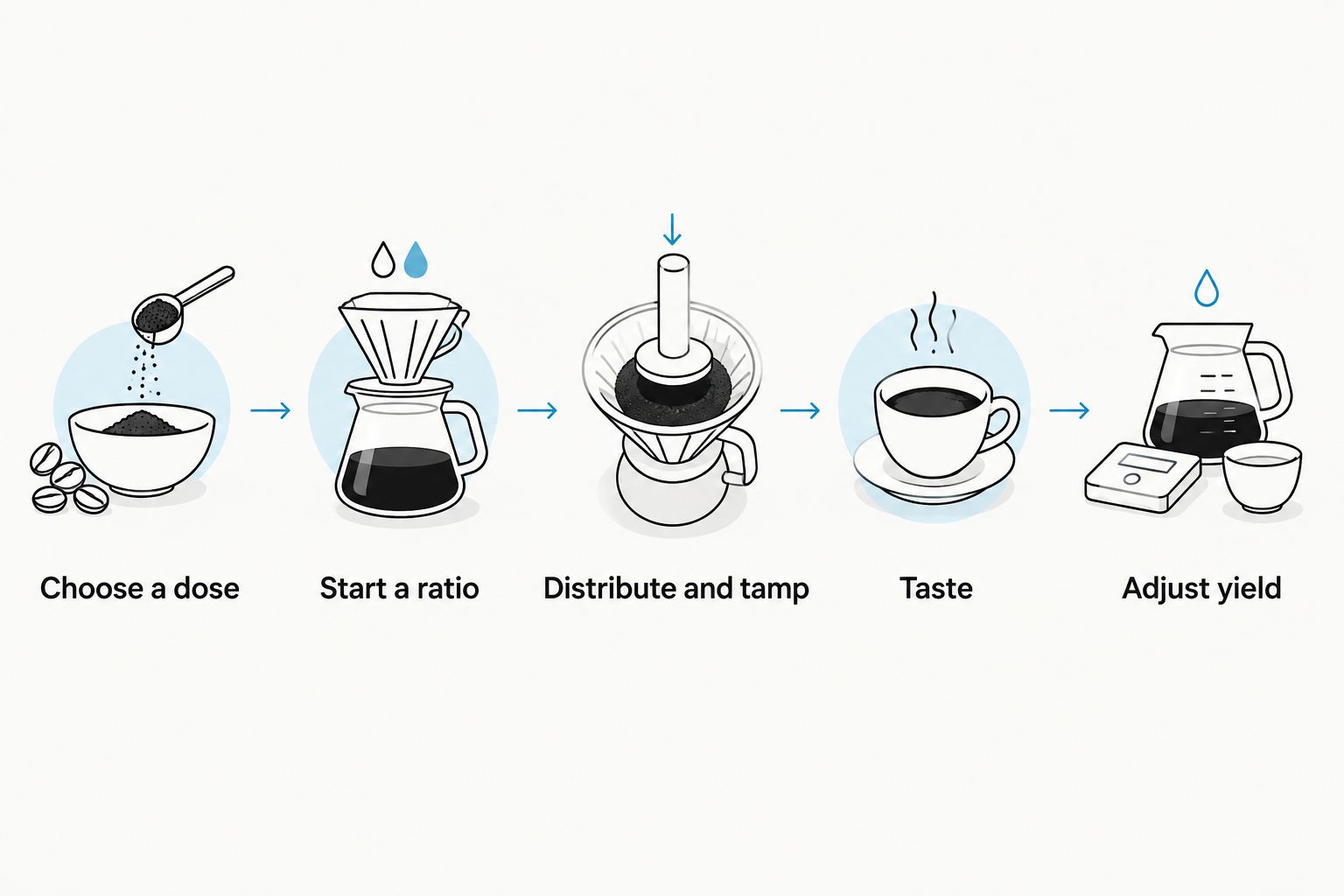
Use a repeatable sequence rather than chasing a perfect-looking shot. For your 2026 recipe notes, record the coffee, dose, beverage yield, and taste; those details make your next adjustment easier to understand.
1. Choose a dose that fits your basket
Follow the basket or machine manufacturer’s guidance. Overfilling or underfilling introduces another variable before you have established a baseline.
For a conventional double basket designed for that amount, 18 grams of ground coffee is a familiar starting dose. It is not a universal requirement: a different basket can call for a different amount.
2. Start with a simple brew ratio
A 1:2 brew ratio means collecting twice the weight of the dry coffee. With an 18-gram dose, that gives you 36 grams of espresso in the cup.
This is a common starting recipe, not a rule for every single-origin coffee. Keep it steady while you make your initial grind adjustments, then change the yield if the taste calls for it.
3. Distribute the grounds and tamp evenly
Spread the grounds evenly in the basket before tamping. Keep the tamp level so your preparation does not create an obvious easy route for the water.
Aim for repeatability rather than extra force. Changing your dose, distribution, and tamping approach together makes it difficult to know why the next shot tastes different.
4. Taste before changing the recipe
Stir the espresso and let it cool enough to taste comfortably. Look for sweetness, acidity, bitterness, body, and the flavor left after swallowing.
If a fast-flowing shot tastes thin and sharply sour, try a finer grind while keeping dose and yield steady. If the machine struggles to produce a shot, start by checking whether the grind is too fine for that dose and basket.
5. Adjust yield after establishing steady flow
If preparation and flow are consistent but the shot still tastes unbalanced, test a different beverage yield. A longer yield generally increases extraction while making the drink less concentrated; a shorter yield does the reverse.
Taste the trade-off. More extraction is not automatically more enjoyable, and a thicker shot is not automatically a sweeter one.
What equipment matters most for single-origin espresso?
An espresso-capable grinder matters because small grind adjustments affect water flow through the coffee. Whole beans give you control over that adjustment; preground coffee fixes the grind before you know how it behaves in your machine.
The trade-off is convenience. Grinding for each session adds a step, while preground coffee removes that step but limits your ability to correct flow problems. Follow your machine’s instructions, especially when using a pressurized basket or a machine with an integrated grinder.
Once you have a baseline recipe, a precision coffee scale helps you hold dose and beverage yield steady, so a grind adjustment is the main change you are tasting. Measuring by cup volume is less repeatable because crema changes the apparent volume of the shot.
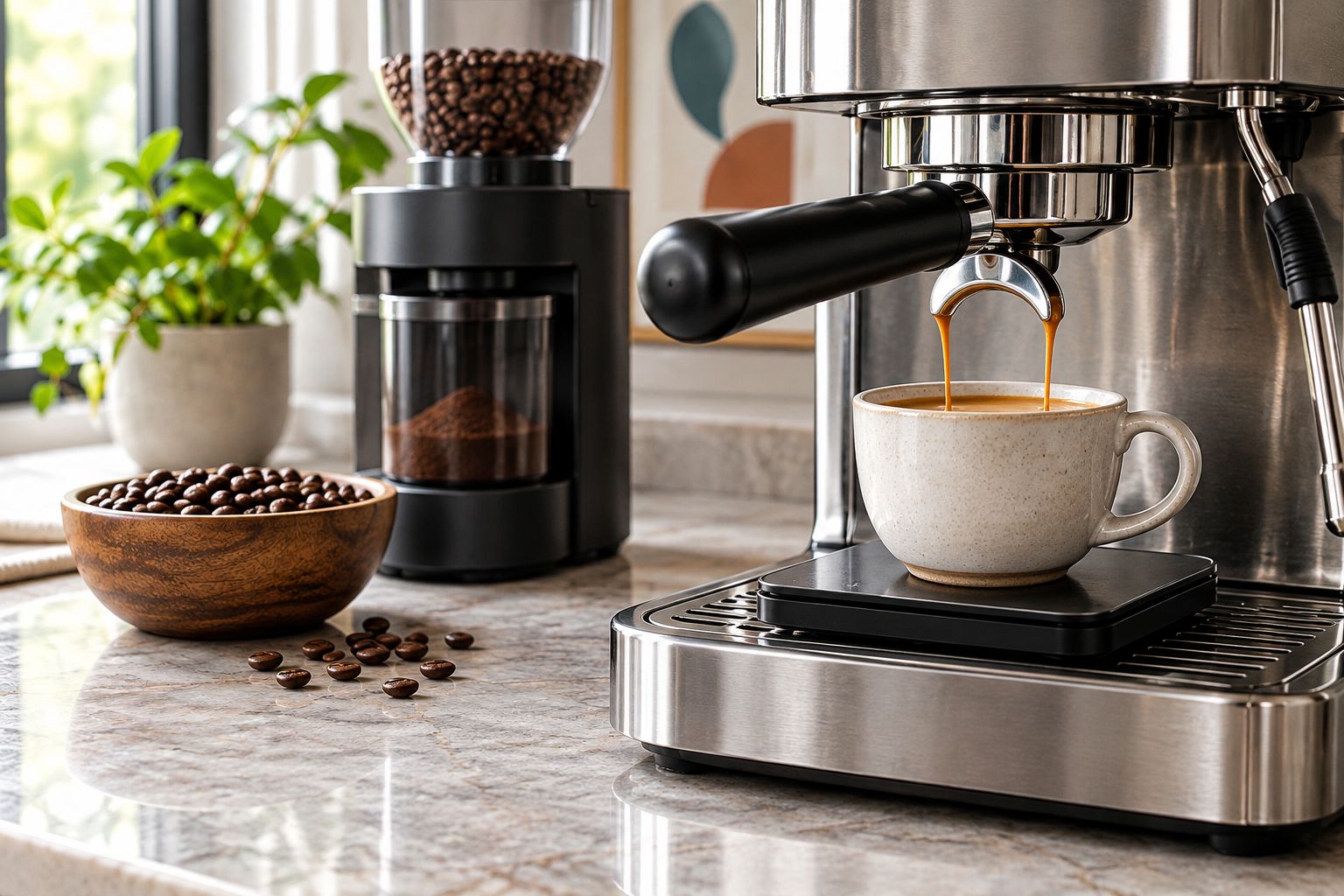
You do not need to replace every tool to try single-origin coffee. For a 2026 equipment purchase, identify the limitation first: inconsistent grinding, an unsuitable basket, or difficulty measuring the finished shot. Buy to solve that problem rather than assuming another accessory will improve the flavor.
How do you choose a bag without overcomplicating your routine?
Start with the drink you actually make. If you drink espresso straight, prioritize flavor descriptions you enjoy without milk; if you make lattes, assess whether those flavors remain pleasant in your normal drink.
Keep the roast familiar when trying a new origin. Changing both roast style and source at once makes the result harder to interpret, especially while you are learning to adjust the grinder.
Cinder and Cedar Coffee Roasters offers the Single Origin Favorites Sample Pack, with 6 packs of 2 ounces each. Best for: home drinkers comparing different single-origin coffees. The practical benefit is variety; the trade-off for espresso is that each change of coffee can require fresh adjustments, using part of a small pack before you settle on a recipe.
If your priority is a repeatable weekday cup, stay with one coffee while learning your machine. Sampling makes more sense when you have time to taste, adjust, and take notes rather than rush through breakfast.
Does single-origin coffee need a special espresso recipe?
Single-origin coffee needs a recipe suited to the coffee, not a separate set of espresso rules. Start with your basket’s recommended dose and a familiar brew ratio, then adjust according to taste.
Do not copy a recipe solely because it names the same country. Roast, processing, grinder, and machine can differ enough that another brewer’s settings do not transfer directly.
Can you use single-origin espresso in milk drinks?
Yes, single-origin espresso works in milk drinks. Milk changes the balance and can make delicate flavors less noticeable, so taste the complete drink before deciding whether the coffee suits your routine.
Keep your usual milk amount steady while comparing coffees. Otherwise, a change in drink strength can look like a difference between origins.
Is single-origin coffee better than a blend for espresso?
Single-origin coffee is not automatically better than a blend for espresso. Choose single-origin coffee to explore a source’s character; choose a blend when its intended flavor profile matches what you want to drink.
Both options can taste balanced or disappointing depending on the coffee and preparation. The better choice is the one you enjoy and can brew consistently.
FAQ
Can single origin coffee be used for espresso in a home machine?
Yes, single-origin coffee can be used for espresso in a home machine. Use a grind and dose appropriate for your machine and basket, then adjust the recipe to taste.
Do I need coffee labeled espresso to make espresso?
No, coffee does not need an espresso label to work in an espresso machine. An espresso label usually communicates the roaster’s intended use or flavor direction, not a separate type of bean.
What roast should I try first for single-origin espresso?
A medium roast is a sensible starting point if you want a balance between bright acidity and stronger roast flavors. Your preferred flavor and willingness to adjust the recipe matter more than the label alone.
Why does my single-origin espresso taste sour?
A sharply sour, thin shot can indicate insufficient extraction, while pleasant acidity can be part of the coffee’s flavor. Check preparation and flow before changing the grind or beverage yield.
Can I use preground single-origin coffee for espresso?
Yes, if the grind suits your machine and basket. The limitation is that you cannot adjust the grind when the shot runs too quickly or too slowly.
Can I use the same single-origin beans for espresso and pour-over?
Yes, the same single-origin beans can be used for espresso and pour-over. Each method needs its own grind and recipe, and you might prefer the coffee prepared one way over the other.
Does Cinder and Cedar Coffee Roasters sell single-origin coffee?
Yes, Cinder and Cedar Coffee Roasters sells single-origin coffee for home drinkers. Choose according to the stated roast, flavor description, and the brewing routine you want to maintain.
One last thing
Crema is not a taste verdict. An attractive layer on top does not establish that the espresso underneath is sweet or balanced, so taste before adjusting your recipe to match a photograph.
For your next 2026 brewing session, write a plain-language note such as sharp and thin, sweet and rounded, or bitter and drying. That note gives your next adjustment a purpose. Once the coffee tastes right in your usual drink, stop changing things and enjoy it.