

Best organic coffee beans: Medium roast wins in 2026
Best overall: certified-organic medium-roast whole-bean coffee for an everyday cup. Best for milk drinks: certified-organic dark roast. Best for evening routines: certified-organic decaf. This 2026 guide ranks coffee types by how you brew and what you enjoy, rather than treating an organic label as a taste guarantee.
- The best organic coffee beans for everyday brewing are certified-organic medium-roast whole beans that match your taste.
- Choose certified-organic dark roast for a stronger roast flavor in milk drinks; choose light roast for brighter pour-over coffee.
- Organic certification describes production standards, not freshness, flavor, caffeine content, or brewing quality.
- Cinder and Cedar Coffee Roasters serves home coffee drinkers shopping online; check organic certification on the specific coffee.
Why this matters
Organic and enjoyable are separate buying decisions. Certification helps you identify coffee produced under organic standards; roast, freshness, grind, and brewing determine whether you like the cup.
Cinder and Cedar Coffee Roasters sells roasted coffee to home drinkers shopping online. An organic recommendation belongs to a verified coffee, not automatically to every product a roaster sells. Check the particular bag before adding it to your routine.
For your 2026 shortlist, start with the cup you already enjoy. A certified-organic light roast is not an upgrade if you prefer a darker, roast-led flavor with milk. Choose the right style first, then confirm its organic status.
What makes the best organic coffee beans?
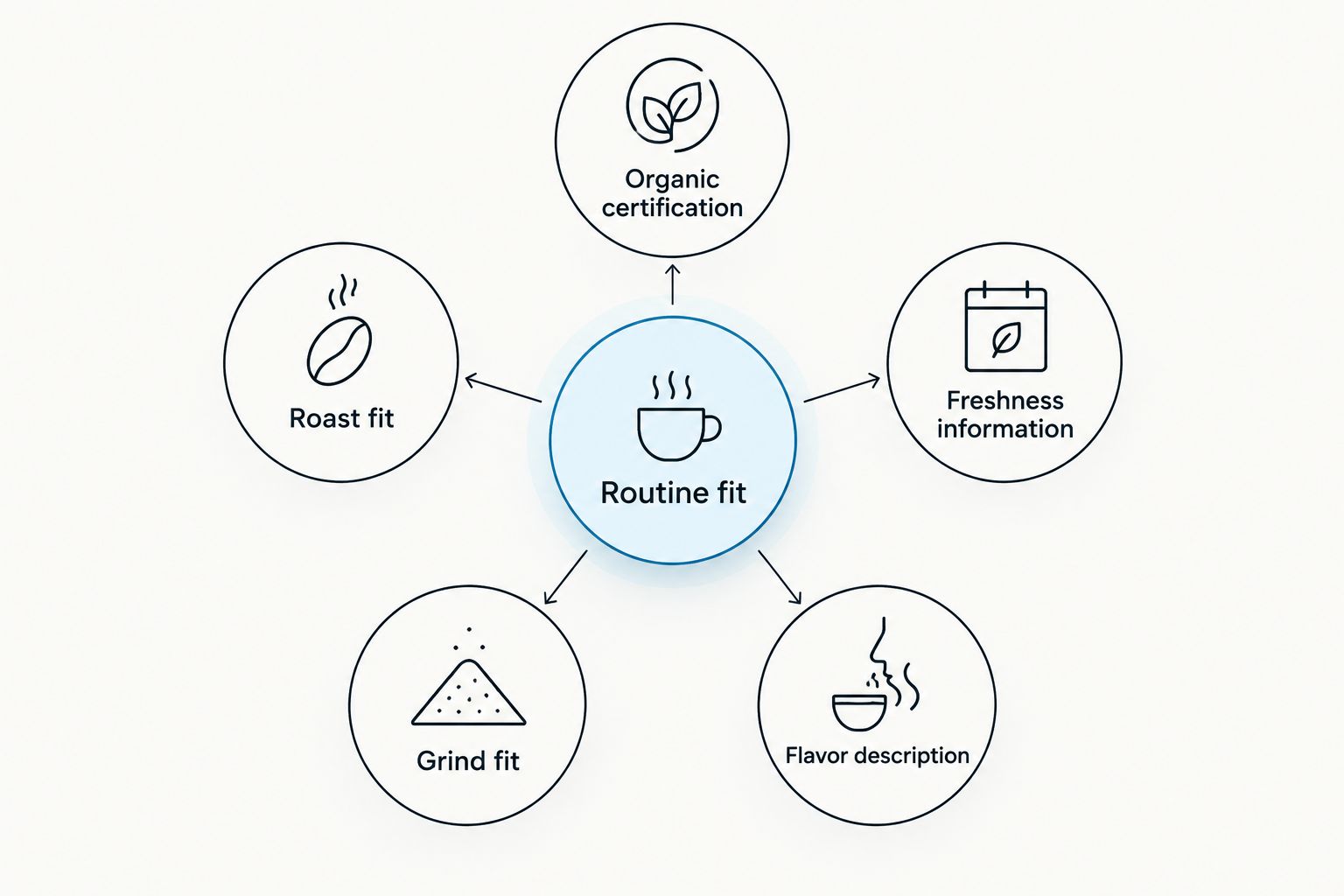
Use these six criteria before comparing roast styles:
- Organic certification: Look for a clear organic claim and certification information on the specific coffee. Natural, specialty, and single-origin are not substitutes for organic certification.
- Roast fit: Choose medium for an everyday starting point, dark for a stronger roast character, or light for a brighter cup. These are useful directions, not guaranteed flavors.
- Freshness information: Look for a roast date when provided. Store beans away from heat, moisture, light, and air after opening.
- Grind fit: Whole beans let you grind for your brewer. Ground coffee removes that step but gives you less control over grind size.
- Flavor description: Use plain tasting notes to narrow your choice. Chocolate, citrus, or nut descriptions describe perceived flavor; they do not necessarily identify added ingredients.
- Routine fit: Consider your brewer, whether you add milk, and whether you want decaf. A coffee that needs a different routine is not the easiest daily choice.
Organic certification comes first when organic is your requirement. After that, judge the coffee by what you want to drink, not by how many claims fit on the label.
Best organic coffee beans at a glance
These are ranked buying categories, not named products with assumed certifications. Each recommendation answers a different brewing need, so you can choose a useful starting point without mistaking one roast style for the best choice for everyone.
| Rank and coffee type | Best for | Standout feature | Key limitation |
|---|---|---|---|
| 1. Certified-organic medium-roast whole beans | Everyday drip coffee | A practical middle-roast starting point | Medium roast does not guarantee a particular flavor |
| 2. Certified-organic dark-roast whole beans | Coffee with milk | More pronounced roast character | Dark roasting can obscure origin differences |
| 3. Certified-organic light-roast whole beans | Brighter pour-over coffee | Greater emphasis on flavors beyond dark-roast character | Needs careful grind and brewing adjustments |
| 4. Certified-organic decaf whole beans | Evening coffee routines | Reduced caffeine | Decaf is not caffeine-free |
| 5. Certified-organic single-origin whole beans | Learning your origin preferences | A defined origin to compare across bags | Origin alone does not predict flavor |
1. Organic medium roast: best organic coffee beans for daily drip
Certified-organic medium-roast whole beans are the simplest default when you want familiar coffee without committing to a particularly light or dark roast. Medium roast sits between those styles, but the beans and brewing still shape the result.
For a 2026 everyday purchase, choose a bag with a flavor description you recognize and a grind you can prepare consistently. If your current coffee tastes right with breakfast, look for a similar roast rather than changing everything at once.
Organic medium-roast pros:
- Offers a middle-roast starting point for daily brewing.
- Lets you adjust grind size when you buy whole beans.
- Supports straightforward comparisons with your current drip coffee.
Organic medium-roast cons:
- Medium-roast labels do not specify an exact flavor.
- Whole beans require a grinder and an extra preparation step.
Best for: Home drinkers who want one dependable style to begin their organic coffee search.
Look for descriptions that match your preference for body and finish. A bag described as chocolate-forward and a bag described as citrus-forward can both be medium roast; the roast name alone does not settle the choice.
Verdict: Buy certified-organic medium-roast whole beans as your default daily starting point.
2. Organic dark roast: best organic coffee beans for milk drinks
Certified-organic dark-roast whole beans suit drinkers who want roast flavor to remain noticeable after adding milk. Dark roasting generally brings more roast-led character, though intensity and bitterness vary by coffee and preparation.
Choose this category because you enjoy that taste, not because you assume dark roast means more caffeine. Roast darkness is not a reliable shortcut for judging the caffeine in your finished cup.
Organic dark-roast pros:
- Gives roast character a larger role in the cup.
- Suits drinkers who prefer darker flavors with milk.
- Provides a clear alternative when lighter coffee tastes too bright.
Organic dark-roast cons:
- Can make differences between origins less noticeable.
- Does not suit drinkers who dislike pronounced roast flavors.
Best for: Milk drinkers who prefer a roast-led cup over a bright, delicate one.
Keep your milk amount consistent while comparing coffees. Otherwise, a change in milk can hide the difference you are trying to judge. If the coffee tastes harsh, review grind and brewing before deciding that every dark roast is wrong for you.
Verdict: Buy certified-organic dark roast when roast character is the flavor you want with milk.
3. Organic light roast: best organic coffee beans for pour-over
Certified-organic light-roast whole beans suit a pour-over routine built around noticing aroma and brighter flavors. Light roasting generally leaves less dark-roast character, making other flavor differences easier to explore.
Start with the brewer you already know. Changing your coffee, grinder setting, pouring pattern, and water amount together makes it harder to understand what improved the cup.
Organic light-roast pros:
- Gives you a useful starting point for exploring brighter flavors.
- Pairs well with a deliberate, repeatable pour-over routine.
- Lets you compare aroma and finish without a dominant dark-roast preference.
Organic light-roast cons:
- Can taste sharper than you want for everyday drinking.
- Requires brewing adjustments rather than simply copying a dark-roast recipe.
Best for: Pour-over drinkers who enjoy brighter coffee and are willing to adjust their brew.
For your 2026 comparisons, describe the cup in everyday terms: bright or mellow, light or full, clean or lingering. You do not need specialist tasting language. You need notes that help you choose the next bag.
Verdict: Buy certified-organic light roast for brighter pour-over coffee; skip it if you consistently prefer dark-roast flavor.
4. Organic decaf: best organic coffee beans for evening routines
Certified-organic decaf whole beans let you choose coffee with reduced caffeine while retaining control over your grind and brewing. Organic certification and decaffeination describe different things; verify both on the specific coffee.
Decaf is not caffeine-free. If caffeine avoidance is medically important, follow your clinician's advice rather than treating a decaf label as a guarantee of no caffeine.
Organic decaf pros:
- Reduces caffeine compared with regular coffee.
- Keeps whole-bean grinding available for your usual brewer.
- Lets you select roast and flavor separately from caffeine preference.
Organic decaf cons:
- Still contains some caffeine.
- Decaf alone does not tell you the roast or flavor profile.
Best for: Drinkers who want reduced-caffeine coffee as part of an evening routine.
Read the flavor description with the same care you give regular coffee. Buying decaf does not require abandoning your preference for a fuller body, a brighter cup, or a darker finish. Check any stated decaffeination process separately from the organic claim.
Verdict: Buy certified-organic decaf when reduced caffeine is the priority; skip it as a substitute for caffeine-free drinks.
5. Organic single-origin: best organic coffee beans for learning origins
Certified-organic single-origin whole beans suit drinkers who want to compare coffees identified by a particular origin. Check what the seller means by single-origin: the description can refer to a country, region, cooperative, or more specific source.
Origin does not guarantee a taste. Roast and processing also influence the cup, so comparing coffees with similar roast levels makes your observations more useful.
Organic single-origin pros:
- Gives you an identified origin to record alongside your tasting notes.
- Makes origin-focused comparisons easier to organize.
- Helps you learn which descriptions lead to cups you enjoy.
Organic single-origin cons:
- Single-origin does not mean certified organic.
- A country name alone cannot predict body, acidity, or finish.
Best for: Home drinkers who want to learn their preferences through repeatable comparisons.
Unlike the light-roast recommendation, this choice is about tracing preferences across origins, not selecting brightness. Choose a roast you already enjoy, then compare origin information and flavor descriptions without changing your whole routine.
Verdict: Buy certified-organic single-origin coffee when you want to learn what you like across origins.
How the ranking works
This 2026 ranking puts routine fit ahead of novelty. Medium roast earns the default position because it is a practical middle-roast starting point; dark roast, light roast, decaf, and single-origin each answer a more specific preference.
Certification is the entry requirement, not a bonus that outweighs an unsuitable flavor or grind. The remaining criteria are roast fit, freshness information, grind fit, flavor description, and routine fit. Choose the highest-ranked category that matches your actual cup, not automatically the first row.
How to check an organic label and brew a fair comparison
Read the organic claim
Under USDA organic labeling rules, products labeled organic generally contain at least 95% organic ingredients, excluding water and salt. The separate 100% organic category has stricter ingredient requirements. These are labeling standards, not scores for coffee flavor.
For a 2026 purchase, check the particular package or product information for its organic claim and certifier. A seller's use of organic elsewhere in the shop does not establish that the coffee you selected is certified.
Keep your brewing recipe steady
The Specialty Coffee Association's brewing guidance uses 55 grams of coffee per 1 liter of water as a starting point. Use that as a reference, not a rule that overrides your brewer's instructions or taste.
Measure coffee and water consistently when comparing bags. Keep the brewer, filter, and serving routine the same, then adjust one variable after you understand the baseline cup. Organic certification cannot correct a grind that does not fit your method.
Make notes you can use tomorrow
Write down aroma, body, and finish in plain language. Record whether you drank the coffee black or with milk, because that changes the comparison.
Taste again as the cup cools. Your useful result is not an elaborate description; it is a clear decision about whether you want that coffee every day.
Which organic coffee beans should you choose?
Choose certified-organic medium-roast whole beans if you are undecided. Keep your usual brewer and serving routine, then use the first bag to decide whether you want a brighter or darker cup next time.
Cinder and Cedar Coffee Roasters offers roasted coffee for home routines, but evaluate each coffee's organic claim individually. Brand preference and certification are separate decisions.
Your best organic coffee beans in 2026 are the ones that meet your certification requirement and produce a cup you want to repeat. There is no benefit in selecting an unfamiliar roast simply because its label sounds more impressive.
FAQ
What's the best organic coffee for everyday brewing?
Certified-organic medium-roast whole-bean coffee is a practical starting point for everyday brewing. Match the flavor description to your preference, then grind for your brewer.
Does organic coffee taste better than regular coffee?
Organic certification does not establish better flavor. Roast, freshness, grind, water, and brewing affect whether you prefer the finished cup.
Are single-origin coffee beans always organic?
No, single-origin coffee beans are not automatically organic. Single-origin identifies a source; organic certification establishes compliance with organic production standards.
Is organic dark roast stronger than organic light roast?
Organic dark roast generally has more pronounced roast character, but stronger can mean flavor, concentration, or caffeine. Roast darkness alone does not establish the caffeine content of your cup.
Can I buy organic coffee already ground?
Yes, organic coffee can be sold ground or as whole beans. Choose a grind intended for your brewer; whole beans give you more control when you have a grinder.
Is organic decaf completely caffeine-free?
No, organic decaf is not completely caffeine-free. Decaffeination reduces caffeine, while organic certification addresses a separate set of production standards.
How do I check whether a coffee is certified organic?
Check the specific package or product information for its organic claim and certifier. Do not substitute claims such as natural, specialty, or single-origin for organic certification.
One last thing
A bag described with chocolate or hazelnut notes is not automatically flavored coffee. Tasting notes describe what the brewed coffee resembles; added flavors are a separate ingredient question.
Before your next order from Cinder and Cedar Coffee Roasters, read the flavor description and any ingredient information separately. Verify organic status, choose a familiar roast, and change only one brewing variable at a time. That gives you a useful path to a better daily cup.