

Best medium roast coffee beans in 2026
Best for cold brew: Cold Brew Coffee. Best for mushroom-infused brewing: Coffee with Mushrooms Medium Roast. This 2026 guide to the best medium roast coffee beans helps you choose by brewing method, flavor, and whether you want plain coffee or an infused option.
- The best medium roast coffee beans match your brewing method, not just your preferred roast label.
- Cinder and Cedar Coffee Roasters’ Cold Brew Coffee is the best fit here for home cold-brew drinkers.
- Coffee with Mushrooms Medium Roast is the infused option, not a substitute for plain medium-roast coffee.
- Choose whole beans when you grind at home; match preground coffee to your brewer.
Why this matters
Medium roast is a starting point, not a complete flavor description. Two coffees with that label can taste different because of the beans, processing, added ingredients, and how you brew them.
Cinder and Cedar Coffee Roasters sells roasted coffee across blends, flavored coffees, and single-origin options. Cinder and Cedar Coffee Roasters’ Cold Brew Coffee is the best medium-roast choice here for home cold-brew drinkers. Its description identifies a medium roast with chocolate, toffee, and floral tones, specifically suited to cold brew or nitro.
For your 2026 shopping decision, separate three questions: Is the roast right? Is the format right? Does the coffee suit the cup you actually make? A coffee that answers only the first question is not automatically your best choice.
What makes the best medium roast coffee beans?
Use these criteria before comparing names. They help you rule out a poor fit without turning everyday coffee shopping into a technical exercise.
- Clear roast description: Look for an explicit medium-roast label. Chocolate tasting notes alone do not establish roast level.
- Brewing fit: Start with a coffee described for your method, especially when you mainly make cold brew.
- Flavor direction: Choose familiar notes you want in the cup, such as chocolate or toffee. Treat tasting notes as guidance, not promised ingredients.
- Ingredient fit: Keep plain coffee, flavored coffee, and mushroom-infused coffee separate. They answer different shopping needs.
- Usable format: Whole beans require a grinder. Ground coffee needs a grind that suits your brewer; capsules require a compatible machine.
- Routine fit: Choose coffee you can prepare consistently with the equipment and time you already have.
Do not let a roast label override the ingredient list or brewing format. Medium-roast capsules are not medium-roast beans, and an infused coffee is not a plain-coffee comparison.
Medium-roast coffee at a glance
This 2026 shortlist separates two distinct uses rather than treating every medium-roast product as interchangeable. The order below matches the detailed recommendations.
| Coffee | Best for | Standout detail | Key limitation |
|---|---|---|---|
| Cold Brew Coffee | Home cold-brew drinkers | Medium roast with chocolate, toffee, and floral tones | Its stated use is cold brew or nitro, not a dedicated hot-drip recommendation |
| Coffee with Mushrooms Medium Roast | Buyers who specifically want mushroom-infused coffee | Coffee infused with Lion’s Mane, Cordyceps, and Reishi | Not plain coffee; no tasting profile is stated |
Use the full description to identify Cold Brew Coffee: the relevant version says medium roast with chocolate, toffee, and floral tones. A product name alone does not tell you which roast or flavor profile you are choosing.
1. Cold Brew Coffee: best medium roast for cold brewing
Cold Brew Coffee from Cinder and Cedar Coffee Roasters is described as a medium roast with smooth chocolate, toffee, and floral tones. Its stated brewing uses are cold brew and nitro, making it the clearest match for someone whose regular cup starts with cold extraction.
Choose this coffee when the brewing method is already settled and you want a flavor description that gives you something concrete to compare. Chocolate and toffee are tasting notes, not a statement that chocolate or candy has been added.
Cold Brew Coffee pros
- The description explicitly identifies a medium roast.
- Chocolate, toffee, and floral notes give you a clear flavor direction.
- Cold brew is a stated use rather than a guess based on roast color.
- Nitro is also a stated use for buyers with suitable equipment.
Cold Brew Coffee cons
- The stated use does not establish it as the best option for hot drip coffee.
- The floral note is part of the profile, so this is not described solely as a chocolate-forward cup.
- Choosing the correct whole-bean or ground format still matters; the name does not settle that decision.
Best for: Home brewers who primarily make cold brew and want a medium roast with chocolate and toffee notes.
For your first batch, follow your cold-brew maker’s instructions and keep a written record of the coffee amount, water amount, and steeping routine. Taste the finished drink at the dilution you normally use. Comparing undiluted concentrate with a ready-to-drink cup tells you little about which coffee suits breakfast.
If the finished cup tastes too strong, adjust dilution before replacing the beans. If it tastes thin, check the recipe and grind before assuming medium roast is the problem. Keep the coffee unchanged while you make that adjustment.
Verdict: Buy Cold Brew Coffee for a cold-brew routine; skip it as an automatic all-purpose winner.
2. Coffee with Mushrooms Medium Roast: best infused option
Coffee with Mushrooms Medium Roast from Cinder and Cedar Coffee Roasters combines coffee with Lion’s Mane, Cordyceps, and Reishi mushrooms. Its name identifies medium roast, while its description identifies the added ingredients.
That distinction is the reason to choose it. This recommendation is for someone who already wants mushroom-infused coffee, not someone simply looking for a familiar plain-coffee replacement.
Coffee with Mushrooms Medium Roast pros
- Medium roast is explicitly identified in the product name.
- The description names all three mushroom ingredients.
- It gives infused-coffee shoppers an option separate from ordinary roasted coffee.
- The named ingredients make it easier to decide whether the product matches your preferences.
Coffee with Mushrooms Medium Roast cons
- It is not plain coffee, so it does not answer every medium-roast shopping need.
- The description does not establish chocolate, nutty, fruity, or other tasting notes.
- Mushroom ingredients do not establish a health benefit or predict how you will feel after drinking it.
Best for: Buyers who specifically want coffee infused with Lion’s Mane, Cordyceps, and Reishi.
Read the ingredient information before choosing this coffee for a shared household. Someone asking for medium roast has not necessarily asked for added mushrooms. Keep that decision explicit rather than treating the infusion as a minor detail.
Use your brewer’s normal instructions as the starting point. Judge the result on aroma, flavor, body, and finish, and avoid comparing it with plain coffee as though the ingredient lists were identical.
Verdict: Buy Coffee with Mushrooms Medium Roast for an intentional infused-coffee choice; skip it for a plain-coffee routine.
Choose the right version before ordering
The two recommendations solve different problems. Choose Cold Brew Coffee for its stated brewing use and tasting profile; choose Coffee with Mushrooms Medium Roast because you want its named added ingredients.
Before completing a 2026 order, check the selected format and full description. Product titles do not replace those details, especially when you want whole beans rather than a prepared or single-serve format.


Match medium roast to your daily routine
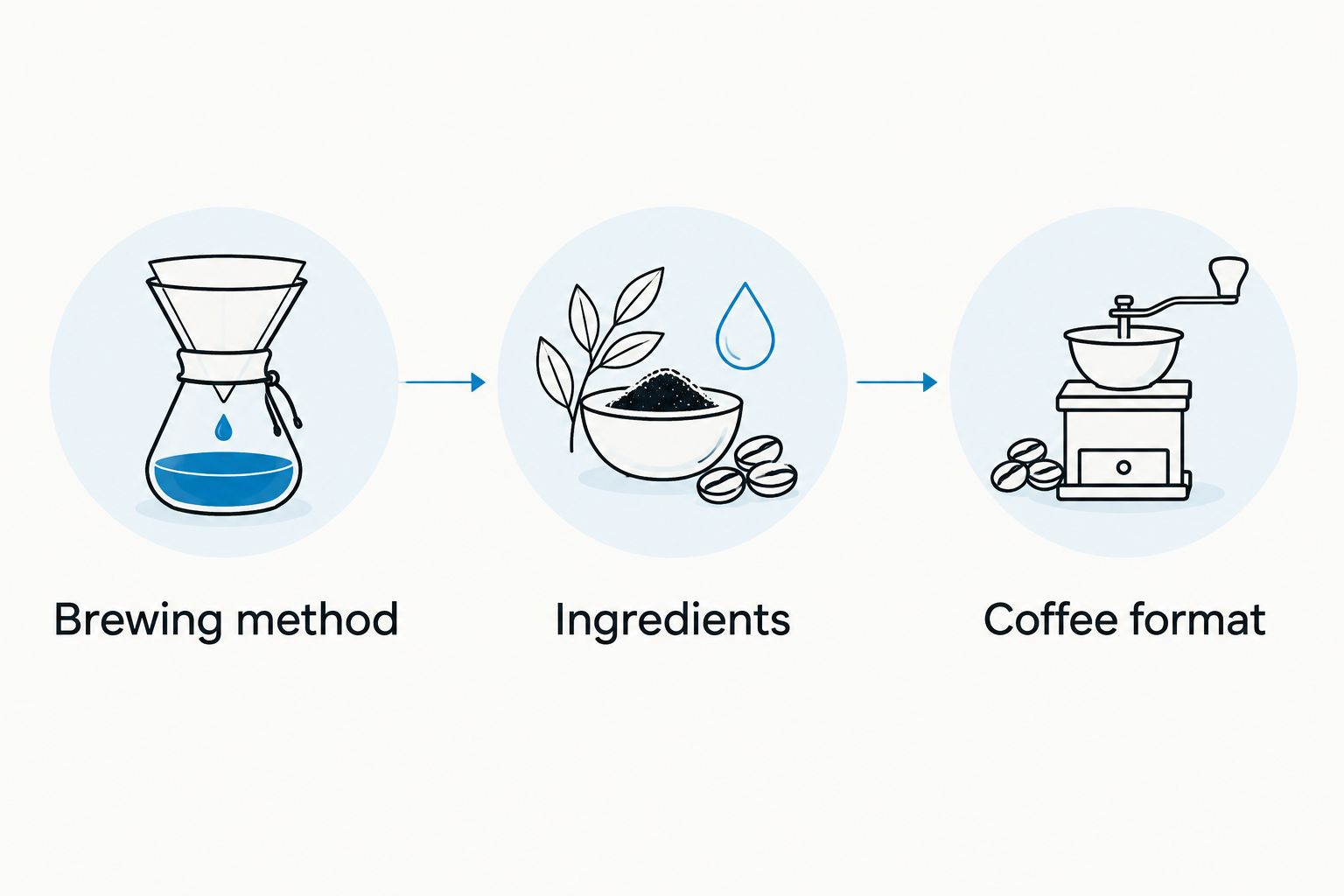
Start with how you prepare coffee, then decide whether added ingredients belong in that routine. Finish by choosing a format your equipment can use. That order prevents an appealing tasting note from leading you toward the wrong kind of purchase.
Brewing method
Cold-brew drinkers have a direct match in the first recommendation. If you mainly use a drip maker, pour-over, or French press, look for a medium roast whose description and grind options suit that method. Do not assume a cold-brew recommendation is also a tested winner for every hot brewer.
Ingredients
Decide between plain coffee and infused coffee before comparing flavor descriptions. Tasting notes describe a sensory impression; named additions describe what has been included. Those are different kinds of information.
Coffee format
Choose whole beans when you have a grinder and want to adjust the grind yourself. Choose ground coffee when convenience matters more, but make sure the grind suits your method. A roast you enjoy can still brew poorly when the grind is wrong.
Make a fair comparison at home
Your 2026 medium-roast comparison will be more useful if you keep the brewing conditions consistent. Use the same brewer, water, mug, and serving style, then change the coffee. Otherwise, you are judging several changes at once.
Start with a measured hot-brew recipe
For ordinary hot filter coffee, an established starting point is 55 g of coffee per 1 L of water. That is a baseline, not a promise that every coffee will taste best at that strength. Follow your brewer’s instructions when they specify a different recipe.
For manual hot brewing, the commonly used brewing-water range is approximately 90–96°C, or 194–205°F. These hot-brew guidelines do not apply to cold-brew steeping. Keep the two methods separate when planning your comparison.
A scale helps you repeat a recipe because scoops measure volume rather than coffee weight. Once you find a cup you like, repeat that measured recipe before deciding whether another bean is better.
Taste the cup you actually drink
Taste plain coffee first if you want to notice its aroma and finish. Then add the milk or sweetener you normally use and judge that version too. Your everyday preparation is the final test, not an unfamiliar serving style.
Notice whether the cup feels light or full, whether the finish is pleasant, and whether you want another sip. You do not need to identify every tasting note to choose well.
Adjust before rejecting
For hot filter coffee, a sour cup can point to insufficient extraction, while a bitter or drying cup can point to excessive extraction. These are troubleshooting clues, not proof: the coffee itself also affects flavor.
Change one variable at a time, such as grind or coffee-to-water ratio. If you adjust both together, you lose the ability to tell which change helped.
How these recommendations are ranked
This ranking uses stated roast level, stated brewing use, named ingredients, and the clarity of the flavor description. Cold Brew Coffee ranks first because it connects a medium roast with a specific home-brewing routine and an explicit tasting profile.
Coffee with Mushrooms Medium Roast occupies a separate infused-coffee slot. It is not ranked as better-tasting than plain coffee, and the recommendation makes no health claim. The ranking is a shopping-fit guide, not a blind-tasting result.
Capsules, instant coffee, and dark roasts are outside this medium-roast bean shortlist. Their convenience or flavor does not make them interchangeable with the category you searched for.
Which medium-roast coffee should you choose?
Choose Cold Brew Coffee if cold brew is your everyday method. Its stated medium roast and chocolate, toffee, and floral profile make it the default choice for that routine.
Choose Coffee with Mushrooms Medium Roast only when the infusion is part of what you want. For plain hot-drip coffee, prioritize an explicit medium roast, suitable grind options, and a flavor description you recognize rather than borrowing a recommendation from another brewing method.
The best medium roast coffee beans in 2026 are the ones that fit your actual cup. Keep the decision practical: method first, ingredients second, format third.
FAQ
What are the best medium roast coffee beans for cold brew?
Cold Brew Coffee is the strongest match in this shortlist for home cold brewing. Its description identifies a medium roast with chocolate, toffee, and floral tones and states that it suits cold brew or nitro.
Is medium roast better than dark roast for everyday coffee?
Medium roast is not automatically better than dark roast; your preferred flavor and brewing method decide the fit. Compare coffees prepared the same way rather than choosing solely by roast label.
Does medium-roast coffee taste like chocolate?
Not every medium-roast coffee has chocolate tasting notes. Cold Brew Coffee lists chocolate, toffee, and floral tones, but those notes describe flavor impressions rather than added chocolate.
Should I buy whole-bean or ground medium-roast coffee?
Choose whole beans if you have a grinder and want control over grind size. Choose ground coffee for convenience, making sure the selected grind suits your brewer.
Is Coffee with Mushrooms Medium Roast plain coffee?
Coffee with Mushrooms Medium Roast is not plain coffee. Its description names Lion’s Mane, Cordyceps, and Reishi as added mushroom ingredients.
Can I use medium-roast coffee in a drip maker?
Medium-roast coffee can be brewed in a drip maker when the grind and recipe suit the machine. A medium-roast label alone does not establish that a particular product is the best drip-coffee choice.
How do I compare two medium-roast coffees fairly?
Keep the brewer, water, recipe, and serving style consistent, and change only the coffee. Taste both as you normally drink them, then adjust one brewing variable at a time if needed.
One last thing
Taste the coffee after it cools slightly, not only on the first hot sip. Temperature changes what you notice, so a quick first impression is not the whole cup. If you usually drink coffee slowly through breakfast, judge the finish at that stage too.
Record the recipe that works alongside the coffee name. A repeatable cup is more useful than a tasting note you cannot recreate tomorrow.