

Best loose leaf green teas in 2026
Best overall: sencha. Best for floral aroma: jasmine green tea. Best for a roasted, less grassy cup: hojicha. This 2026 guide compares the best loose leaf green tea styles by flavor, brewing routine, and what you want in your everyday mug.
- Sencha is the best loose leaf green tea starting point for a fresh, grassy everyday cup.
- Choose jasmine green tea for floral aroma or genmaicha for toasted rice flavor.
- Longjing suits drinkers who prefer a nutty cup; hojicha suits those who prefer roasted flavor.
- Cinder and Cedar Coffee Roasters serves home drinkers shopping online for coffee and tea.
Why this matters
The best green tea for your routine is not necessarily the most delicate or unfamiliar one. It is the style you enjoy drinking and can brew consistently with the equipment you already have.
Green tea covers fresh, grassy leaves, jasmine-scented blends, toasted rice blends, and roasted styles. Those differences matter more than a broad claim that one tea is the best for everyone.
Cinder and Cedar Coffee Roasters sells coffee and tea for home drinkers. This guide ranks green tea styles rather than claiming a specific shop product is sencha, longjing, or another type.
What makes the best loose leaf green tea?
Use these criteria to choose your 2026 everyday tea before comparing the names:
- Flavor fit: Choose fresh and grassy, nutty, floral, or roasted according to what you actually enjoy.
- Clear identification: Look for the tea style and ingredients. A blend with rice or jasmine is different from plain green tea.
- Brewing fit: Choose a tea whose temperature and steeping instructions work with your kettle and daily routine.
- Leaf space: Use an infuser that lets the leaves expand rather than packing them into a cramped ball.
- Finish: Judge the taste after swallowing. A pleasant finish matters as much as the first sip.
- Storage: Keep tea sealed, dry, and away from heat, light, and strong kitchen smells.
Choose flavor first, then adjust brewing. A grassy tea does not become a roasted tea because you change the water temperature, and jasmine aroma is not a substitute for liking the underlying green tea.
Best loose leaf green teas at a glance
These are category recommendations, not scored product reviews. The order gives an undecided reader a starting point, then separates the other choices by use case.
| Tea style | Best for | Standout feature | Key limitation |
|---|---|---|---|
| Sencha | A fresh everyday cup | Steamed Japanese green tea with grassy character | Hot water or long steeping can emphasize bitterness |
| Jasmine green tea | Floral aroma | Green tea scented with jasmine blossoms | Scenting strength varies between teas |
| Longjing | A nutty, less grassy cup | Pan-fired Chinese green tea with flattened leaves | The name alone does not establish quality |
| Genmaicha | Toasted flavor alongside meals | Green tea blended with roasted rice | Rice changes the character of plain green tea |
| Hojicha | Roasted flavor | Roasted Japanese tea with a brown appearance | Not the choice for a fresh, leafy flavor |
| Gunpowder green tea | A firmer cup for mint blends | Leaves rolled into small pellets | Strong brewing can produce a bitter cup |
1. Sencha: best loose leaf green tea for everyday drinking
Sencha is a Japanese green tea commonly made by steaming the leaves before rolling and drying them. Its fresh, grassy character makes it a useful reference point when you are learning what green tea tastes like without added flavoring.
Choose sencha if you want a plain green tea for your 2026 daily routine. Start with the package instructions, and pay attention to temperature: boiling water is not the default for this style.
Sencha pros:
- Gives you a clear introduction to fresh green tea flavor.
- Works as a plain cup without added flowers or rice.
- Lets you compare aroma, body, and finish easily.
Sencha cons:
- Grassy flavor does not suit every drinker.
- Excessive heat or steeping can make the cup bitter.
Best for: You want an everyday green tea and enjoy fresh, leafy flavors.
Verdict: Buy sencha as your starting point if grassy flavor appeals to you.
2. Jasmine green tea: best green tea for floral aroma
Jasmine green tea combines a green tea base with the aroma of jasmine blossoms. Traditional scenting exposes the tea to the flowers; check the ingredients and description because jasmine teas do not all use the same preparation.
The floral aroma is the reason to choose it. You still need to like the green tea beneath that aroma, especially as the cup cools and the finish becomes easier to notice.
Jasmine green tea pros:
- Adds a floral dimension without requiring milk or sweetener.
- Offers a clear alternative to plain grassy tea.
- Makes aroma an easy part of your tasting routine.
Jasmine green tea cons:
- Strong floral scent can distract from the tea itself.
- The green tea base still needs careful brewing.
Best for: You want your cup to smell floral rather than primarily leafy or toasted.
Verdict: Buy jasmine green tea for its aroma; skip it if floral drinks feel perfumed to you.
3. Longjing: best green tea for a nutty cup
Longjing, also called Dragon Well, is a Chinese green tea known for its flattened leaves and pan-fired processing. Its characteristic flavor is often described as nutty or chestnut-like rather than strongly grassy.
Choose longjing when you want to explore plain green tea but do not want jasmine or roasted rice added to it. Read the origin and processing description rather than treating the name as a guarantee of how every bag will taste.
Longjing pros:
- Offers a nutty direction within plain green tea.
- Does not rely on added scenting or rice for its identity.
- Gives you a useful contrast with steamed sencha.
Longjing cons:
- Flavor and quality vary between producers and lots.
- A nutty character does not mean the tea contains nuts; check ingredients separately for allergens.
Best for: You prefer a softer, nutty flavor direction to a distinctly grassy cup.
Verdict: Buy longjing when you want plain green tea with a pan-fired character.
4. Genmaicha: best green tea for toasted flavor with meals
Genmaicha blends Japanese green tea with roasted rice. The rice adds a toasted aroma that changes the experience from a straight green tea, while the leaves retain their own green tea character.
This is a practical choice when you like both leafy and toasted flavors. Check the ingredients: some versions also contain matcha, which changes the cup's appearance and flavor.
Genmaicha pros:
- Combines green tea flavor with toasted rice aroma.
- Gives you an alternative to flower-scented blends.
- Suits drinkers who enjoy a savory-tasting cup alongside food.
Genmaicha cons:
- Does not show plain green tea flavor on its own.
- Matcha-containing versions differ from rice-and-leaf blends.
Best for: You want toasted rice flavor in a green tea to drink with meals.
Verdict: Buy genmaicha for the rice-and-tea combination, not as a substitute for plain sencha.
5. Hojicha: best green tea for roasted flavor
Hojicha is roasted Japanese tea, commonly made from green tea leaves, stems, or a combination. Roasting gives it a brown appearance and a distinctly roasted aroma, even though it belongs to the green tea family.
For a coffee drinker exploring tea in 2026, that roasted direction is a useful place to begin. Hojicha is not coffee-like in every respect, and roast flavor does not establish a particular caffeine level.
Hojicha pros:
- Offers roasted flavor instead of a predominantly grassy profile.
- Includes leaf-based and stem-based versions to explore.
- Provides a contrast with steamed green tea.
Hojicha cons:
- Does not deliver the fresh character expected from sencha.
- Should not be treated as caffeine-free.
Best for: You prefer roasted aromas and want a less leafy-tasting tea.
Verdict: Buy hojicha for roasted flavor; skip it if freshness and grassy notes are your goal.
6. Gunpowder green tea: best green tea for mint blends
Gunpowder green tea is rolled into small pellets that open during brewing. Chinese gunpowder tea is traditionally associated with Moroccan-style mint tea, making it a useful option when fresh mint is part of the cup you want.
Try the tea plain before adding mint so you understand its underlying strength. Rolled leaves are a processing style, not proof that the tea will taste smoky or suit your preferred brewing method.
Gunpowder green tea pros:
- Gives you a traditional base for mint tea.
- Has a recognizable rolled-leaf form.
- Lets you explore a firmer green tea flavor direction.
Gunpowder green tea cons:
- Long or concentrated brewing can emphasize bitterness.
- Pellet appearance alone does not establish quality.
Best for: You want a green tea base to brew with fresh mint.
Verdict: Buy gunpowder green tea for mint blends; choose sencha for a fresh everyday reference cup.
How we ranked these green tea styles
This 2026 ranking puts everyday flavor fit ahead of prestige, unusual names, or decorative packaging. Sencha takes the default position because it introduces plain, fresh green tea; each other recommendation answers a different preference.
The comparison uses established differences in processing and ingredients. It does not claim a taste test of individual products, assign review scores, or treat every tea carrying the same name as identical.
For Cinder and Cedar Coffee Roasters customers choosing between coffee and tea, the practical question is the same: Which flavor will you want to drink again tomorrow?
How to brew your first comparison cup
Use the instructions on your tea first. For many unflavored green teas, around 175°F, or 80°C, and a 2-minute steep provide a familiar starting point, not a rule for every style.
Keep your mug, water, and leaf measure consistent when comparing teas. Taste before adding anything, then change one brewing variable at a time.
- Read instructions: Follow the tea's stated leaf quantity and brewing guidance.
- Set temperature: Use the recommended water temperature rather than boiling by habit.
- Give space: Put the leaves in a roomy basket or teapot.
- Time steeping: Remove the leaves when the steep ends.
- Taste plain: Notice aroma, body, bitterness, and finish before adding anything.
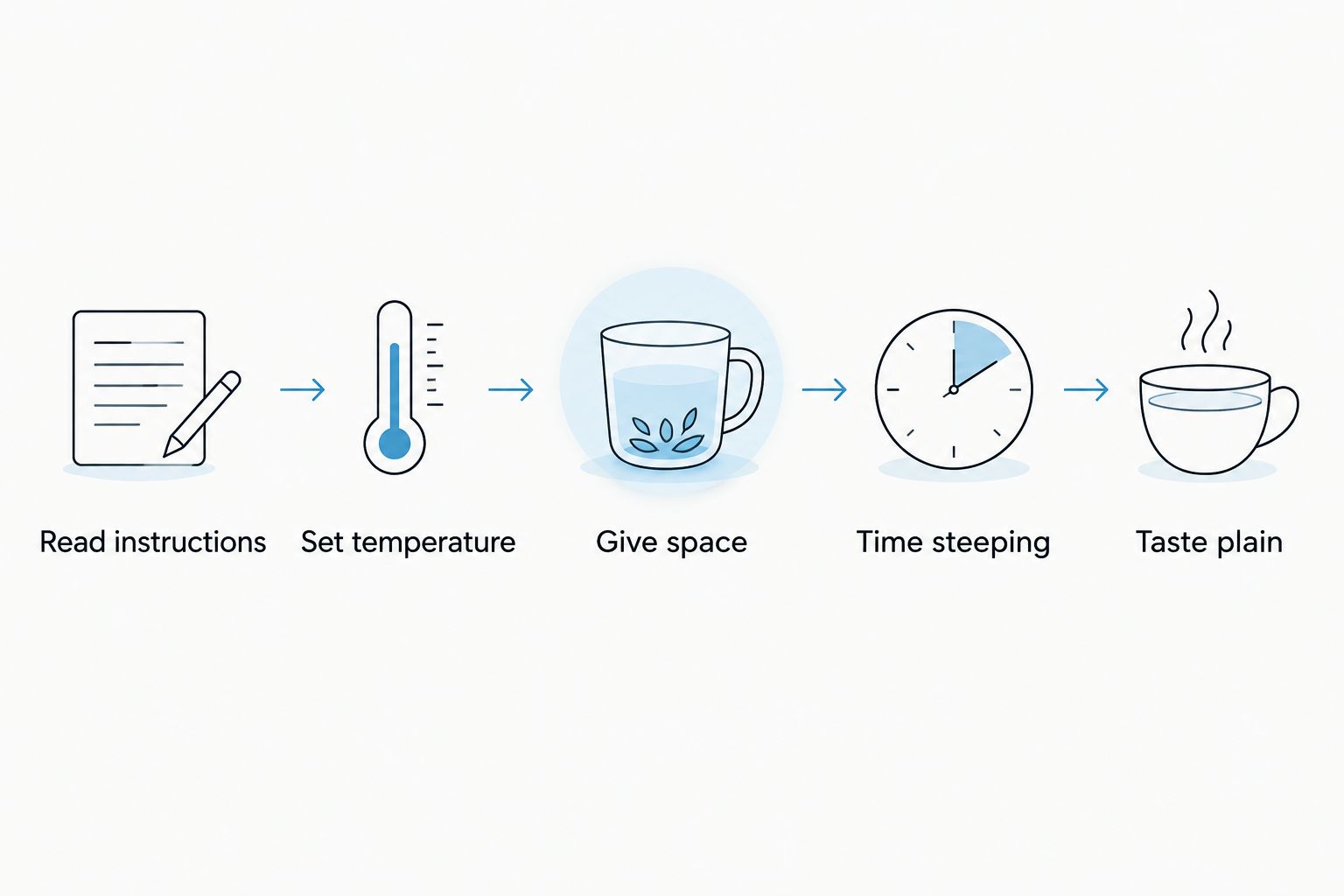
If the cup is bitter, shorten the next steep or reduce the temperature within the tea's guidance. If it tastes weak, check your leaf quantity before extending the steep indefinitely.
For iced tea, do not assume a longer hot steep is the answer. Choose a suitable preparation method and remove the leaves before the drink sits cooling.
Which loose leaf green tea should you choose?
Choose sencha if you are undecided and want to learn the taste of plain green tea. Choose jasmine for flowers, longjing for a nutty direction, genmaicha for rice, hojicha for roast, and gunpowder for mint blends.
Make your 2026 choice around one clear preference rather than buying several unfamiliar styles at once. A tea you enjoy plain gives you a better starting point for adjusting strength or serving it iced.
FAQ
What's the best loose leaf green tea for beginners?
Sencha is a useful first choice if you enjoy fresh, grassy flavor. Choose hojicha instead if you prefer roasted aromas, or jasmine green tea if floral aroma is your priority.
Is sencha better than longjing?
Sencha is better for a fresh, grassy cup, while longjing suits a nutty, pan-fired flavor preference. Neither style guarantees that every individual tea will suit your taste.
Is hojicha really a green tea?
Hojicha belongs to the green tea family even though roasting turns it brown. Choose it for roasted aroma rather than the fresh, leafy character of sencha.
What water temperature should I use for loose leaf green tea?
Follow the instructions for your specific tea. Around 175°F, or 80°C, is a common starting point for many green teas, but styles and producers differ.
Why does my green tea taste bitter?
Excessive heat, a long steep, or too much leaf can make green tea bitter. Change one variable at a time and remove the leaves when the steep ends.
Is jasmine green tea the same as herbal tea?
Jasmine green tea contains a green tea base and is not the same as an herbal infusion. Check the ingredients because jasmine-labelled drinks can use different bases.
Can I drink loose leaf green tea without a teapot?
Yes, you can brew loose leaf green tea in a mug with a roomy infuser basket. Remove the basket after steeping so the leaves do not keep extracting.
Does Cinder and Cedar Coffee Roasters sell tea?
Cinder and Cedar Coffee Roasters sells tea as well as roasted coffee and merchandise for home drinkers. Choose a tea by its stated ingredients and description rather than assuming every tea is green tea.
One last thing
Remove the leaves, not just the heat. Tea left in the mug continues steeping while you drink, so the last sip can taste quite different from the first.
For your next cup, use a removable basket and taste the tea again as it cools. That simple habit helps you separate a tea you dislike from a tea you have been brewing too strongly.