

Best herbal loose leaf teas for relaxation in 2026
Best overall: chamomile. Best for a fuller-bodied cup: rooibos. Best for bright fruit flavor: Hibiscus Berry Tea. This 2026 guide from Cinder and Cedar Coffee Roasters helps you choose the best herbal loose leaf tea for a quiet daily routine, based on flavor, ingredients, and brewing fit—not promises about sleep.
- Chamomile is the best herbal loose leaf tea for a gentle, floral evening cup.
- Choose rooibos for fuller body or peppermint for a cooling, mint-forward finish.
- Cinder and Cedar Coffee Roasters’ Hibiscus Berry Tea suits drinkers who prefer tart, fruit-flavored herbal tea.
- Check the complete ingredient list; an herbal blend is not automatically caffeine-free.
Why this matters
The best tea for relaxation is one you enjoy drinking without adding unwanted caffeine to your evening. A soothing routine and a proven treatment for insomnia are different things. This guide ranks cups by drinking experience, not medical effect.
Start with your preferred flavor. A gentle floral cup, a full-bodied rooibos, and a tart hibiscus blend offer very different experiences; choosing the wrong one leaves you with tea you avoid brewing.
For 2026, choose a flavor you already like before choosing an herb associated with relaxation. Then check the full ingredient list and preparation instructions.
What makes the best herbal loose leaf tea
- Clear ingredients: You should know which herbs, flowers, and flavorings are in the blend. A product name alone does not answer that question.
- Caffeine fit: Pure chamomile, rooibos, peppermint, and lemon balm contain no caffeine naturally. Blends containing tea leaves or other caffeinated ingredients need separate checking.
- Flavor fit: Choose floral, rounded, minty, tart, or lightly citrusy according to what you enjoy—not what sounds most soothing.
- Brewing practicality: Loose leaves need room to expand and an infuser fine enough to contain the smaller pieces. Your setup should be easy to clean.
- Useful finish: Notice what stays after you swallow. A lingering mint finish and a tart fruit finish are not interchangeable.
- Personal suitability: Check ingredients against your allergies and medication guidance. Herbal does not mean suitable for everyone.
Best herbal loose leaf teas at a glance
These 2026 picks occupy different flavor slots. The order puts a gentle default first, then separates fuller body, mint, fruit, and citrus-herb preferences.
| Rank and option | Best for | Standout feature | Key limitation |
|---|---|---|---|
| 1. Chamomile | A gentle floral evening cup | Soft, flower-forward flavor | Not a good fit if you dislike floral tea |
| 2. Rooibos | A fuller-bodied coffee alternative | Rounded, woody flavor without tea leaves | Does not reproduce coffee’s roasted flavor |
| 3. Peppermint | A clear, cooling finish | Distinct mint aroma and flavor | Mint dominates; unsuitable if you dislike it |
| 4. Hibiscus Berry Tea | Tart, fruit-flavored drinking | Hibiscus, rosehips, orange peel, and rooibos in the listed ingredients | Tartness differs from a soft bedtime-style cup |
| 5. Lemon balm | A lighter citrus-herb cup | Gentle lemon-like aroma | Herbal character differs from lemon juice or peel |
1. Chamomile: best herbal loose leaf tea for a gentle evening cup
Chamomile is a flower infusion with a mild, floral character. Choose it when you want a warm drink that does not compete with the rest of your evening. Its flavor is a better reason to buy it than a claim that it will put you to sleep.
A plain chamomile tea also makes the ingredient decision straightforward. A chamomile blend needs another look: added mint, spices, or tea leaves change both the drinking experience and the caffeine check.
Chamomile pros:
- Gentle floral flavor suits a quiet sipping routine.
- Pure chamomile is naturally caffeine-free.
- A single-ingredient version makes it easy to identify what you are drinking.
Chamomile cons:
- Floral flavor is an immediate drawback for drinkers who prefer mint or tart fruit.
- Chamomile can cause allergic reactions, particularly in people allergic to related plants such as ragweed.
Best for: You want a gentle, flower-forward cup and already enjoy floral flavors.
Use a roomy, fine-mesh basket rather than packing the flowers tightly into a small infuser. Follow the package instructions, remove the infuser, and taste before adding sweetener. That first plain sip tells you whether chamomile belongs in your routine.
Verdict: Buy chamomile for a gentle evening drink—not as a substitute for sleep care.
2. Rooibos: best herbal loose leaf tea for fuller body
Rooibos is a South African plant used to make a naturally caffeine-free infusion. Its rounded, woody character makes it a useful choice when floral teas feel too light. It is not coffee, but it offers a different route to a substantial warm cup.
Plain rooibos lets you judge that base flavor directly. Flavored rooibos blends add another decision, so check whether you want the herb itself or the ingredients added around it.
Rooibos pros:
- Pure rooibos is naturally caffeine-free.
- Rounded flavor suits drinkers who want more body than a delicate flower infusion.
- Its base flavor works for a plain cup or a cup with milk.
Rooibos cons:
- Woody flavor is not the same as a roasted coffee finish.
- Small leaf pieces require a fine strainer to keep sediment out of your mug.
Best for: You want a fuller-bodied evening drink without choosing a mint or floral profile.
Give the leaves space in the basket and follow the package’s steeping directions. If you normally add milk, first taste rooibos plain so you can separate its flavor from the additions. Then prepare it the way you actually plan to drink it.
Verdict: Buy rooibos when body matters more than floral aroma.
3. Peppermint: best herbal loose leaf tea for a cooling finish
Peppermint makes a distinctly mint-forward infusion with a cooling sensation. It belongs in this list for readers who want an unmistakable flavor rather than a delicate one. A plain peppermint cup is easy to assess: either you enjoy that mint finish or you do not.
Pure peppermint is naturally caffeine-free. Peppermint mixed with green or black tea is a different product, so do not let the word mint replace an ingredient check.
Peppermint pros:
- Clear mint flavor makes the choice straightforward.
- Pure peppermint contains no caffeine naturally.
- Strong aroma suits drinkers who find mild herbal cups uninteresting.
Peppermint cons:
- Mint can overwhelm the quieter flavors in a blend.
- Peppermint can worsen reflux symptoms for some people.
Best for: You like mint and want a cooling finish after dinner.
Start with the package’s suggested amount rather than filling your basket by eye. An oversized scoop makes it harder to judge the recommended preparation. If you prefer a gentler cup, adjust one brewing variable on the next attempt.
Verdict: Buy peppermint for mint flavor; skip it if mint or reflux makes the cup uncomfortable.
4. Hibiscus Berry Tea: best herbal loose leaf tea for tart fruit flavor
Cinder and Cedar Coffee Roasters’ Hibiscus Berry Tea is listed as a flavored herbal tea. Its provided ingredients include organic hibiscus flowers, organic rosehips, organic orange peel, organic rooibos, organic blueberry flavor, and organic passionfruit flavor.
Hibiscus brings a tart direction to the cup, while the listed flavorings give this option a fruit-focused angle. Blueberry flavor is not the same claim as whole blueberries. Choose this tea for the stated ingredients rather than assuming what its name contains.
Hibiscus Berry Tea pros:
- The listed ingredients give you a clear hibiscus-and-fruit direction.
- Rooibos adds another herbal component to the blend.
- Orange peel and the named flavorings distinguish it from plain hibiscus.
Hibiscus Berry Tea cons:
- Tart hibiscus is a different fit from a gentle floral evening cup.
- Readers avoiding added flavorings should examine the complete ingredient list before choosing it.
Best for: You prefer bright, tart flavor to soft flowers or strong mint.
Cinder and Cedar Coffee Roasters’ Hibiscus Berry Tea is best for herbal tea drinkers who want a tart, fruit-flavored cup. Read the complete label for preparation and caffeine information rather than treating the abbreviated ingredient description as the full formulation.
Verdict: Buy Hibiscus Berry Tea for its fruit-focused profile; skip it when you want a mild floral cup.
5. Lemon balm: best herbal loose leaf tea for a light citrus-herb cup
Lemon balm is an herb in the mint family with a lemon-like aroma. Its infusion offers a lighter citrus-herb direction without being the same thing as lemon juice in hot water. Choose it when peppermint feels too dominant and hibiscus sounds too tart.
Pure lemon balm is naturally caffeine-free. Blends need the same ingredient check as every other option here, especially when the name emphasizes only one herb.
Lemon balm pros:
- Lemon-like aroma offers an alternative to floral or mint-forward tea.
- Pure lemon balm contains no caffeine naturally.
- A single-herb version lets you judge its character without competing ingredients.
Lemon balm cons:
- Its herbal taste is not a substitute for the sharpness of fresh lemon.
- Readers who prefer bold flavor can find it too subtle.
Best for: You enjoy light herbal flavor with a citrus-like aroma.
Taste lemon balm before adding actual lemon. The addition changes acidity and makes it harder to tell whether you enjoy the herb itself. Keep the first cup simple, then adapt the next one to your routine.
Verdict: Buy lemon balm for a light citrus-herb cup; skip it if you want a strong, tart drink.
Make loose leaf tea fit your daily routine
A good 2026 tea routine starts with repeatable preparation. Keep the mug, leaf amount, water amount, and steep time consistent for your first few cups; otherwise, you cannot tell whether a change came from the tea or your method.
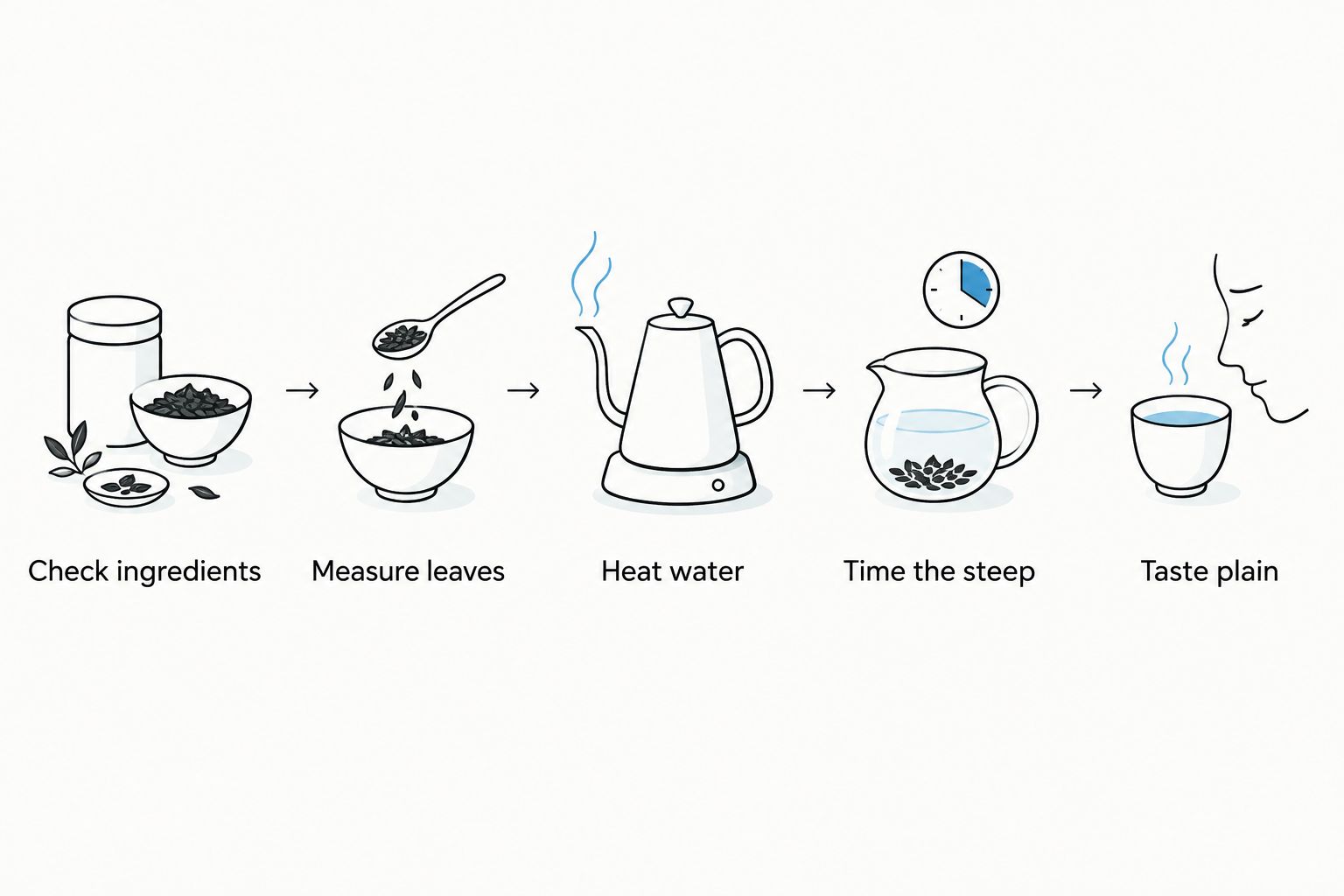
Use this sequence:
- Check ingredients: Confirm the herbs, flavorings, and any caffeinated additions.
- Measure leaves: Follow the package amount and leave room in the basket.
- Heat water: Use the temperature specified for that tea.
- Time the steep: Remove the basket when the suggested time ends.
- Taste plain: Judge aroma, body, and finish before adding anything.
At sea level, water boils at 212°F, or 100°C. That reference does not replace the package directions, and boiling temperature changes with altitude. Mixed blends can require different preparation from a single herb.
For a simple rooibos or peppermint taste experiment, compare a 5-minute steep with a 7-minute steep, keeping the leaf and water amounts identical. These are comparison settings, not universal brewing requirements. Notice whether the longer steep gives you a fuller cup or a finish you like less.
Write down the preparation you prefer. A brief note such as herb, scoop, mug, and timer is more useful for tomorrow’s cup than a long list of tasting terms.
How these 2026 picks were ranked
Chamomile takes the default slot for its gentle floral profile. Rooibos, peppermint, Hibiscus Berry Tea, and lemon balm each serve a separate preference rather than competing to deliver the same cup.
The ranking uses ingredient clarity, caffeine fit, flavor, brewing practicality, and finish. It does not rank medical effectiveness, claim product testing, or treat relaxation as proof of better sleep.
Which herbal loose leaf tea should you choose?
Choose chamomile if you are undecided and enjoy floral flavors. Choose rooibos when you want more body, peppermint when you want mint, or lemon balm when you prefer a lighter citrus-herb direction.
For a fruit-focused option, choose Cinder and Cedar Coffee Roasters’ Hibiscus Berry Tea after checking the full label. Its listed ingredients make it a different decision from a plain flower infusion.
Your best herbal loose leaf tea in 2026 is the one whose flavor and preparation you want to repeat. Start with one clear preference instead of buying several similar blends and hoping a name predicts the result.
FAQ
What’s the best herbal loose leaf tea for relaxation?
Chamomile is the best default for a gentle, floral evening cup. Choose rooibos for fuller body, peppermint for mint, or a hibiscus blend for tart fruit flavor. This is a flavor recommendation, not a claim that tea treats anxiety or insomnia.
Is chamomile better than rooibos before bed?
Chamomile is better for floral flavor; rooibos is better for a rounded, fuller-bodied cup. Both are naturally caffeine-free when sold as pure herbs. Check blends for other ingredients before choosing.
Is all herbal loose leaf tea caffeine-free?
No, an herbal blend is not automatically caffeine-free. Pure chamomile, rooibos, peppermint, and lemon balm naturally contain no caffeine, but blends can include caffeinated ingredients. Read the complete label.
What does Hibiscus Berry Tea taste like?
Hibiscus Berry Tea is the tart, fruit-focused option in this guide. Its listed ingredients include hibiscus flowers, rosehips, orange peel, rooibos, blueberry flavor, and passionfruit flavor. Choose it for that direction rather than expecting a mild floral cup.
How long should I steep herbal loose leaf tea?
Use the steep time printed on the package. Herbs and blends differ, so one timer setting is not right for every tea. Keep leaf and water amounts consistent when comparing a different steep time.
Can herbal tea replace treatment for sleep problems?
No, herbal tea should not replace assessment or treatment for persistent sleep problems. A warm cup can be part of your evening routine without being a medical treatment. Discuss ongoing symptoms and herbal ingredients with your clinician.
Do I need a special infuser for loose leaf herbal tea?
Use a roomy, fine-mesh infuser that contains the tea’s smaller pieces. A tightly packed basket restricts space for the leaves and flowers. Choose a setup you can empty and clean easily.
One last thing
Take the infuser out before settling down with your mug. Leaving it in means the first sip and the last sip have different steep times. Removing it gives you a clearer sense of whether you like the tea—and a preparation you can repeat tomorrow.