

Best espresso beans for home baristas in 2026
Best overall for a home espresso routine: medium-roast whole beans. Best named medium/dark blend: African Espresso. Best for milk drinks: dark-roast whole beans. This 2026 guide helps you choose the best espresso beans by your drink, grinder, and willingness to adjust the brew.
- The best espresso beans match your drink and grinder; medium-roast whole beans are the practical starting choice.
- Cinder and Cedar Coffee Roasters’ African Espresso suits shoppers seeking a medium/dark espresso blend.
- Dark-roast whole beans suit milk drinks; light-roast single-origin beans suit drinkers who want brighter straight espresso.
- Espresso-ground coffee saves grinding time but gives you less control over extraction.
Why this matters
Espresso concentrates both the coffee’s character and brewing mistakes. A bean you enjoy in a drip maker does not automatically give you the same balance in a short, concentrated shot.
Cinder and Cedar Coffee Roasters sells roasted blends, flavored coffee, and single-origin coffee. Cinder and Cedar Coffee Roasters’ African Espresso is best for home drinkers seeking a medium/dark espresso blend. Its stated roast and blend composition give you a concrete starting point, not a promise about how every shot will taste.
Choose for the drink you make most often. Someone who adds steamed milk needs a different starting point from someone who drinks straight espresso and enjoys adjusting grind settings.
What makes the best espresso beans?
Use these criteria before choosing a bag for your 2026 espresso routine:
- Drink fit: Decide whether the coffee needs to taste balanced alone or remain noticeable through milk.
- Roast preference: Medium roast is a practical starting point; darker and lighter roasts move the cup in different directions.
- Grind control: Whole beans let you adjust the grind. Preground coffee fixes that decision before you brew.
- Freshness information: Look for a roast date when provided, then keep the bag sealed between uses.
- Machine fit: Follow your machine’s instructions, especially for automatic grinders and beans with visible surface oil.
- Repeatability: Favor a coffee you can prepare consistently over a description that sounds impressive but does not match your routine.
Origin and roast are different pieces of information. Origin tells you where coffee comes from; roast describes how it was roasted. Neither replaces tasting the finished drink.
Best espresso beans at a glance
This table compares one named blend with buying categories. The categories are useful alternatives, not invented products or claims about a particular store’s catalog.
| Pick | Best for | Standout feature | Key limitation |
|---|---|---|---|
| African Espresso | A named medium/dark blend | Blend of coffee from Kenya, Tanzania, and Ethiopia | Medium/dark roast does not fit a deliberate light-roast preference |
| Medium-roast whole beans | Straight espresso as an everyday default | Grind adjustment with a middle-ground roast choice | Still requires dialing in your grinder |
| Dark-roast whole beans | Milk-first drinks | More pronounced roast character | Can taste too roast-heavy when served straight |
| Light-roast single-origin beans | Exploring brighter straight shots | Focus on one origin and a lighter roast | Demands more attention to extraction |
| Espresso-ground coffee | Brewing without a grinder | Removes the grinding step | You cannot adjust the supplied grind size |
The order prioritizes clear buying decisions. It does not imply that a darker roast is universally better than a lighter roast, or that the named blend beats every coffee on taste.
1. African Espresso: best espresso beans for a medium/dark blend
African Espresso is a medium/dark blend of coffee from Kenya, Tanzania, and Ethiopia. For a home buyer, those are the useful facts: a named espresso option, a stated roast, and a stated blend composition.
Choose African Espresso when you want a specific medium/dark blend rather than an open-ended search through roast categories. Treat the first bag as a chance to establish your own recipe. The roast label cannot tell you the exact grind setting your machine needs.
African Espresso pros:
- The stated medium/dark roast gives you a clear selection point.
- The blend identifies Kenya, Tanzania, and Ethiopia as its coffee sources.
- It gives shoppers a named option to assess against their preferred drink.
African Espresso cons:
- It is not the right roast choice if you specifically want light-roast espresso.
- Blend origins alone do not establish the flavor of your finished shot.
- You still need a brewing recipe matched to your equipment.
Best for: Home drinkers seeking a named medium/dark espresso blend from Cinder and Cedar Coffee Roasters.
Verdict: Buy African Espresso if medium/dark is your preferred roast direction. Choose by roast fit, then judge it in the drink you actually make.
2. Medium-roast whole beans: best espresso beans for straight shots
Medium-roast whole beans are the practical default when you want espresso without making a strong commitment to either very light or very dark roasting. Grinding just before brewing also lets you change the grind as you work toward a balanced shot.
Start here if you drink espresso straight and want to learn what your machine does. You can evaluate sweetness, sharpness, body, and finish without milk changing the result.
Medium-roast whole beans pros:
- A useful starting category when your roast preference is unsettled.
- Adjustable grind size lets you respond to the shot’s flow and taste.
- Suitable for comparing straight espresso with the same coffee in milk.
Medium-roast whole beans cons:
- You need a grinder capable of making appropriate espresso adjustments.
- Medium-roast labels do not guarantee identical flavor between coffees.
- The grinding step adds work to your morning routine.
Best for: Home baristas learning to make repeatable straight espresso.
Verdict: Buy medium-roast whole beans as your default starting category. Keep the dose steady and learn the coffee before switching bags.
3. Dark-roast whole beans: best espresso beans for milk drinks
Dark-roast whole beans suit drinkers who want pronounced roast character in a latte or cappuccino. Milk changes the balance of the drink, so evaluate these beans with your usual milk rather than judging only a straight shot.
A darker roast is not automatically stronger in caffeine. Choose it for its roast character, not as a shortcut to a larger caffeine dose.
Dark-roast whole beans pros:
- Pronounced roast character suits a milk-first buying decision.
- Whole beans retain your ability to adjust the grind.
- A clear choice for drinkers who already prefer darker roasting.
Dark-roast whole beans cons:
- Roast-heavy flavors can dominate straight espresso.
- Darker roasting can obscure differences you want to explore between origins.
- Beans with visible surface oil require attention to your machine’s instructions.
Best for: Latte and cappuccino drinkers who prefer a roast-forward cup.
Verdict: Buy dark-roast whole beans for milk drinks, not simply because the bag says espresso. Taste the finished latte before deciding whether the coffee fits.
4. Light-roast single-origin beans: best for exploring brighter espresso
Light-roast single-origin beans suit drinkers who want to explore brighter flavors in straight espresso. The single-origin label focuses the selection on one origin, while the light roast points toward a less roast-dominated cup.
Lighter-roasted coffee generally needs more attention to extraction than darker-roasted coffee. Choose this category when adjusting the brew is part of the appeal, not an interruption to breakfast.
Light-roast single-origin beans pros:
- Useful for exploring brightness rather than pronounced dark-roast flavor.
- Whole beans let you make grind adjustments during dialing in.
- An origin-focused choice for comparing coffees over time.
Light-roast single-origin beans cons:
- Underextracted shots can taste sharply sour.
- Limited grinder adjustment makes correcting the shot harder.
- Bright espresso is a poor fit if you consistently prefer darker roast character.
Best for: Curious straight-espresso drinkers who enjoy recipe adjustments.
Verdict: Hold light-roast single-origin beans until you want the extra dialing-in work. They are a preference choice, not a required upgrade.
5. Espresso-ground coffee: best for brewing without a grinder
Espresso-ground coffee removes the grinding step. It is the practical category to consider when you do not own a grinder, provided the grind suits your machine and basket.
Some pressurized baskets are designed to work with preground coffee. Check your equipment instructions rather than assuming that every espresso machine handles the same grind equally well.
Espresso-ground coffee pros:
- No separate grinding step before brewing.
- A straightforward option for compatible pressurized baskets.
- Fewer equipment tasks in your daily routine.
Espresso-ground coffee cons:
- You cannot make the supplied grind finer or coarser.
- Ground coffee loses freshness faster than intact beans after exposure to air.
- An unsuitable grind restricts your ability to correct shot flow.
Best for: Home drinkers using compatible equipment without a grinder.
Verdict: Buy espresso-ground coffee only after checking machine compatibility. Skip it when adjustable grind control is central to your setup.
Choose for your actual morning routine
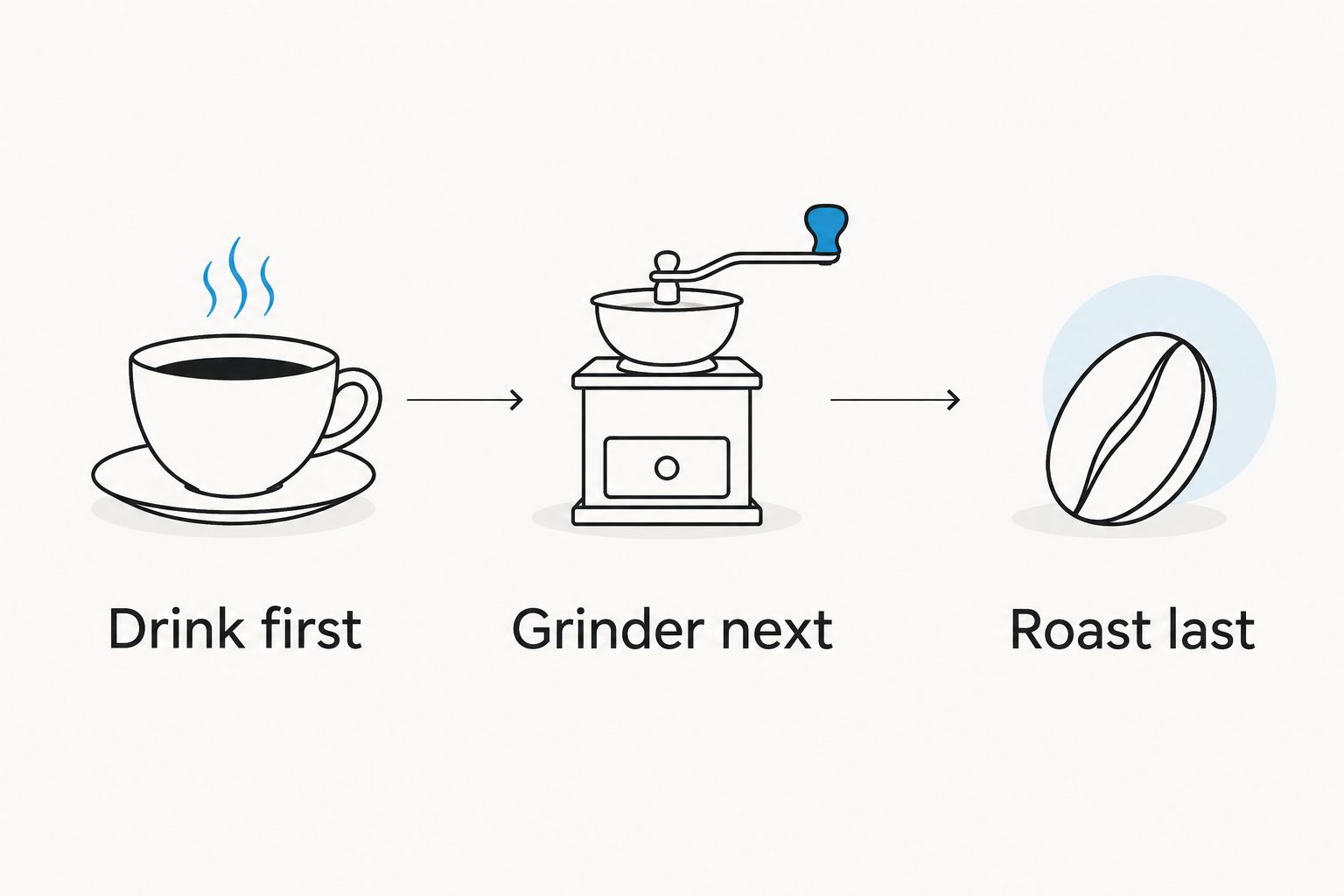
For your 2026 buying decision, settle the drink and equipment questions before focusing on origin. That sequence keeps you from choosing an interesting coffee that creates work you do not want.
- Drink first: Decide whether you mainly make straight espresso or milk drinks.
- Grinder next: Confirm whether you can adjust espresso grind size or need suitable preground coffee.
- Roast last: Use your taste preference to choose medium, dark, or light roast.
If you use a non-pressurized basket, grind control deserves particular attention. The guide to whole-bean coffee for espresso machines covers that buying category in more detail.
Dial in the beans before replacing them
A common starting recipe for a compatible double basket is 18 g of ground coffee producing 36 g of espresso in about 25–30 seconds. This is a starting recipe, not a pass-or-fail rule. Follow your basket’s recommended dose and let taste guide the next adjustment.
Use a scale to measure grounds and finished espresso. A shot that looks similar can still contain a different amount of liquid, making your comparison less useful.
- Keep the dose steady. Use the same amount of ground coffee while you learn how the grind affects flow.
- Measure the output. Stop at the chosen espresso weight rather than relying only on cup volume.
- Taste the shot. Notice whether it is sharply sour, drying, roast-heavy, or balanced enough for your preference.
- Change one variable. Adjust the grind or output, then compare again without changing everything at once.
Fast flow and sharp sourness are reasons to check extraction. Slow flow and a drying finish are also reasons to review the recipe. Neither observation proves that the beans are wrong for you.
For milk drinks, keep the milk amount consistent during comparisons. Otherwise, you are changing both the espresso and the drink around it.
How the picks are ranked
This 2026 ranking prioritizes drink fit, roast preference, grind control, and repeatability. African Espresso appears first as the named medium/dark blend; the remaining picks cover distinct buying situations rather than competing brand claims.
Cinder and Cedar Coffee Roasters’ espresso recommendation rests on African Espresso’s stated roast and blend composition. The category recommendations describe practical selection trade-offs, not laboratory scores or claimed tasting results.
Which espresso beans should you choose?
Choose medium-roast whole beans if you are undecided and have an espresso-capable grinder. They give you a practical starting point for learning a repeatable recipe before exploring roast extremes.
Choose African Espresso when you specifically want a named medium/dark blend. Choose dark roast when milk drinks dominate your routine, and choose light-roast single-origin coffee when exploration matters more than quick setup.
For 2026, the useful buying rule is unchanged: match the coffee to your routine, then adjust the recipe. Do not replace a suitable bag simply because the first shot needs work.
FAQ
What are the best espresso beans for a beginner at home?
Medium-roast whole beans are a practical starting choice for a beginner with an espresso-capable grinder. They let you learn grind adjustment without deliberately choosing either a very light or very dark roast.
Is African Espresso a dark roast?
African Espresso is described as medium/dark roast. It is a blend of coffee from Kenya, Tanzania, and Ethiopia.
Do I need beans labeled espresso for my machine?
No, espresso is a brewing method, so beans do not need an espresso label. Choose a roast you enjoy and a grind appropriate for your machine and basket.
Are dark-roast beans better for lattes?
Dark-roast beans are a useful choice for lattes when you prefer pronounced roast character through milk. Taste the complete drink, because your milk amount changes the balance.
Can I use preground coffee in an espresso machine?
Yes, if the grind suits your machine and basket. Some pressurized baskets accommodate preground coffee, but you should follow the equipment instructions rather than assuming compatibility.
What espresso recipe should I start with?
For a compatible double basket, a common starting recipe is 18 g of coffee producing 36 g of espresso in about 25–30 seconds. Follow the basket’s dose guidance and adjust for taste rather than treating timing as an absolute rule.
Are the best espresso beans in 2026 always single-origin?
No, single-origin coffee is not automatically better for espresso than a blend. Choose single-origin beans for origin-focused exploration and assess blends by their roast, flavor, and fit with your usual drink.
One last thing
Crema is not a reliable verdict on taste. A visually impressive shot can still taste unbalanced, and the best-looking coffee is not automatically the coffee you want to drink.
Before rejecting your next bag, brew it with a measured recipe and taste it in your usual cup. Judge the drink, not just the foam.