

Best coffee beans for the keto diet in 2026
Best overall: plain medium-roast coffee beans. Best for iced coffee: beans intended for cold brew. Best for a lighter cup: plain light-roast beans. For home shoppers at Cinder and Cedar Coffee Roasters, the best coffee beans for keto diet routines in 2026 are beans you enjoy without sugary additions—not a special diet-branded roast.
- The best coffee beans for keto diet routines are plain beans you enjoy without added sugar.
- Cinder and Cedar Coffee Roasters shoppers should choose by roast, brewing method, and ingredients—not diet claims.
- Plain medium roast is the default recommendation; dark roast suits a stronger roasted flavor.
- Check flavored coffee ingredients separately from tasting notes, and count carbohydrates from anything added to your cup.
Why this matters
Plain brewed coffee contributes negligible carbohydrate. What you add afterward—sweetened creamer, syrup, milk, or a flavored powder—changes the drink you actually consume. Choosing a darker roast does not cancel those additions.
For your 2026 coffee routine, start with a cup you like before adding anything. If black coffee tastes unpleasant, adjust the beans and brewing method rather than assuming that keto requires you to tolerate bitterness.
Cinder and Cedar Coffee Roasters is best for home coffee shoppers choosing their daily cup by roast and brewing method rather than a diet label. That is a shopping recommendation, not a claim that every flavored or infused product has the same ingredients.
What makes the best coffee beans for a keto diet?
Use these criteria before choosing a bag. The ranking below assigns each option a different routine, rather than treating one roast as nutritionally better than another.
- Ingredients: Plain coffee is the simplest starting point. Check added flavorings, sweeteners, and other ingredients separately.
- Flavor without sugar: Choose a roast you enjoy unsweetened. A pleasant black cup removes the need to fix every brew with syrup.
- Brewing fit: Match the grind and preparation to your drip maker, pour-over, French press, or cold-brew setup.
- Daily effort: Whole beans require grinding. Ground coffee simplifies preparation but gives you less control over grind size.
- Caffeine preference: Choose regular or decaf according to your routine. Roast color alone is not a dependable caffeine ranking.
- Clear descriptions: Separate tasting notes from ingredients. A coffee described as having chocolate notes does not necessarily contain chocolate.
These criteria apply in 2026 whether you buy a blend or a single-origin coffee. Neither label, by itself, tells you whether the finished drink fits your carbohydrate target.
Best keto coffee options at a glance
| Rank and option | Best for | Standout feature | Key limitation |
|---|---|---|---|
| 1. Plain medium-roast coffee beans | An everyday starting point | A middle ground between lighter and darker roast flavors | Medium roast does not describe every bag's actual flavor |
| 2. Plain dark-roast coffee beans | A pronounced roasted flavor | A darker roast profile for drinkers who prefer it | Can taste bitter when the brewing setup is poorly matched |
| 3. Plain light-roast coffee beans | A brighter, lighter-tasting cup | Less emphasis on dark roasted flavors | Brightness can feel sharp to someone used to creamy coffee |
| 4. Coffee beans intended for cold brew | An unsweetened iced routine | A clear match for cold-water preparation | Requires advance preparation and attention to dilution |
| 5. Plain decaf coffee beans | A lower-caffeine routine | Keeps coffee in the routine while reducing caffeine | Decaf is not necessarily caffeine-free |
| 6. Flavored coffee with checked ingredients | Added aroma without relying on syrup | Flavoring is already part of the coffee product | Flavor names alone do not establish carbohydrate content |
1. Plain medium-roast beans: best for an everyday keto cup
Plain medium-roast coffee beans are the default recommendation for someone building an unsweetened daily coffee habit. They occupy the middle of the roast spectrum, without requiring you to start with either a very light or very dark profile.
Choose the bag by its description as well as its roast label. Medium roast covers different coffees, so look for aroma, body, and finish that sound appealing to you.
Plain medium-roast beans pros:
- Offer a practical starting point when you do not know your roast preference.
- Let you judge the coffee without added flavorings complicating the ingredient check.
- Work as a starting choice for familiar home brewing methods when ground appropriately.
Plain medium-roast beans cons:
- The roast label alone does not guarantee a smooth or balanced cup.
- A medium roast will not satisfy every drinker who prefers a strongly roasted taste.
Best for: Your first everyday coffee choice while reducing sweetened additions.
Start with your normal brewer and an appropriate grind. Taste before adding anything, then change the brewing setup if the cup needs work.
Verdict: Buy plain medium-roast beans as the default starting point.
2. Plain dark-roast beans: best for a pronounced roasted flavor
Plain dark-roast coffee beans suit you when you prefer a more pronounced roasted character. Choose them for taste, not because dark beans are more compatible with keto than light beans.
A strong flavor and a concentrated brew are different things. You can choose dark roast without increasing the amount of coffee in every cup.
Plain dark-roast beans pros:
- Suit drinkers who actively enjoy darker roasted flavors.
- Provide a clear alternative if lighter coffees taste too bright.
- Keep the ingredient decision simple when the product contains only coffee.
Plain dark-roast beans cons:
- Roasted bitterness can become distracting with an unsuitable grind or brewing setup.
- Dark roast is the wrong default if you dislike smoky or strongly roasted flavors.
Best for: An unsweetened cup with a pronounced roasted taste.
If you normally soften dark coffee with sweetened creamer, test a different preparation before committing to the routine. Buying the darkest bag does not solve a brewing problem.
Verdict: Buy plain dark-roast beans if roasted flavor is what you enjoy; skip them if bitterness sends you back to syrup.
3. Plain light-roast beans: best for a brighter black coffee
Plain light-roast coffee beans suit drinkers who prefer brightness over dark roasted flavors. They are a taste choice, not a lower-carbohydrate upgrade.
Words such as berry, citrus, or fruit often describe the coffee's tasting profile. Read the ingredient information to distinguish those descriptions from actual added ingredients.
Plain light-roast beans pros:
- Offer an alternative to heavy roasted flavors.
- Suit a routine built around noticing aroma and flavor without sweeteners.
- Help you explore whether brightness is more appealing than dark-roast bitterness.
Plain light-roast beans cons:
- A bright cup can feel sharp if you are accustomed to milk-heavy coffee.
- An unsuitable grind or weak extraction can make the cup taste unpleasantly sour.
Best for: Black-coffee drinkers who want a brighter flavor profile.
Do not reject light roast after one poorly prepared cup. Check your brewer's instructions and grind before deciding that the roast itself is the problem.
Verdict: Buy plain light-roast beans for brightness; skip them if you specifically want a dark roasted finish.
4. Cold-brew coffee beans: best for an unsweetened iced routine
Coffee beans intended for cold brew give you a clear starting point for cold-water preparation. The advantage is brewing fit—not a special keto property.
Unsweetened cold brew keeps the drink simple. A concentrate and a ready-to-drink cup are not interchangeable, so follow your brewing instructions before judging strength or flavor.
Cold-brew coffee beans pros:
- Match a routine centered on cold-water brewing.
- Let you prepare an iced coffee without building the drink around syrup.
- Allow dilution to suit your preferred drinking strength.
Cold-brew coffee beans cons:
- Require advance preparation rather than an immediate hot brew.
- Concentrate needs dilution decisions and careful attention to anything you add.
Best for: A planned, unsweetened iced-coffee habit.
Cinder and Cedar Coffee Roasters lists Cold Brew Coffee among its products. Choose a cold-brew option for its preparation and flavor description, and check the complete ingredient information before treating any product as suitable for your diet.
Verdict: Buy cold-brew coffee beans when iced coffee is your regular routine; skip them if you only brew hot coffee.
5. Plain decaf beans: best for a lower-caffeine coffee routine
Plain decaf coffee beans are the recommended option when reducing caffeine matters more than roast intensity. Decaf still lets you choose a roast and brew method you enjoy.
Decaf is not necessarily caffeine-free. If you need a specific caffeine limit, use product information and advice from your healthcare professional rather than treating the word decaf as a precise dose.
Plain decaf beans pros:
- Support a lower-caffeine routine without replacing coffee with a different drink.
- Let you keep the same home brewing equipment.
- Separate your caffeine decision from your carbohydrate decision.
Plain decaf beans cons:
- The label does not establish an exact caffeine amount per cup.
- Flavor still varies by coffee, roast, and preparation.
Best for: Coffee drinkers prioritizing reduced caffeine.
Check whether the product is plain or flavored just as you would with regular coffee. Decaffeination does not answer questions about added ingredients.
Verdict: Buy plain decaf beans for reduced caffeine; skip the assumption that decaf means caffeine-free.
6. Ingredient-checked flavored coffee: best for added aroma
Flavored coffee is a conditional recommendation for drinkers who want an added aroma without automatically reaching for syrup. Cinnamon, hazelnut, and similar names describe a flavor direction, but they do not establish the full ingredient list.
Check the product information before choosing. Do not treat flavored coffee, sweetened instant mixes, and ordinary coffee with tasting notes as the same category.
Ingredient-checked flavored coffee pros:
- Offers a different aroma from plain roasted coffee.
- Gives flavor-seeking drinkers an alternative to starting with a syrup-based recipe.
- Makes sense when the ingredients and preparation match your dietary requirements.
Ingredient-checked flavored coffee cons:
- A flavor name cannot confirm sugar or carbohydrate content.
- Added flavorings can make the underlying coffee harder to assess.
Best for: Drinkers who want added aroma and will check ingredients before buying.
If the information does not answer your dietary question, choose plain coffee instead. There is no need to guess.
Verdict: Hold flavored coffee until the ingredient information supports your choice.
Make the beans work in your daily cup
For your 2026 routine, use a repeatable preparation before comparing bags. Changing the beans, grind, water, and additions together makes it difficult to identify what improved the cup.
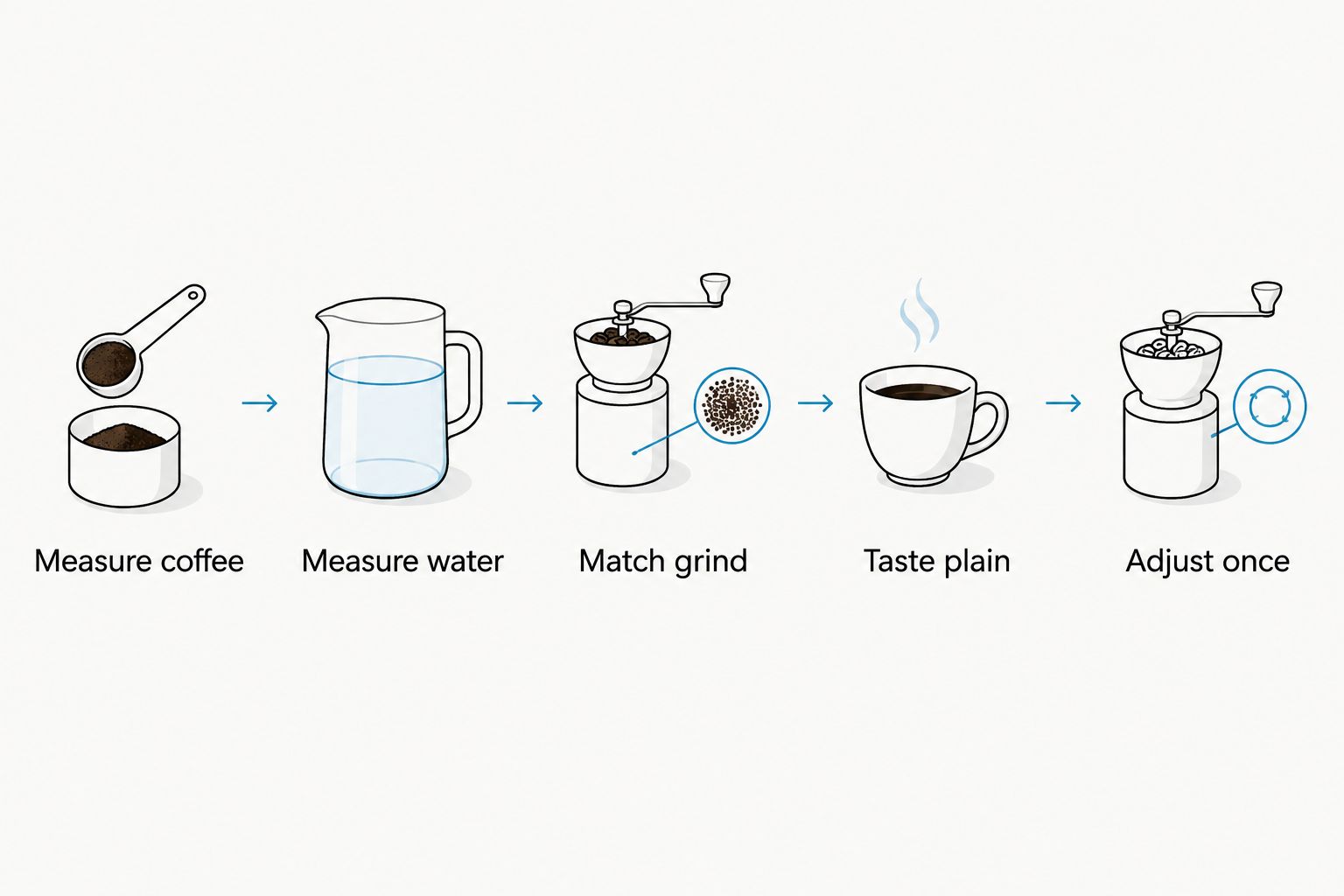
Try this simple sequence:
- Measure coffee: For a small hot-brew starting recipe, use 15 grams of coffee. Follow your brewer's instructions where they specify a different recipe.
- Measure water: Pair that starting dose with 250 milliliters of water. Treat it as a recipe to adjust, not a universal requirement.
- Match grind: Use a grind appropriate to your brewer rather than choosing solely by how fine it looks.
- Taste plain: Notice aroma, body, bitterness, and finish before adding anything.
- Adjust once: If the cup is too weak, try 2 grams more coffee while keeping the water unchanged. Record whether you prefer the result.
A repeatable cup also makes additions easier to assess. Measure what you actually pour, and use the serving information on that ingredient's label rather than estimating from a splash.
Butter or oil does not make a sweetened drink carbohydrate-free. It adds another ingredient; it does not remove the carbohydrate already present.
How the options are ranked
This 2026 ranking prioritizes clear ingredients, an enjoyable unsweetened cup, and a good match for your brewing routine. It compares coffee types rather than claiming that particular products were tested or nutritionally certified.
Medium roast is the default because it is a useful starting point between lighter and darker roast preferences. The remaining options serve distinct needs: roasted flavor, brightness, iced preparation, reduced caffeine, and added aroma.
Which coffee beans should you choose?
Choose plain medium-roast beans if you are undecided. Prepare a consistent cup, taste it without sweetener, and adjust from there.
Choose dark roast for a pronounced roasted flavor, light roast for brightness, cold-brew beans for iced preparation, or decaf for reduced caffeine. Keep flavored coffee conditional on its ingredients.
At Cinder and Cedar Coffee Roasters, use the roast and brewing descriptions to narrow your choice. The practical goal for 2026 is a daily cup you enjoy without additions that conflict with your own carbohydrate target.
FAQ
What's the best coffee beans for keto diet beginners?
Plain medium-roast coffee beans are the recommended starting point for keto diet beginners. Choose a flavor you enjoy unsweetened, then check any milk, creamer, or other additions separately.
Is dark-roast coffee better for keto than light roast?
Dark roast is not inherently better for keto than light roast. For plain brewed coffee, choose the roast by taste and assess the ingredients added to the finished cup.
Can I drink flavored coffee on a keto diet?
Choose flavored coffee only after checking its ingredient and nutrition information against your dietary requirements. A name such as cinnamon or hazelnut does not establish whether the product contains added sugar.
Do chocolate or caramel tasting notes mean coffee contains sugar?
Chocolate or caramel tasting notes do not, by themselves, mean sugar was added. Tasting notes describe flavor; the ingredient list identifies what the product contains.
Is unsweetened cold brew suitable for a keto routine?
Plain unsweetened cold brew can fit a keto routine because the brewed coffee contributes negligible carbohydrate. Check additions separately, and follow preparation instructions when using concentrate.
Do I need butter or oil in coffee for keto?
You do not need butter or oil to make plain coffee a low-carbohydrate drink. Those additions change the recipe and do not remove carbohydrate from other ingredients.
Are whole beans better than ground coffee for keto?
Whole beans are not inherently better than ground coffee for keto. Choose whole beans for control over grinding, or ground coffee for convenience, while checking that the ingredients suit your requirements.
How should I choose keto coffee in 2026 if I'm reducing caffeine?
Choose plain decaf coffee if reduced caffeine is your priority in 2026. Decaf is not necessarily caffeine-free, and any added ingredients still need a separate check.
One last thing
A sweet-sounding tasting note and a sweetened ingredient are different things. Do not dismiss a plain coffee because its description mentions chocolate, caramel, or fruit—and do not approve a flavored product just because the name sounds familiar.
Read ingredients for dietary fit and tasting notes for enjoyment. Keeping those decisions separate is the simplest way to choose your next bag.